
Small business owners who closed their businesses last year decide to close their businesses when st..
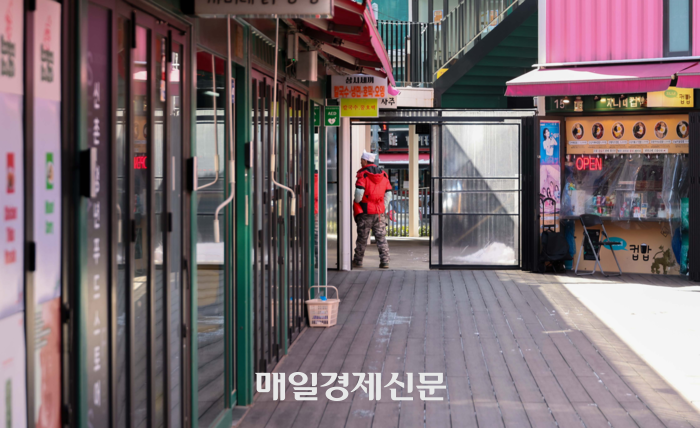
Small business owners who closed their businesses last year decide to close their businesses when store sales fall by more than 40%, the survey showed. They already had an average debt of about 85 million won at the time of closure, and paid an average of 12.8 million won additionally to close the store. The number of closed businesses, which exceeded 1 million for the first time in 2024, fell slightly to 970,000.
According to the Ministry of SMEs and Startups' survey on the status of businesses closed and small business owners released on the 30th, the number of businesses closed last year was 976,000, down 32,000 from the previous year (1,088). The closing rate was 8.64%, down 3.23% from the previous year (9.04%).
The Ministry of SMEs and Startups analyzed the "current status of business closures" released by the National Tax Service on the 29th and the results of a survey of 1,500 small business owners who closed their businesses in the past year in May. This is the first time that the statistics on the closure of the National Tax Service have been analyzed at the mid-term to medium-term level.
Although the overall closure rate decreased slightly from 9% last year to 8%, the closure rate of the six major industries (manufacturing, wholesale and retail, food, lodging, and services) where small business owners are mainly employed was 11% for the third consecutive year, far exceeding the overall average. The Ministry of SMEs and Startups analyzed that the impact of the closure was concentrated on small businesses.
The closing rate was the highest in the retail industry (15.4%), followed by the restaurant industry (15.14%) and the electricity, gas, and water supply industry (3.29%). The most common reason for the closure was "business slump" (50.4%), which is rising every year to 48.9% in 2023 and 50.2% in 2024. This means that although they were willing to continue their business, there are many involuntary closures that close without enduring sluggish sales.
By age, the proportion of people aged 60 or older closing businesses increased from 22.7% the previous year to 24.4% in 2025.
In a survey of only small business owners who have closed their businesses in the past year, the decline in sales was also the biggest cause of closure. 64.4% of those who went out of business decided to go out of business if sales decreased by more than 40% from normal sales. Even if sales fell, many people continued their business by holding out for now, and as a result, debt also increased.
68.5% of those who closed their business already had an average debt of 85.31 million won when they decided to close their business. By age group, 35.67 million won for those in their 20s and younger, 72.95 million won for those in their 30s, 76.73 million won for those in their 40s, 84.24 million won for those in their 50s, and 98.97 million won for those in their 60s and older, and the higher the age, the greater the debt. After deciding to close the business, it took an average of 7.7 months to cancel the actual business registration.
In the closing process (multiple responses), 45.5% of respondents said that repayment of loans was the most difficult. It was also not easy to decide when to close (37.3%) and recover the deposit and premium (30.7%).
The average cost of closure was 12.86 million won, followed by store demolition and restoration costs (5.59 million won), raw material costs (2.21 million won), and employee severance pay (2.05 million won).
Starting next year, the Ministry of SMEs and Startups will regularly announce the current status, actual conditions, and statistics of business closures in July every year. In September this year, the government will jointly research and announce the path of recovery after the closure of the business with the National Data Agency. Based on this, the plan is to strengthen the step-by-step support system that leads to diagnosis of management crisis, rapid closure, re-starting, and employment linkage.
Choi Won-young, head of the Small Business Policy Division, said, "The government's role is to provide support so that once the business closure does not become a cliff that destroys the lives of small business owners. We will hold regional consultations in the second half of the year so that small business owners who are in a management crisis or have closed their business can all receive counseling online and offline."
Related Stories
 AI News
Israeli troops face resistance from residents as they push into a town in Syria
14 minutes ago
 AI News
How Germany were handed a World Cup humbling and what it means to Paraguay
14 minutes ago
 AI News
Paraguay coach salutes ‘extraordinary’ World Cup win over Germany
14 minutes ago
 AI News
Canada Open: All Eyes on Victor Lai
14 minutes ago
 AI News
Paraguay upsets Germany on penalties, Morocco also knocks out the Netherlands on penalties, and Brazil beats Japan
15 minutes ago
 AI News
Aspen Acres Fire Prompts Southern Colorado Air Quality Alert
16 minutes ago
 AI News
Two kids, father dead in suspected murder
16 minutes ago
 AI News
Heavy rainfall causes damage, strands campers west of Calgary
16 minutes ago