
Senator Mark R. Warner introduces S. 5576: Artificial Intelligence Risk Management and Security Act of 2026
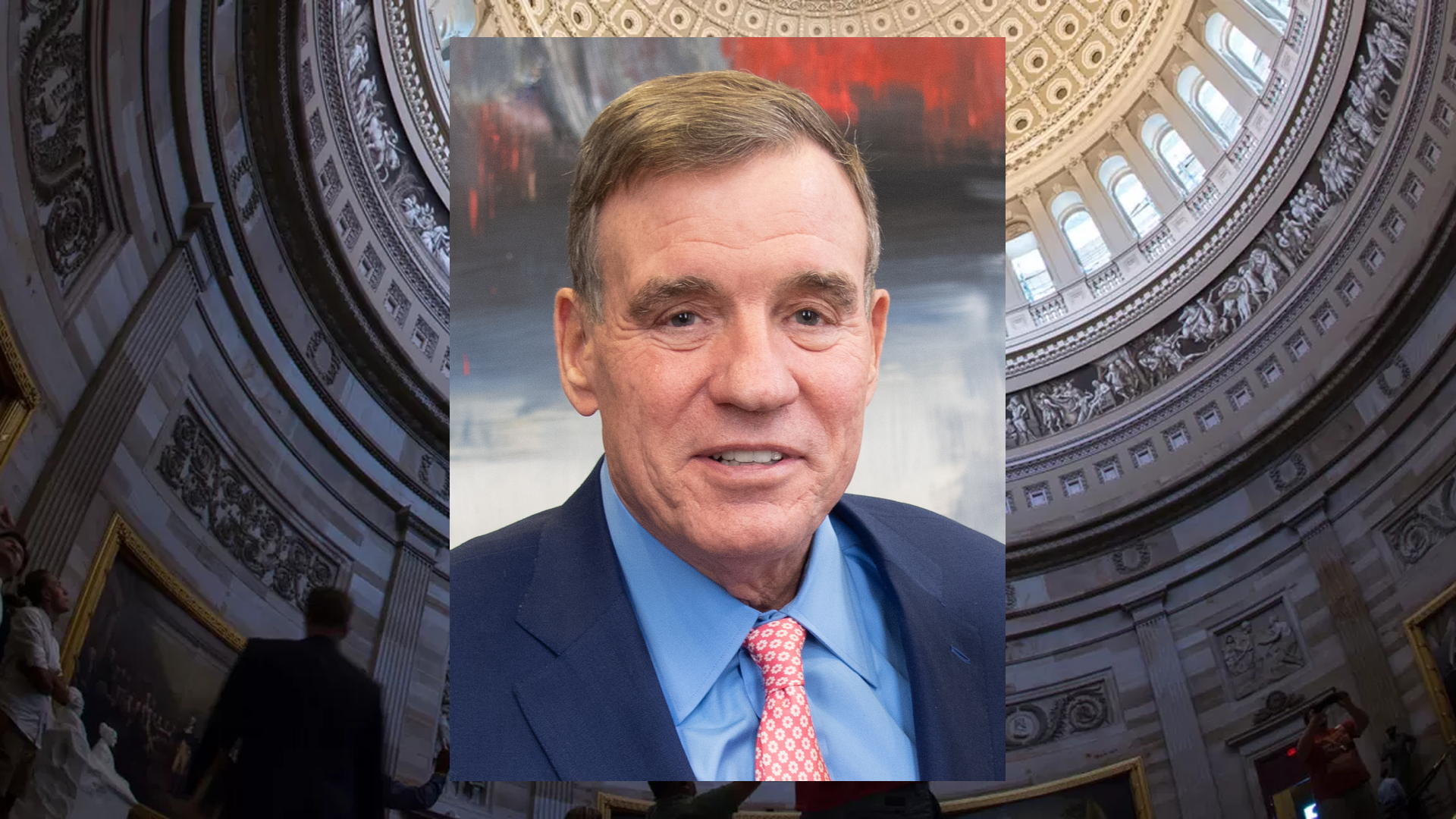
We have received text from S. 5576: Artificial Intelligence Risk Management and Security Act of 2026. This bill was received on 2026-09-29, and currently has 2 cosponsors.
Here is a short summary of the bill:
This bill would create a federal structure for identifying, evaluating, and reducing risks from advanced artificial intelligence systems, especially highly capable “frontier” models and AI agents.
The bill would require the Secretary of Commerce to create an Artificial Intelligence Safety Board within the Department of Commerce. The board would include representatives from several federal agencies, along with outside experts. It would be treated as a permanent advisory committee.
Members would need security clearances to access classified information, and they would have to follow conflict-of-interest rules and disclose financial and employment ties. The board could hold closed sessions when discussing classified material, security incidents, vulnerabilities, threats, or proprietary information.
The board would develop technical standards and evaluation methods for frontier AI models. These standards would focus on things like:
The board would review and update these standards at least once a year.
The board would have to submit proposed standards to the Secretary of Commerce within 90 days of being formed. The Secretary would then have 30 days to adopt them, either as written or with changes needed for national security. Once adopted, the standards would be mandatory for covered developers.
Developers who violate the rules could face civil penalties of up to $250,000 per violation , with each day of noncompliance counting as a separate violation. The Attorney General could also sue to stop violations or collect penalties.
At least 45 days before a developer puts a frontier AI model into interstate or foreign commerce, the developer would have to give the board access to the model, including necessary weights, configuration files, runtimes, or software libraries.
The bill also allows the government to use secure federal computing environments, including resources from the National Security Agency and Department of Energy national laboratories, for testing and AI security research. Those environments could also be made available to private-sector and other qualified participants on a cost-recovery basis.
Each developer would have to create, publish, and follow a Model Safety Plan for each AI system it creates, substantially modifies, or uses to train or evaluate other models. The plan would need to identify the model, include a risk assessment, list mitigation steps, and name the corporate officer responsible for implementation. These plans would have to be filed with the Secretary of Commerce.
The bill would require the National Institute of Standards and Technology, working with CISA, to create systems for reporting AI safety incidents, AI security incidents, and AI flaws.
It would also require a publicly accessible database, to be created within one year, containing incidents and a catalog of identified flaws. Reports would be anonymized unless affected parties consented to being named. Information shared through these reporting systems would generally be protected from public disclosure and would not waive trade secret protections.
Developers of frontier AI models and operators of critical infrastructure using AI in industrial control or operational technology settings would have to report confirmed safety or security incidents within 30 days, or within 72 hours if the incident poses an imminent threat to national security, critical infrastructure, or public safety.
NIST would have to publish nonbinding guidance explaining when an event “materially increases” the risk of an AI safety or security incident.
The bill would direct NIST to create an “Agentic AI Profile” for AI agents—systems that can choose actions and carry them out directly. That profile would help organizations assess and manage risks specific to AI agents, including autonomy levels, identity and authentication risks, and cybersecurity issues.
NIST would also develop a common documentation template for AI agents, covering items such as identity, version, intended use, authority boundaries, access to tools and data, evaluation results, known limitations, and the name of any independent evaluator.
Senator Mark R. Warner Bill Proposals
Here are some bills which have recently been proposed by Senator Mark R. Warner:
You can track bills proposed by Senator Mark R. Warner on Quiver Quantitative's politician page for Warner.
Senator Mark R. Warner Net Worth
Quiver Quantitative estimates that Senator Mark R. Warner is worth $210.9M, as of October 10th, 2026. This is the 8th highest net worth in Congress, per our live estimates.
Warner has approximately $111.4M invested in publicly traded assets which Quiver is able to track live.
You can track Senator Mark R. Warner's net worth on Quiver Quantitative's politician page for Warner.
Senator Mark R. Warner Stock Trading
We have data on up to $98.4M of trades from Senator Mark R. Warner, which we parsed from STOCK Act filings. Some of the largest trades include:
You can track Senator Mark R. Warner's stock trading on Quiver Quantitative's politician page for Warner.
2026 Virginia US Senate Election
There has been approximately $26,125,054 of spending in Virginia US Senate elections over the last two years, per our estimates.
Approximately $508,706 of this has been from outside spending by PACs and Super PACs. Some of the groups who are spending money in this race include:
The rating for this race is currently "Solid D".
You can track this election on our matchup page for the 2026 Virginia US Senate election.
This article is not financial advice. See Quiver Quantitative's disclaimers for more information.
Related Stories
 AI News
The Hugging Face Incident: When Artificial Intelligence Escaped Its Masters
52 minutes ago
 AI News
Leading AI companies are preparing for the possibility of artificial intelligence getting out of control
52 minutes ago
 AI News
Ukraine war briefing: Kyiv blasts peace talks as just ‘smokescreen’ for Trump‘s Russian diesel deal
3 hours ago
 AI News
AI is changing how lawyers work
3 hours ago
 AI News
Anthropic AI model submits false homicide tip to Philadelphia police
3 hours ago
 AI News
AI News: Artificial Intelligence Trends And Top AI Stocks To Watch
4 hours ago
 AI News
Artificial intelligence answers: what is the expected result of the Manchester United v Tottenham clash?
4 hours ago
 AI News
What if AI could suffer? Anthropic bans needless cruelty towards Claude
4 hours ago