
Queer India Sanitised
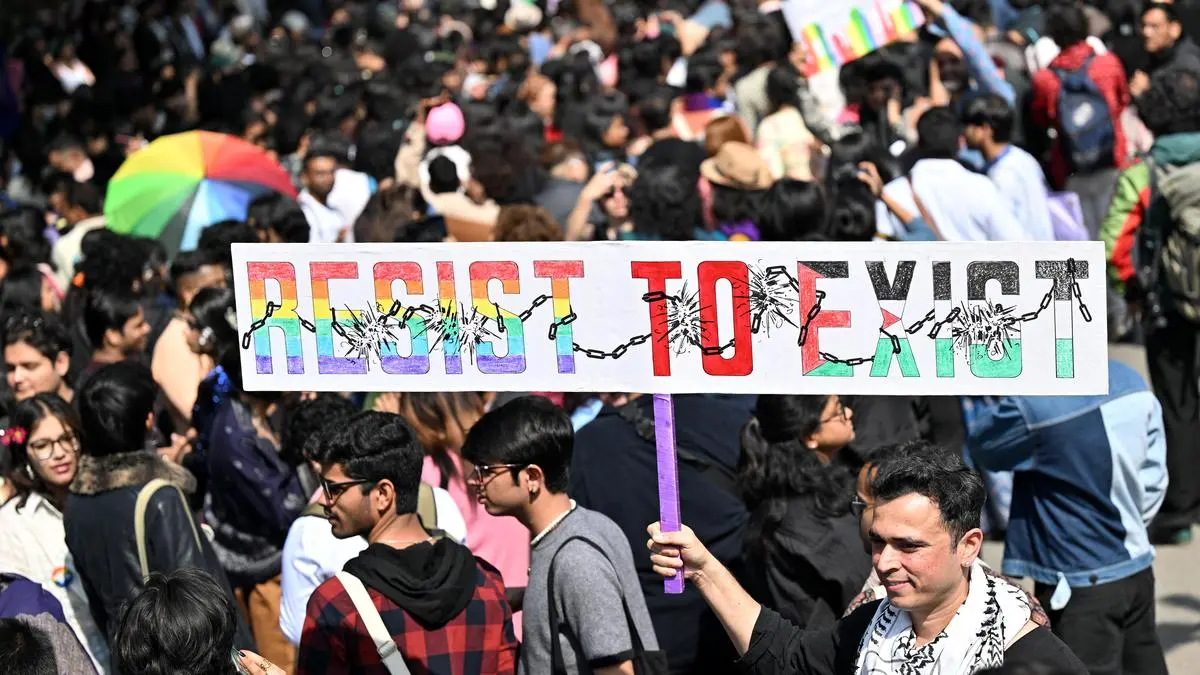
That a corporate “culture lab” has partnered with a corporate publisher to tell us what queer India now is, is not surprising. That the editors of Queer India Now do not examine the implications of this in their incoherent introduction, is.
There are several critical implications that demand exploration. To begin with, the dovetailing of neoliberalism and the emergence of the so-called queer movement goes completely unexamined, not just by both the editors but also by every contributor. This was not a movement on the ground but on the Internet, in NGO offices via epidemiology around HIV/AIDS, and in legal offices. That the culture lab does not simply give the means of representation to people—like say, the independent newspaper Khabar Lahariya does, by putting cameras and reporting directly into the hands of Dalit women in the Hindi heartland—but instead filters them through two urban journalists shows who actually holds the reins of power in the queer world. The journalists in question offer no organising principle to the book; pieces lurch across genres, rendering the experience disorienting. Their introduction, to make matters worse, unpacks none of this.
Then there is the question of language. Practically every piece in this book is suffused with the language of US identity politics. Indeed, the culture lab is now the “DEI [diversity, equity, and inclusion] lab” and from that acronym onwards, it is as though queer India is a satellite of the equally elite planet of US identityspeak, ceaselessly circling in its orbit. Contributors from the remotest villages relate to it and adopt it immediately without question, contextualisation, or critical thinking.
This is followed by the urban and rural dichotomy, undercut not just by the universality of US language but the persistence of oppression in both contexts in India. Yet it is maintained and replicates the First World (theory) and Third World (experience) dichotomy that afflicts academia. “Small town India” just has to catch up with urban India which has to catch up with the US and all will be well.
The focus on the law remains undiminished, despite the law having done practically nothing for same-sex people in India. Despite the so-called decriminalisation of homosexuality, which was actually just a reading down of one part of Section 377 of the Indian Penal Code, suited to the privileged classes and castes (based as it was on the idea of privacy, which many sexual minorities cannot afford), violence, as testimony after testimony in this book shows us—from B. Kiran Nayak’s account of his disability and transness to Siddharth Shanthala Ganesh’s recounting of the jogati Manjamma—against same-sex communities continues unabated. Yet the law remains touted as the great saviour without question by the more privileged contributors who invoke it as a triumph.
“Gender” is the flavour of the whole anthology. Sexuality (and, indeed, sexual desire, which is almost entirely evacuated from the pages) and the persistence of what psychoanalysis calls sexual difference, in the way in which we psychosexually construct ourselves within the circumscribed masculine-feminine axis, are paid no heed as the kites of gender are flown miraculously above all constraints. It is as if the symbolic (by which is meant the system of language, culture, the law and social rules that govern us from even before our birth and which we internalise) does not exist even as the languages of most contributors necessarily falls back in its undertow (into the male/female binary, for example).
The lack of reflection on all of this is the hallmark of this anthology. Not a single contributor explores any of these large structuring contexts that give a particular set of framings and meanings to their existences. Instead, there is a focus only on the individualist nature of so-called extraordinary self-accounts and stories. The problem with these accounts is that they are completely exteriorised with little or no interiority or exploration of the contradictions in the formation of subjectivity, queer or otherwise, which would give us a less triumphalist but far more interesting and helpful complexity (an account of the messiness of our own lives, our complicity with oppressors and our own violences).
For example, in the two narratives referred to above, Nayak’s is an externalising account of his achievements rather than an interior account of his disability and transness, while Ganesh’s account of the jogati Manjamma recounts the biographical with no mention of her internal contradictions, pain, and devotion. The psyche is almost entirely absent in these accounts as narratives settle for the framing device of suffering versus joy, as if lives merely vacillate between these two extremities.
A few contributors touch on important questions: Prathyush Parasuraman on the gay man’s investment in oppressive, homophobic masculinity and Bonita Rajpurohit on the compulsive spectacularisation of the trans body, but neither is given time to breathe. Parasuraman gives in to the undergraduate urge to show off how many books and theorists he knows; Rajpurohit plumbs the individualist path rather than exploring the block against transness as being part of a social tissue—including the self—that needs a deeper exploration.
The liberal emptiness of the DEI model (which does not change structures at all but merely assimilates difference) means that care is taken to try and explore every corner of the country, but never mind if the Naga contributor, Kenny Awomi, tells us nothing about what it means to be trans in homophobic Nagaland and instead tells us what to eat before we walk the ramp, or if the Kashmiri contributor, Aijaz Ahmad Bund, gives us the most banal, generalised account of the life of same-sex subjects in Kashmir, with not one insight of any significance. The essay does not have even one portrait of a Kashmiri queer person and the multiple layers that would form a Kashmiri queer sensibility from deep cultural homophobia to the violence of the state.
“Gender” is the flavour of Queer India Now. | Photo Credit: By Special Arrangement
Two psychologists, Dr Aqsa Shaikh and Arya Somaiya, who one might hope would address the difficult question of the same-sex psyche in India, speak of ambivalence and trauma but do not actually explore what they might mean. Instead, they mostly focus on accelerated resolution therapy and hormone replacement therapy, without any indication about how these can help understand ambivalence and trauma, even as they speak about the ignorance of the medical establishment and medical textbooks. The psyche is forgotten altogether in their US Ego Psychology understanding of the mind. Similarly, a trans doctor, Dr Sameera Jahagirdar, speaks of how community engagement changed her approach as a doctor but does not tell us how, keeping the dichotomy between medical knowledge and community knowledge intact.
The emptiness of the liberal DEI model becomes especially clear when representation of every corner of the country does not actually involve every identity. Hijras, thirunangais, aravanis, and other regionally specific, non-English-speaking third gender people are completely missing from the book, in a telling reprisal of the way they have been ousted from the law that was brought into existence primarily for them. The Transgender (Amendment) Act, 2026, from its earliest iteration as a petition by DMK MP Tiruchi Siva, was a law for thirunangais. These regional identities are, quite simply, not trans. The fact that some among them may identify as trans and make legal claims to transness is only an indication of the conflation and erasure of indigenous categories of people with an umbrella term signifying 100 identities and counting. This is for a variety of reasons, ranging from visibility to the state to international funding. Their voices are simply not in the book.
However, transgender voices amount to more than half of the contributors, followed by gay men, showing where the power lies, with no analysis of the political economy behind the politics of representation. Lesbians just about make it, as do bisexuals, and it is as if the only cutting edge of same-sex identities lies in trans lives.
Cultural expression is given short shrift with one graphic account buried under text (Priya Dali), another marred by too little text (Ammel Sharon and Sharanya Ravi), and a third by little connection between the work and text (Payal Rathva). Vikram Phukan’s racy account of Bombay’s cultural queer scene from the 1990s is marred by his need to also give us an account of the queer scene in general across three cities. Vqueeram Aditya Sahai and Shripad Sinnakaar seem to mistake chopped-up prose with some rhetorical flourish for poetry but dish up only poetastery.
Banal accounts of several “identities” and issues—of asexuality (Oviya V.), with no understanding of, or engagement with, the sexual drive; of the demand for same-sex marriage (Susan Dias), with no critique of that fundamentally oppressive institution or why queers want it; of intersex (Dit Thoudam), with no account of the intersex psyche; of religious belief (Tashi Choedup), with no exploration of the intersection of belief and sexuality—leave the reader simply ticking boxes and none the wiser about any of them.
All in all, this is a deeply disturbing account of queer India now. If this is what queer India now is, it does not bode well for the future.
Ashley Tellis is an academic (literature and sexuality studies), journalist (arts and culture), editor, and writer.
Also Read | Twenty years of coming out as Dalit
Also Read | Satrangi Salaam: A community-led protest against the amended transgender law
Related Stories
 India
India
Former IAS Divya Mittal Enters UP Politics: Is She Joining Any Party? All About IIT, IIM Graduate Who Left London Job to Crack UPSC
42 minutes ago
 India
India
Divya Mittal Quits IAS, Enters UP Politics: The Officer Who Wants to Be ‘the Voice of the People’
1 hour ago
 India
India
Congress
1 hour ago
 India
India
Indian Ambassador Srivastava bids farewell to PM Shah
3 hours ago
 India
India
India’s Election Crisis and the Erosion of Public Trust
4 hours ago
 India
India
AAP donations fall 68%, BJD reports nil: What political parties received in FY26
5 hours ago
 India
India
‘From The Soil Of UP…’: Ex
5 hours ago
 India
India
Why the latest action from India's youth
5 hours ago