
Programme to shape how human and artificial intelligence can work responsibly together
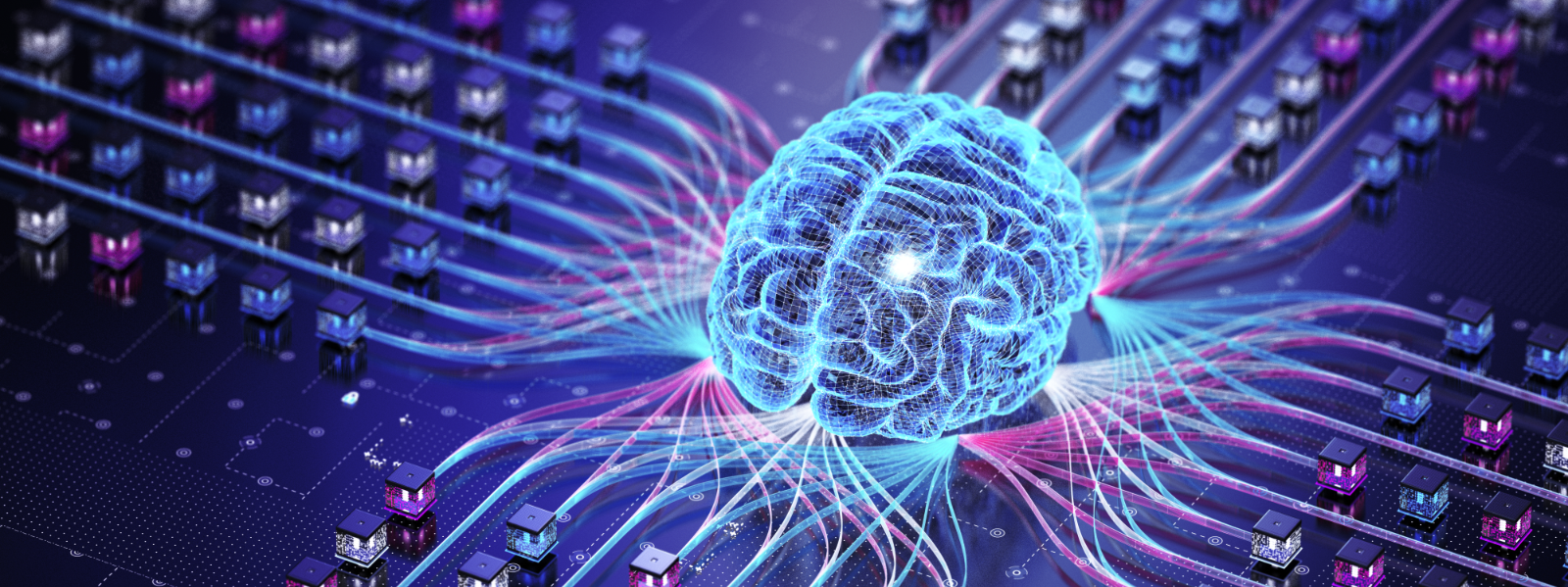
New approaches to creating direct links between the human brain and artificial intelligence will be explored in a new doctoral programme at the Universities of Strathclyde and Glasgow.
The Leverhulme Doctoral Programme in Responsible Hybrid Intelligence will assess the scientific, psychological, legal, ethical and philosophical implications of these emerging neurotechnologies, ensuring that they are developed safely and that control remains with people.
The Programme’s Director is Dr Yashar Moshfeghi, a Reader in Strathclyde’s Department of Computer & Information Sciences, and Professor Simon Hanslmayr, of the University of Glasgow’s School of Psychology & Neuroscience is Deputy Director.
Researchers leading the programme believe hybrid intelligence represents one of the next major scientific frontiers, requiring expertise that spans artificial intelligence, neuroscience, neurotechnology, engineering, psychology, philosophy and law.
Advances in artificial intelligence and neurotechnology are making it possible for humans and artificial intelligence to move beyond working separately and begin learning, adapting and acting together. This raises scientific questions that no existing discipline can answer alone.
The new programme aims to pioneer Responsible Hybrid Intelligence as a recognised field of scientific research and to train the specialists who will shape its future. It will also establish the scientific foundations needed to understand and inform this new field.
It will investigate three fundamental questions: co-adaptation – how biological and artificial intelligence learn together; agency – how control and decision-making should be shared, and grounding – how responsibility and accountability should be understood.
A £5 million Leverhulme Doctoral Scholarship grant from the Leverhulme Trust will be invested in the programme, with lead institution Strathclyde and the University of Glasgow both contributing a further £4.1 million. Over the next nine years, the programme will recruit and train 40 PhD researchers.
Dr Moshfeghi said: “For the first time in history, advances in AI and neurotechnology are making it possible for biological and artificial intelligence to learn and adapt together. We are entering a new era of hybrid intelligence.
“Whether this future empowers people or diminishes human autonomy will depend on the scientific choices we make today.
This programme gives the UK a unique opportunity to build the science that ensures humans and intelligent technologies evolve together in ways that enhance human capability while keeping people firmly in control.
Professor Hanslmayr said: “The doctoral programme aims to ensure that whatever technology is deployed, it’s done in an ethical way and that we anticipate these questions before the technology is in place.
"Human intelligence and silicon-based intelligence haven’t been studied before as interacting in one system, and new frameworks need to be developed for this.”
Strathclyde’s Neurotechnology Centre and Socially Progressive AI Lab, and the University of Glasgow’s Centre for Neurotechnology will be partners in the Leverhulme Doctoral Programme.
Related Stories
 AI News
Juuuno Group Raises $2 Mn To Expand Consumer Technology And Marketing AI Businesses
1 hour ago
 AI News
Artificial intelligence and the emerging crisis of Christ...
1 hour ago
 AI News
Store of the Future: Staffing & AI
1 hour ago
 AI News
‘It’s not helping’: calls for guardrails and regulations as AI use rises at US retailers
1 hour ago
 AI News
BigBear.ai Rises 9% As Technology Stocks Rebound
2 hours ago
 AI News
Portmore Ministers’ Fraternal says it will not support AI data centres without consultations with residents and stakeholders
2 hours ago
 AI News
Artificial intelligence and law: uses and risks
2 hours ago
 AI News
Only 24% of Andorra's SMEs Use Artificial Intelligence in 2026
2 hours ago