
Pope at Audience: Church is called to serve humanity, unmask society's contradictions
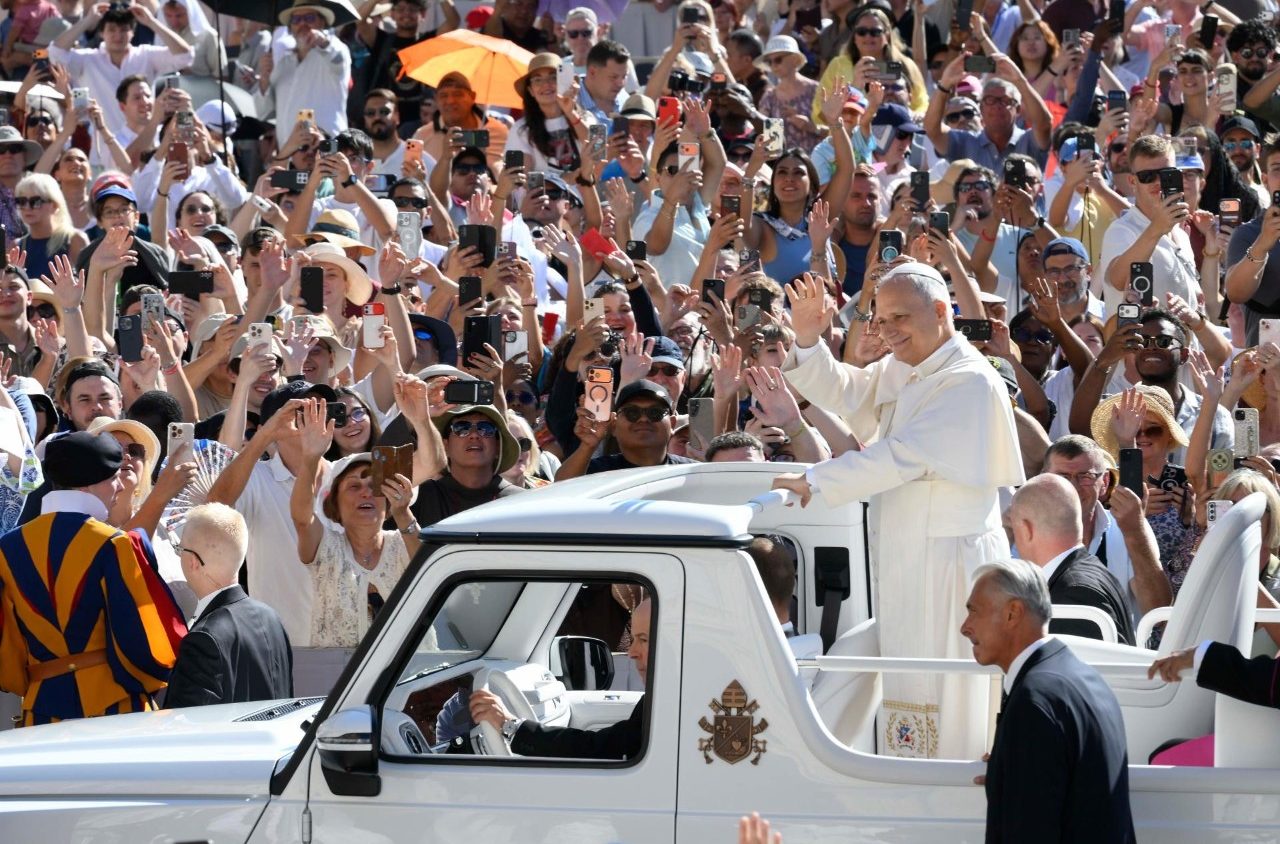
Pope at Audience: Church is called to serve humanity, unmask society's contradictions
In a time marked by tensions, conflicts and many changes, the Church is called to be at the service of humanity – especially those who are most vulnerable – by engaging with reality, including its contradictions, Pope Leo XIV said during the Wednesday General Audience on September 2.
The Church must “leave behind all passivity and indifference in the face of current events, history and people’s lives, especially in the face of the rapid and profound changes we are experiencing today,” the Pope highlighted to the crowd gathered in St. Peter’s Square.
“We cannot remain as unengaged spectators; rather, we must listen with our hearts, allow ourselves to be challenged, and become involved. With Christ and sustained by the power of His Spirit, believers are called to take on the burdens of their brothers and sisters, especially those who are crushed by injustice, discrimination, and violence.”
Pope Leo began a new phase in his catecheses on the Documents of the Second Vatican Council by reflecting on the 1965 Pastoral Constitution Gaudium et Spes (meaning “joy and hope”) on the Church in the modern world.
Christians must unmask contradictions
As the Church is called to get involved in humanity, it means that “Christian solidarity commits us to engaging with reality and also to unmasking the contradictions that characterize personal and social life in the contemporary world,” the Pope emphasized in his catechesis.
He cited various examples of this in our current societies such as technological and scientific progress that only benefits some people; or a clearer understanding of the laws of society but uncertainty regarding their direction; or a great abundance of wealth, resources and economic power which, however, “today as in the days of the Council, leaves ‘a huge proportion of the world’s citizens … still tormented by hunger and poverty’.”
Or also lastly, “a shared awareness that the future of the planet is at stake, coupled with an inability to renounce selfish consumption and the illusion that war is an effective means of building peace.”
“In a time marked by profound changes, giving rise to worrying imbalances,” the Pope underlined, “the Church is called to serve the human person, listening to and welcoming the deepest questions of their heart and the longings that dwell within them, pointing to Christ as ‘the key, the focal point and the goal of … all human history’.”
The Pope also cited his predecessor Pope St. John XXIII who, in his opening address of the Second Vatican Council in 1962, took issue with those who believed that their time period was worse than the previous ones.
Pope John XXIII emphasized that in that era, like at every moment in history, one must “see the mysterious plans of Divine Providence, which are brought to fulfilment in due course through the work of men, and often beyond their expectations, and which, with wisdom, arrange everything, even adverse human affairs, for the good of the Church.”
Pope Leo explained that the promulgation of Gaudium et spes recognized in this discernment an essential element of the nature of the Church, which is that as Jesus Christ “by becoming incarnate, chooses to share our life,” so too He calls the Church to become involved in this same way with humanity.
“Hence, the conciliar Constitution Gaudium et spes begins by declaring that the Church makes her own ‘the joys and the hopes, the griefs and the anxieties of the men of this age, especially those who are poor or in any way afflicted’,” the Pope insisted.
In this regard, he noted that the Constitution recalls the Church’s constant duty to scrutinize the signs of the times and interpret them in light of the Gospel and also her mission to bring forward the work of Christ, who bore witness to truth and served all.
Focusing on the poor and those most in need
The Pope noted that this is not “merely a moral imperative” and, as Pope Francis had said, “the option for the poor is primarily a theological category rather than a cultural, sociological, political or philosophical one.”
“We are called to find Christ in them, to lend our voice to their causes, but also to be their friends, to listen to them, to speak for them and to embrace the mysterious wisdom which God wishes to share with us through them,” Pope Leo said, citing his predecessor’s Apostolic Exhortation Evangelii Gaudium.
The Pope concluded by expressing his hope that “joy and hope – gaudium et spes – be the distinctive features of a Church who proclaims and bears witness to the Gospel, drawing close to the women and men of our time.”
Related Stories
 World
World
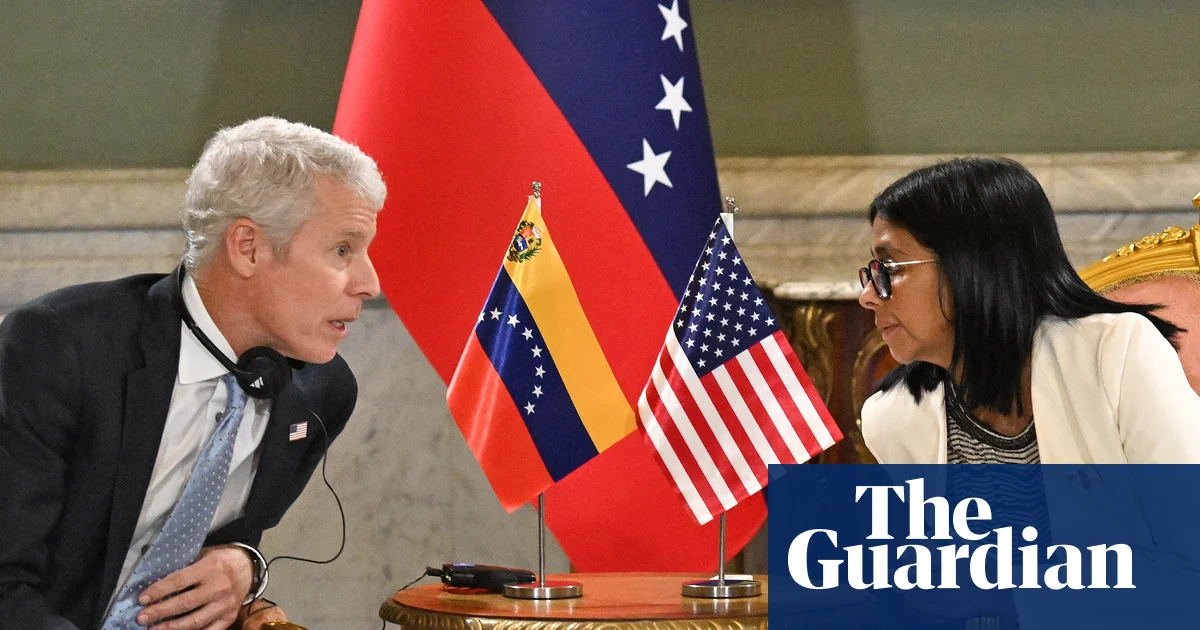
Trump ally defends Venezuela oil deal amid ‘gunpoint diplomacy’ criticism
49 minutes ago
 World
World
The US is gobbling up Venezuelan oil, but will it lower fuel prices?
1 hour ago
 World
World
'An incredible experience': Calgary teen makes history as Alberta's first world juvenile highland dance champion
2 hours ago
 World
World
'Black Day for Democracy': Indian Police Bash and Gas Youth
2 hours ago
 World
World
Ariana Grande completes tour and steps back from public life
3 hours ago
 World
World
What’s really behind Trump’s deference to Putin?
4 hours ago
 World
World
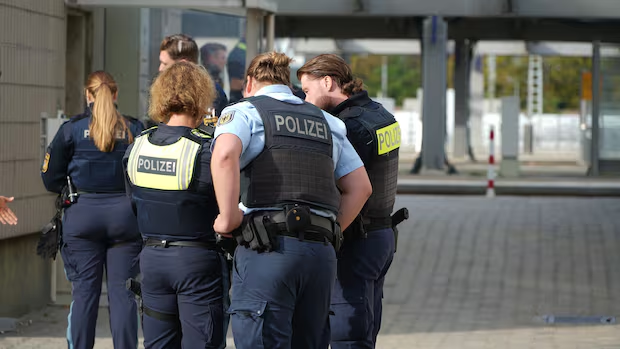
Explosion near southern Germany train station injures 2
5 hours ago
 World
World
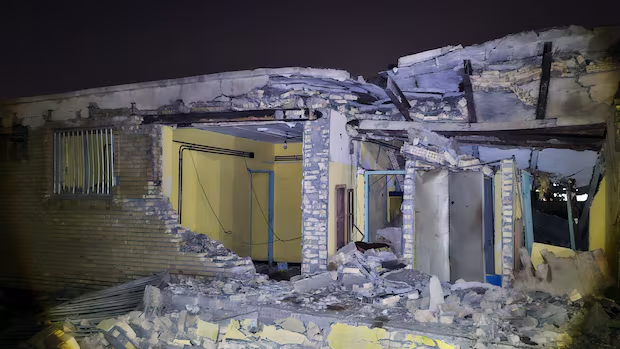
Tehran attacks U.S. bases across Gulf after reports of deadly strike on wedding
5 hours ago