
Opinion: The Canada we want and need
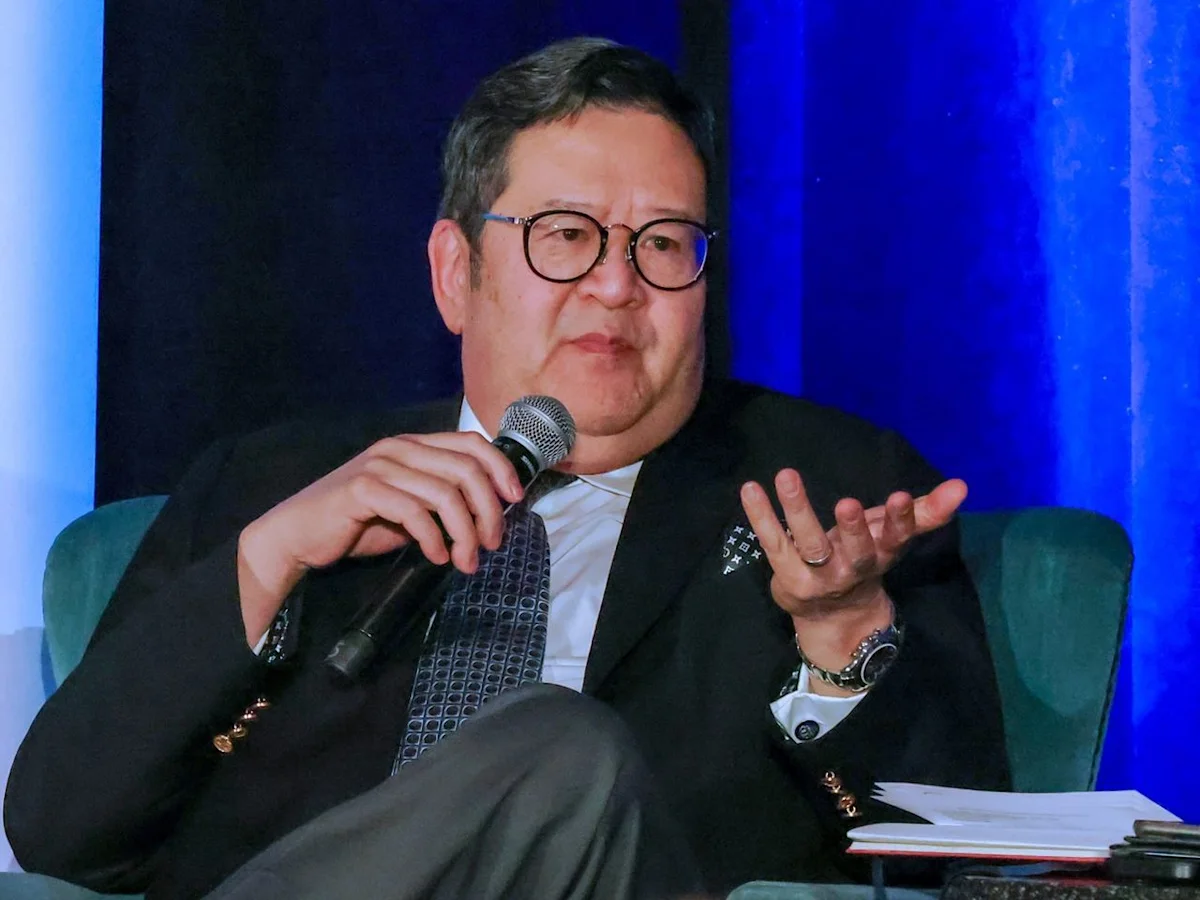
Several months ago, the Canada West Foundation set out to examine a difficult question: What would Alberta leaving Canada actually mean?
We assembled some of the country's leading experts in constitutional law, economics, Indigenous rights, trade, investment, business and public policy. We asked them to examine what separation would mean for pensions, debt, trade, investment and labour mobility, for treaties and Indigenous rights, among other issues.
Our Alberta in Confederation report sought to bring clarity to the questions Albertans are asking and be candid about those that cannot be answered in advance. Its purpose was to help Albertans draw their own conclusions before they cast their ballots on Oct. 19. It also left us with a larger question: What needs to change?
We would make a mistake if the only lesson Canada takes from the current debate is that separation would be extremely difficult. The status quo isn't working well either.
Much about our federation is worth preserving. After all, Canada is admired around the world. But there is also plenty that needs addressing, and quickly, for the benefit of all Canadians.
That does not mean Confederation has failed. It means we should stop treating Confederation as though it were a finished product.
Alberta did not arrive at this separation referendum overnight. Years of disputes over equalization, pipelines, energy, climate policy, barriers to internal trade, culture and the West's influence in national decision-making have fuelled frustrations that have accumulated over decades.
Part of the problem is that Ottawa sometimes forgets the culture of the West, shaped by entrepreneurial pioneer genes, a willingness to take risks and make sacrifices, deep Indigenous roots and a belief in building something new in a difficult and harsh land. Those roots are part of the West's identity.
When national policies are designed without understanding that history and culture, they can feel less like partnership and more like direction from a distant capital. That is especially true when Indigenous peoples and communities are treated as stakeholders to be consulted rather than as nations and partners.
Grievance is not the same thing as an answer. But dismissing those grievances because you disagree with one proposed remedy creates its own problems.
Getting these things wrong has consequences well beyond politics. Missed investments can mean jobs that never materialize. Lost jobs can mean families forced to move or young people seeking opportunity elsewhere. Policy failures become economic losses and, over time, social and cultural losses.
I have seen these questions from several vantage points: as an Alberta cabinet minister, as Alberta's representative in Washington and in Asia, as an industry association representative, and now at the Canada West Foundation. Governments grapple over programs, policies and jurisdictions. Businesses have to decide whether to invest. Families have to decide whether they can make the mortgage payment and pay the bills. Good public policy connects all three.
The Business Council of Alberta recently identified a "gap between stated principles and real-world outcomes" in Canada's regulatory system. It was talking about regulations, but the point applies more broadly. We have plenty of good principles in Canada. Our difficulty is living up to them.
That is why I believe it is time for a constitutional workplan for the next generation. I use "workplan" deliberately. Canadians do not need another constitutional spectacle. We need a practical examination of how our federation operates, where it is no longer operating as well as it should and what can realistically be improved. Egos will need to be parked. Overt partisanship sidelined. And inflexible ideologies shelved.
Start with the Constitution we already have. Legislative authority is divided between federal and provincial governments for a reason. Constitutional jurisdiction should mean something. It should not be treated as an inconvenience whenever it interferes with a preferred policy.
During Quebec's Quiet Revolution, the 1962 election gave Canada a phrase worth reconsidering: Maîtres chez nous — masters in our own house.
There is something familiar in that phrase for Albertans today. Alberta is asking for much the same thing: to be master in its own house in the areas the Constitution assigns to the province.
But chez nous should not belong only to Quebec, or to Alberta. It should apply to every province. Canada was not conceived as a federation in which provinces serve as regional offices of the federal government. They are governments with constitutionally protected responsibilities and the democratic legitimacy to exercise them.
That does not mean provinces and territories going their own way. It means co-operative federalism. Respect each other's jurisdiction and then do the hard work of working together where interests and responsibilities meet. National policy is not necessarily federal policy. National leadership does not always have to come from Ottawa.
We have made this argument before at the Canada West Foundation. Co-operative federalism cannot mean consultation followed by unilateral action. Collaboration can be difficult and take time. But unilateralism is hardly faster when the result is conflict, court challenges and years of uncertainty.
A stronger Canada does not require weaker provinces.
We should also be willing to ask whether provinces ought to have a greater formal role in appointments to the superior courts within their boundaries, and whether too much authority has migrated from cabinets, legislatures, parliamentary committees and professional public services into first ministers' offices. We should ask whether institutions inherited from another era are serving the Canada of the next 50 or 100 years.
Any serious discussion of Canada's future must include Indigenous peoples from the beginning. Treaties and Indigenous rights are not secondary matters to be sorted out after Ottawa and Alberta settle the "big" questions. Treaties predate Alberta itself.
There is also an opportunity to move beyond consultation toward partnership. Across Western Canada, Indigenous communities are already owners, investors, employers and partners in resource and infrastructure development. When Indigenous communities share in ownership, decision-making and the benefits of development, reconciliation and economic opportunity can coexist.
This is not only a matter of legal obligation. It is also a matter of culture and respect. Indigenous peoples are part of the West's history, present and future.
Canada must also become more comfortable with the fact that we are not all the same. Being Canadian has never required Quebecers to stop being Quebecers. Nor should Albertans have to become less Albertan. Other provinces have their own histories and concerns. Indigenous nations have identities that predate Confederation, and generations of newcomers have added their traditions and ambitions to the country we have become.
That diversity makes governing Canada harder. It also makes Canada what it is.
Alberta needs Canada, but Canada needs Alberta every bit as much.
At a time when trade relationships are being tested, alliances are under strain and countries are thinking more seriously about economic security, this would be a strange moment for Canada to make itself smaller.
But invoking Canadian unity is not an excuse to avoid confronting what isn't working. The choice cannot simply be between breaking Canada apart and defending everything exactly as it is. We should be more ambitious than that.
Our report began with a question about Alberta's future. The more enduring question may be what Alberta's debate means for Canada's future.
Confederation has evolved because Canada itself has evolved. It can do so again. The challenge is not to preserve the Canada we have in amber, nor to discard a country admired around the world.
Alberta can be strong without Canada being weak. So can Quebec, and every other province and territory. That is what a federation is supposed to make possible.
The motto of the 33 Canadian Brigade Group puts it rather well: Fortes soli — fortiores una. Strong alone. Stronger together.
That is the Canada we want and need.
Gary Mar is president and CEO of the Canada West Foundation.
Related Stories
 Canada
Students worried, devastated after Ontario pauses OSAP for private career colleges
39 minutes ago
 Canada
FIRST READING: Mark Carney's favourite catchphrase
39 minutes ago
 Canada
Trump may be gearing up to blame Canada for GOP midterm losses
39 minutes ago
 Canada
Canadian Anne Carson awarded Nobel Prize in Literature
1 hour ago
 Canada
Ontario man denied $22,000 refund after cruise itinerary changed at the last minute
1 hour ago
 Canada
Seventh man bailed in connection with RAF Fairford incident
1 hour ago
 Canada
Canadian poet and essayist wins Nobel Prize in Literature
1 hour ago
 Canada
Ability to fix errors in referendum ballot packages show system works: Alberta premier
2 hours ago