
OpenAI CFO Sarah Friar Built an AI-Native Department. Mid

OpenAI CFO Sarah Friar Built an AI-Native Department. Mid-Market CFOs Can Start Smaller.
Most mid-market CFOs are not going to build OpenAI’s finance stack. They do not have the same engineering resources, access to frontier models or appetite for rebuilding finance workflows from first principles.
They have an ERP, a planning system, Excel, a lean team and a month-end close that still depends on people knowing where the bodies are buried. But on Monday (Aug. 10), Open AI CFO Sarah Friar published a vision of an “AI-native finance function” that is built atop a “zero day close.”
The relevant idea for non-AI-native firms and finance teams is not the zero-day close itself. It is what that goal reveals about where finance automation is heading: away from periodic reporting and toward continuously reconciled, decision-ready information.
For a mid-market CFO, that means the more useful question is not necessarily, “Can artificial intelligence help us close the books faster?” It is, “Which decisions are currently being made with stale financial information?”
The Real AI KPI Is Decision Latency
New research from PYMNTS Intelligence’s “The Enterprise AI Benchmark Report” reveals that more than 7 in 10 executives (71%) at companies with $1 billion or more in annual revenue believe that organizational readiness is the primary limitation on AI performance. Meanwhile, just 11% think that AI technology itself is the main barrier.
“We see inconsistent and incomplete data structures, bad data, dirty data,” Michael Younkie, VP of Product Management at Billtrust, told PYMNTS. “We see challenges around legacy ERP systems with limited AR API capabilities.”
Friar argued that CFOs should determine which data AI can access, which actions it can take, when approval is required and when an exception must be escalated. Every output should tie back to a reliable source, and changes to approved forecast baselines should remain under finance control. CFOs of AI-native finance functions should measure whether useful work was completed, what it cost after human review and rework, whether the output was usable and whether the workflow produced a faster or better decision.
A place to begin may be one recurring finance process with an identifiable owner, measurable cycle time and clear output. Automate part of it. Track the exceptions. Measure the review burden. Then decide whether to expand.
See also: What IBM’s Quantum Breakthrough Means for the $100 Million CFO
OpenAI’s model is ambitious because its technology allows it to be. The mid-market lesson is much more practical: AI-native finance does not begin when the entire department becomes automated. It begins when finance stops using people to repeatedly reconstruct information a system should already know.
OpenAI’s examples of AI-native finance built atop zero day closes span forecasting, procurement, tax and investor relations. The common thread is not flashy automation. It is repetitive knowledge work with clear inputs, defined outputs and human review. That profile exists everywhere in mid-market finance.
Variance commentary, audit support, covenant reporting, board materials, contract review, cash forecasting and recurring management analysis are all candidates because they consume skilled labor without necessarily requiring skilled labor at every step. The more interesting dividing line is therefore not “strategic” versus “administrative.” It is whether a workflow repeatedly forces finance employees to reconstruct information that already exists somewhere in the company.
If the answer is yes, AI may have an economic case.
For all PYMNTS B2B coverage, subscribe to the daily B2B Newsletter.
Related Stories
 AI News
AI stocks are taking a beating amid inflation, interest rate worries
10 minutes ago
 AI News
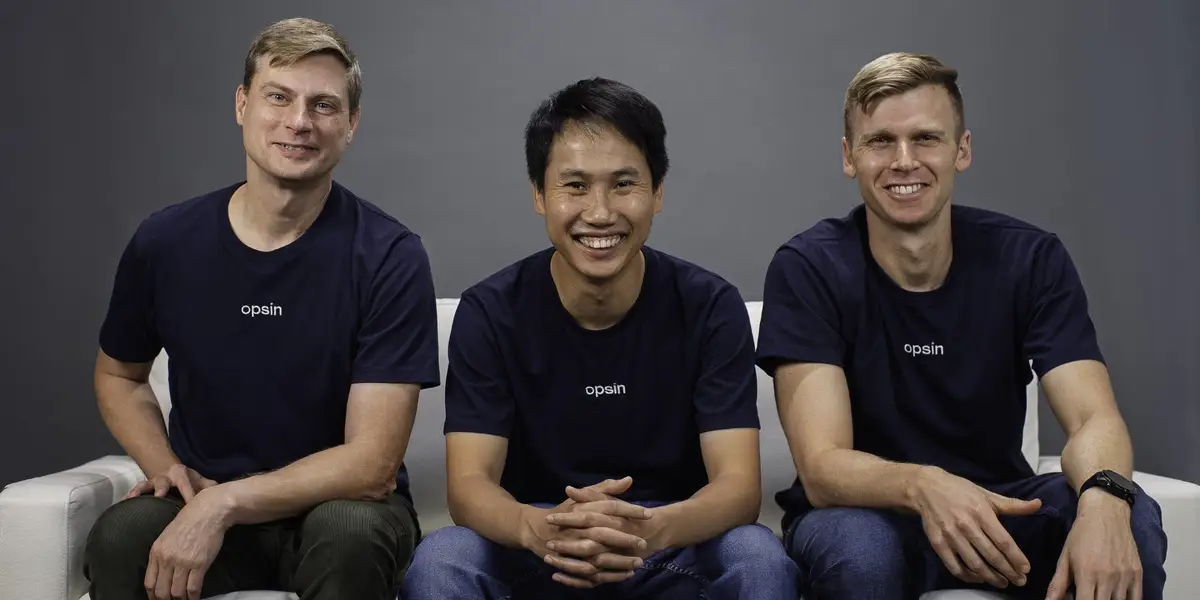
This startup raised $21 million to clean up the AI agent mess hitting companies
13 minutes ago
 AI News
Swiss churches across five traditions issue joint ethical guidelines on artificial intelligence
43 minutes ago
 AI News
Better Artificial Intelligence Stock for 2026: Broadcom vs. NVIDIA
43 minutes ago
 AI News
German AI startup Elevatry secures €3 million to automate procurement workflows
1 hour ago
 AI News
DXC Stock Gets A LangChain AI Partnership Boost
1 hour ago
 AI News
The Artificial Intelligence (AI) Smart Glasses Market is projected to grow at a CAGR of 11.7% by 2030.
1 hour ago
 AI News
The Artificial Intelligence (AI) Vehicle Inspection System Market is Expected to Experience Steady Growth at a 17.1%
1 hour ago