
NVIDIA Expands NVIDIA Agent Toolkit With NVIDIA PhysicsNeMo and CUDA
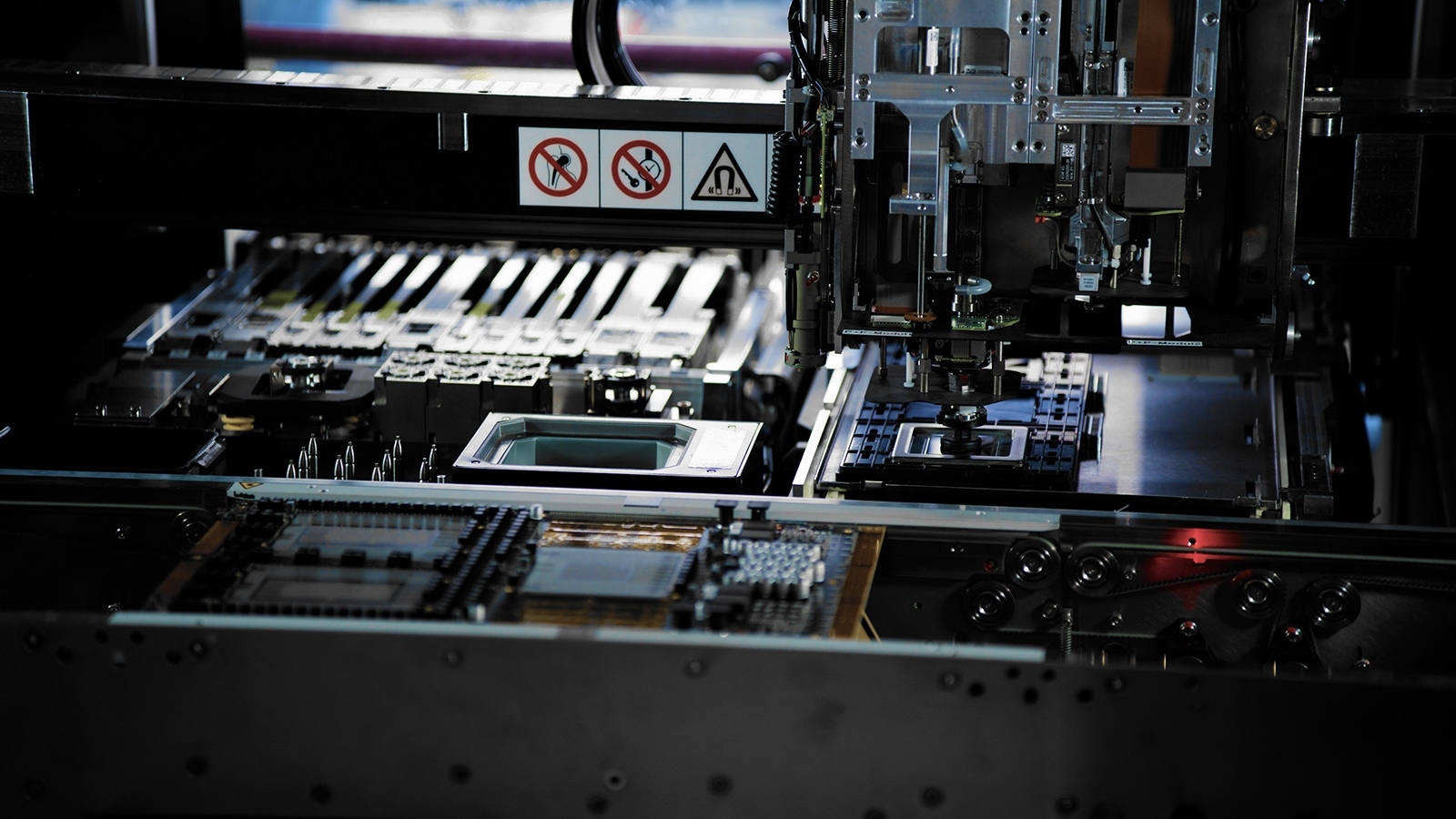
NVIDIA today announced an expansion of NVIDIA Agent Toolkit for engineering, now adding NVIDIA PhysicsNeMo™ and CUDA-X™ libraries as agent-ready tools and skills built to transform how the world designs and develops products.
Building the next generation of chips and systems requires teams to connect physics, simulation and performance analysis across increasingly complex design cycles. A new class of autonomous AI engineers is emerging to help take on that complexity — using specialized tools, running simulations and generating high-fidelity data to help scale chip design, verification, packaging and systems.
Now included in NVIDIA Agent Toolkit, NVIDIA has re-architected PhysicsNeMo into a set of agent-friendly libraries and added new and updated CUDA-X libraries to support complex engineering work. PhysicsNeMo provides AI physics skills for training and deploying models, while CUDA-X libraries bring accelerated solvers and quantum chemistry capabilities into agentic engineering workflows.
“Engineering has reached an inflection point. AI can now work with tools of physics, simulation and design,” said Timothy Costa, vice president and general manager of computational engineering at NVIDIA. “With NVIDIA Agent Toolkit, developers can build agentic engineers that reason using physics, run complex simulations and generate high-fidelity data to become a new engine for innovation in chip and system design.”
NVIDIA Agent Toolkit Adds AI Physics and Accelerated Computing Skills for Engineering Agents NVIDIA Agent Toolkit helps developers build specialized engineering AI assistants connected to domain-specific tools, models and data. With the addition of NVIDIA PhysicsNeMo and CUDA-X libraries, these agents can now use AI physics skills, accelerated solvers and quantum chemistry capabilities for chip, system and industrial engineering.
NVIDIA Nemotron 3 Ultra Open Model Advances Agentic Coding for Chip Design Chip design depends on specialized register-transfer level (RTL) coding, which demands high accuracy, deep domain expertise and flexibility over deployment.
With ACE-RTL — an agent for designing hardware from NVIDIA Research — NVIDIA Nemotron™ 3 Ultra leads among open models in agentic RTL coding on the comprehensive verilog design problems benchmark across RTL coding tasks.
This represents how Nemotron 3 Ultra offers industry-leading accuracy and efficiency and can be post-trained on proprietary data — deployed locally or on premises — giving enterprises greater control, customization and data privacy as they build AI agents for chip design.
Developers can get started with Nemotron 3 Ultra using Cadence’s harness; Synopsys’ fully autonomous, long-running agents for design verification and analog and mixed-signal workflows; Siemens’ Questa One smart verification agentic toolkit; as well as on Hugging Face.
Software Leaders Build Autonomous AI Engineers With NVIDIA Industrial engineering leaders are already using the new and expanded NVIDIA Agent Toolkit components to develop autonomous AI engineers.
Cadence is using NVIDIA Nemotron, accelerated computing and CUDA-X libraries with the recently launched Cadence AuraStack AI Super Agent and the Cadence Millennium M2000 platform to autonomously drive advanced packaging and printed circuit board (PCB) design from exploration through signoff, delivering up to 20x faster multiphysics performance. This joins Cadence’s complete portfolio of silicon design super agents which collectively cover the chip design workflow end to end, from architecture through manufacturing signoff.
In addition, the collaboration extends from agentic design to the underlying compute as Cadence’s portfolio of EDA and system design automation tools, including Cadence Jasper, a formal verification platform, is being optimized for the NVIDIA Vera CPU to help engineering teams validate advanced chip designs faster.
Synopsys is using the NVIDIA Agent Toolkit, NVIDIA NIM™ microservices, Nemotron open models, the NVIDIA NeMo™ Gym library and NVIDIA NemoClaw™ blueprints with Synopsys AgentEngineer to build secure, accelerated agentic workflows across chip and system design. Leveraging Ansys Icepak, Synopsys’ agentic workflow autonomously executes simulation setup, and pre- and post-processing for complex GPU cooling design optimization. Synopsys is developing NVIDIA cuISS use cases to accelerate simulation workloads.
The collaboration extends from agentic workflows to the underlying compute platform as Synopsys VCS, a high-performance functional verification solution used to simulate and validate complex chip designs before fabrication, is being optimized for the NVIDIA Vera CPU to help improve verification throughput.
Siemens is using NVIDIA NeMo Gym, Nemotron open models and CUDA-X libraries with the Siemens Fuse EDA AI Agent to orchestrate multi-tool and multi-agent workflows across semiconductor, 3D-IC, PCB and system design, from conception through signoff. In Siemens Solido Characterization Suite, these agentic AI workflows are delivering more than 10x faster library characterization while reducing token costs by more than 10x.
Samsung is using NVIDIA cuLitho and CUDA-X libraries to achieve up to 20x greater performance for computational lithography and applying NVIDIA PhysicsNeMo to perform chip-scale thermal-stress analysis with numerical solver-level accuracy across domains containing up to 10 billion cells.
ChipAgents is using NVIDIA Agent Toolkit to build domain-specific AI agents for chip design and verification. The team is fine-tuning NVIDIA Nemotron models for complex end-to-end semiconductor design and verification workflows including debug, formal verification, coverage and more.
Silvaco is using NVIDIA accelerated computing to scale high-accuracy 3D optical simulation in the Silvaco Victory Device. Running on 32 NVIDIA GPUs interconnected by NVIDIA NVLink™ technology, it completed a 3.2-billion-mesh-node photonic edge coupler simulation in under four hours, a workload beyond the practical limits of CPU-based simulation.
Keysight is harnessing NVIDIA cuDSS to accelerate electromagnetic simulations by up to 10x, while Samsung, Synopsys and TSMC are integrating NVIDIA cuEST into its GPU-accelerated pipeline to achieve up to a 50x speedup for key quantum-chemistry workloads.
Learn more by joining NVIDIA at DAC.
Related Stories
 AI News
Fact Check Team: Trump and Xi expected to discuss trade, Iran, Taiwan and AI
19 minutes ago
 AI News
‘A tool to help’: Sheffield City leaders approve usage of artificial intelligence to help with city projects
19 minutes ago
 AI News
Bernie Sanders and Greg Casar propose AI ‘superintelligence’ ban with a 20
19 minutes ago
 AI News
Foreign Secretary Address to the UNSC on Artificial Intelligence
1 hour ago
 AI News
Thélyson Orélien: French uproar over author accused of using AI
1 hour ago
 AI News
Trump greets Xi Jinping at plane as Chinese leader arrives for state visit
2 hours ago
 AI News
UBS turns bullish on five AI data center stocks
2 hours ago
 AI News
MLB implements artificial intelligence in cameras
2 hours ago