
Norfolk uses artificial intelligence to handle thousands of non
NORFOLK, Va. — When someone calls Norfolk's non-emergency line, there's now a good chance the voice answering on the other end isn't human.
It's artificial intelligence, and city officials say the technology is already handling more than 40% of non-emergency calls, helping reduce the workload for dispatchers who answer everything from routine questions about city services to life-threatening emergencies.
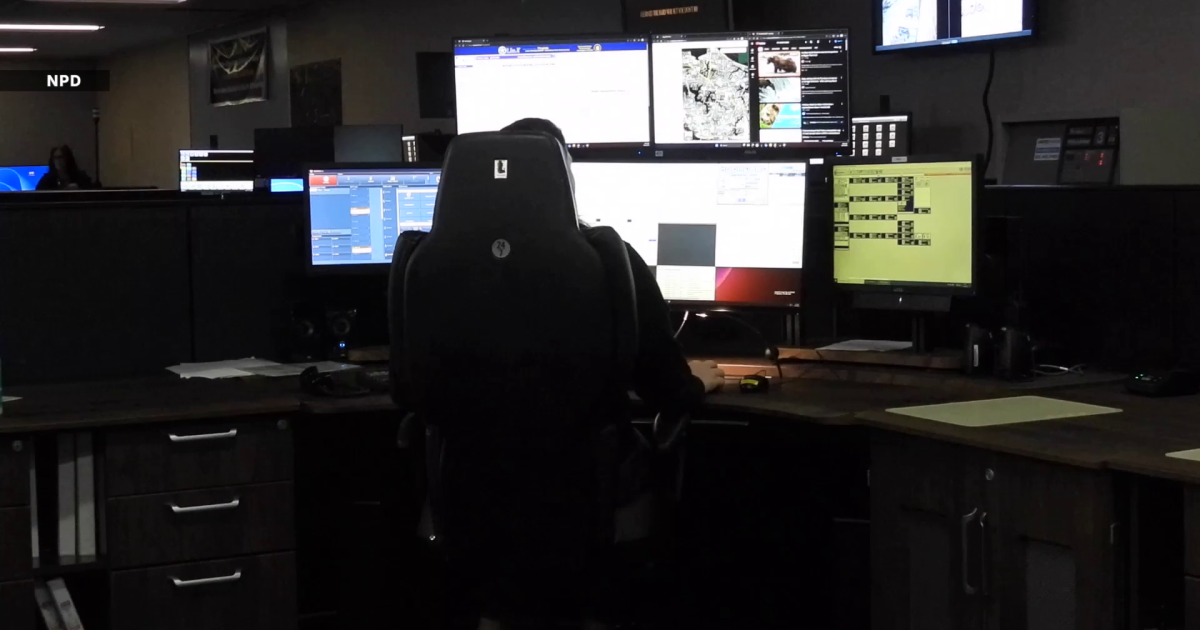
Inside Norfolk's emergency communications center, the technology is becoming another tool for employees who work around the clock to answer calls for help.
Steven Summerlin, Norfolk's E911 manager, said the city introduced the system to get residents information faster while allowing emergency call takers to focus on situations where every second matters.
"We're really excited to have deployed artificial intelligence to assist our call takers to answer all of our non-emergency lines," Summerlin said.
The system answers calls to Norfolk's non-emergency number, 757-441-5610, which operates 24 hours a day.
According to Summerlin, the city's emergency communications center has handled more than 100,000 non-emergency calls so far this year, in addition to more than 130,000 emergency 911 calls.
Those numbers represent a significant workload for employees who must prioritize emergencies while also helping residents with questions that may have little to do with public safety.
"One of the big reasons behind it was we have so many calls that can be answered and information can be provided that does not require public safety assistance," Summerlin said.
Previously, someone calling the non-emergency number might have waited several minutes to speak with a dispatcher, only to be directed to another city department.
Summerlin said the new technology is designed to eliminate some of those unnecessary delays.
"It made no sense for us for someone to sit on wait for five minutes to only be told, well, you could have called this number," he said.
The system can answer questions, provide information about city services and transfer callers to the appropriate department without requiring an emergency dispatcher to handle the entire interaction.
And the results are already noticeable.
"Today we are averaging over 40% of calls are actually being handled by the artificial intelligence," Summerlin said.
If the system continues performing at its current level, Summerlin estimates it could handle approximately 50,000 to 60,000 calls, freeing dispatchers to concentrate on more urgent situations.
He believes that could eventually contribute to faster emergency response times, although he did not provide data demonstrating that response times have already improved.
A conversation instead of a phone menu
Unlike traditional automated phone systems that require callers to press numbers to navigate different options, Norfolk's AI system is designed to respond to normal conversation.
When someone calls, they're greeted by a female-sounding artificial intelligence voice.
"They just have a normal conversation with it," Summerlin explained.
He compared the experience to speaking with a virtual assistant commonly found in people's homes.
Rather than navigating a series of prompts, callers can explain what they need, and the system attempts to provide an answer or connect them with the appropriate service.
Summerlin said Norfolk deliberately waited before introducing the technology because officials wanted to learn from other emergency communications centers already experimenting with AI.
Some jurisdictions had adopted automated systems that relied on traditional phone menus.
Norfolk wanted something different.
"It needs to be the artificial intelligence is set up for Norfolk to you just have a conversation with it and it will directly give you information as soon as it locates it," Summerlin said.
To prepare the system, officials gathered information from city websites and documented procedures used by city employees.
That information became the foundation for the AI's responses.
Unlike some publicly available AI programs, Norfolk's system does not search the open internet for answers.
Instead, Summerlin said it operates within a controlled collection of city-approved information.
"We basically took all the information off the city's web pages. We took institutional knowledge we have of how processes are handled in this city, and we put them in documents, and that's what it's looking at," he said.
The city can also update that information when procedures change.
Summerlin said officials have already made adjustments within minutes after identifying information that needed clarification.
The system can also learn from interactions with callers. Norfolk receives daily reports from Amazon, the technology provider, showing how many calls the system handles and how often it successfully resolves a caller's question without transferring them.
Officials can review call transcripts and recordings to identify questions the AI struggled to answer.
"If you call today and you stump her, we want to find out what you stumped her with, so we can actually add some information maybe tomorrow," Summerlin said.
Taking pressure off dispatchers
For Norfolk's emergency dispatchers, the change is about more than convenience.
Summerlin said employees work 12-and-a-half-hour shifts and can handle anywhere from 85 to more than 100 calls in a single day.
Those calls can involve shootings, cardiac arrests, fires and people who need instructions for CPR.
But in between those emergencies, the same employees may also answer complaints about missed garbage collections, overgrown lawns or missing pets.
"Because if you're going from cardiac arrest to my garbage can wasn't picked up today. To my neighbor's grass wasn't cut. To my dog is missing, and then we're having to go back into you know my house is on fire. What do I need to do?" Summerlin said.
He said constantly switching between life-threatening emergencies and routine service questions can make an already demanding job even more difficult.
The hope is that AI can handle more of those everyday questions, allowing dispatchers to remain mentally prepared for the next emergency.
"So, to not have to go to all these non-emergency events gives them the ability to rest their minds a little bit to be better prepared for that next call where they need to be sharp," Summerlin said.
The technology also arrives as Norfolk continues rebuilding staffing levels in its emergency communications center.
Summerlin said the center had a vacancy rate of approximately 50% about two years ago.
Today, that rate is approaching single digits.
He emphasized that the AI system is not responsible for eliminating those vacancies and is not intended to replace employees.
Instead, it allows the city to make better use of the dispatchers it already has.
"So it's going to help with staffing, just because it allows us to refocus on the people we have. Make them better," Summerlin said.
He also pushed back against concerns that increased automation could eventually mean fewer jobs.
"This is not to replace humans," Summerlin said. "The city is not looking at oh, if this continues, we're not going to have to have as many call takers."
AI is also assisting with emergency 911 calls
Although the new voice assistant is used for non-emergency calls, Norfolk is also using artificial intelligence behind the scenes during actual 911 emergencies.
The difference is that a human dispatcher still answers those emergency calls.
Summerlin said AI works in the background, transcribing conversations between callers and dispatchers in real time.
That can be especially useful when callers are whispering, experiencing pain or having difficulty speaking clearly.
The technology also generates summaries of conversations and identifies certain words that may signal a serious emergency.
Among the terms it can recognize are "gunshot," "not breathing" and "unconscious."
When those words are detected, the system can alert other personnel logged into the communications system.
That allows supervisors and other employees to monitor developing emergencies and review the information being provided.
"We have real-time awareness of some of these serious calls coming into our center," Summerlin said.
He said supervisors can access those calls as they happen and review recordings when necessary.
Still, Summerlin stressed that the technology is designed to support the person answering the phone, not replace them.
"That's a perfect example of how artificial intelligence can be a tool to make us better at what we do, but it's not replacing the actual human interaction with it," he said.
What happens if someone needs a real person?
Residents who call Norfolk's non-emergency line can still request to speak directly with a human call taker.
Summerlin said the AI system can transfer those callers, and it can also connect people with other city departments.
He encourages residents to first explain what they need to the AI assistant because the system may be able to answer their questions without requiring them to wait for an employee.
In some situations, callers who immediately request a human may still have to wait for an available dispatcher, only to receive information the AI could have provided.
The system currently communicates in English.
Summerlin said officials considered offering additional languages but decided to introduce the technology in stages.
He explained that Norfolk did not want residents to have a lengthy conversation with AI in another language, only to be transferred to an employee who could not continue that conversation without an interpreter.
Callers who need language assistance can still speak with a human employee using the city's interpretation service.
How much does the technology cost?
Summerlin said Norfolk's AI system is provided through Amazon and is billed based on usage, rather than through a fixed monthly subscription.
The city expects the cost to be less than $2,000 per month, although the actual amount will depend on how many calls the system processes.
The idea for the technology came after Norfolk's E911 administrator, Diane McDermott, met a 911 director from Charleston, South Carolina, at a conference in Spain.
Charleston had already introduced a similar system.
Summerlin said Norfolk officials studied that experience before moving forward, taking time to ensure the technology would meet the city's needs.
He also sees opportunities for the system to provide information during severe weather.
For example, the AI could answer questions about hurricane preparations, emergency shelters and which shelters allow pets.
That could become particularly useful during major storms, when call volumes increase and residents need information quickly.
What could AI mean for the future of emergency response?
Summerlin believes Norfolk is only beginning to explore what artificial intelligence could do for public safety.
Over the next five years, he envisions technology that could do more than answer questions or direct callers to the correct department.
Eventually, AI could help collect information needed for police reports or begin certain processes before a caller speaks with an employee.
Someone reporting property stolen from a vehicle, for example, might be able to provide the initial information through an automated system and receive a follow-up call from an employee to complete the report.
Summerlin also believes the technology could help eliminate steps that currently slow down how calls are processed.
"You might be able to call and be able to have all your information entered, and we are actually getting someone dispatched to you much more quickly because we may take out some of the components of that interaction," he said.
Those capabilities remain possibilities for the future, not services Norfolk is currently offering through the new system.
And even as the technology advances, Summerlin said there are limits to how much responsibility it should take on.
"I don't see any situation where AI is going to be able to take all the calls because in public safety, it's a very serious situation," he said.
For him, the goal is to use technology to improve how the city serves residents without losing the human judgment needed during an emergency.
"Considering if someone is in danger, we need to have updated, real-time, pertinent information to relay to our responders, and the only way you can do that is through to direct human interaction," Summerlin said.
Click here to see how we use AI at WTKR News 3.
Related Stories
 AI News
Epstein gave $100K to UNM for artificial intelligence research in 2001
4 hours ago
 AI News
AI helps to track lobsters when 'no two shells are the same'
6 hours ago
 AI News
Nurses say technology is making their jobs and patient care worse
6 hours ago
 AI News
AI Agents Accessed Indian Organizations Without Authorization, CERT
7 hours ago
 AI News
Artificial Intelligence applied to health information and knowledge: developments and perspectives
7 hours ago
 AI News
Our Artificial Intelligence panel looks at the impact of the technology on the Alberta referendum
7 hours ago
 AI News
Morocco joins countries giving artificial intelligence a Ministerial portfolio
8 hours ago
 AI News
Building trust in AI agents: A production
9 hours ago