
Musk’s Latest Prediction: AI to Surpass Humans in Five Years, Enter No
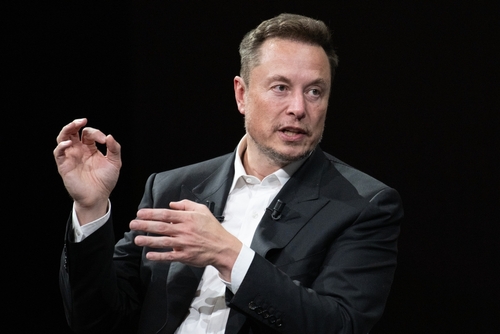
When discussing the development speed of artificial intelligence, Musk provided a clear timeline.
He projects that in about five years, overall AI capabilities will surpass human intelligence, and in around ten years, humans will likely fail to maintain absolute dominance over AI systems. However, he emphasized that this does not imply a movie-style robot takeover, but rather that AI will possess learning, analytical, and decision-making capabilities far exceeding those of humans in almost all cognitive domains.
In Musk's view, once this intelligence is integrated with robotics, a vast amount of repetitive cognitive and physical labor will be performed by machines, leading to profound transformations in manufacturing, logistics, healthcare, and even domestic services. By then, the purpose of human work will shift toward interest and creativity, rather than earning a living.
He further depicted an economic model of near-infinite supply. As robots continuously produce goods and services, society's overall productive capacity will far exceed human consumption demands, leading to an abundance of goods and a significant decline in traditional scarcity.
Based on this assessment, Musk even believes that by the mid-2030s, the importance of money could gradually diminish, as the reliance on wealth accumulation will decline when the vast majority of goods can be produced at an extremely low cost.
When pressed by the editor-in-chief of The Economist on how the economic system would be sustained if people no longer relied on work, Musk stated that governments in the future could completely distribute income to residents through fiscal transfers, while the productivity gains brought by AI might even drive down overall prices, leaving society to face deflationary rather than inflationary pressures.
Related Stories
 AI News
Bill Gross bets AI can help mass
1 day ago
 AI News
Nigeria records 93% rise in AI micro
1 day ago
 AI News
The Italian gelato maker using AI to invent new flavours
1 day ago
 AI News
Closing the Gap Between Agentic CX Pilots and Production
1 day ago
 AI News
New Brunswick data centre debate highlights cross
1 day ago
 AI News
How to Structure an AI Agent Referral Fee Agreement Between Startups
1 day ago
 AI News
No, AI didn’t delete a Swedish reality TV series
1 day ago
 AI News
There is no AI in Armageddon. Artificial intelligence is a tool, not an apocalypse
1 day ago