
MSB Registration in the US and Canada: What Crypto and Fintech Startups Need to Launch Legally

A payment or crypto startup completes MSB registration in the US, receives a registration number and assumes that it can begin serving customers across the United States. That assumption creates a serious licensing gap.
FinCEN registration places the business within the federal Bank Secrecy Act framework. It does not constitute regulatory approval, certify the company’s legitimacy or replace state authorization. A business that transmits money or monetary value must also determine whether it requires a money transmitter license in every state where it operates.
Montana does not regulate money transmitters at the state level. Most other states maintain licensing regimes, although the treatment of cryptocurrency and specific payment models differs by jurisdiction. Operating without a required state license can constitute a federal offense under 18 U.S.C. § 1960, in addition to violating state law.
FinCEN defines an MSB under 31 CFR 1010.100(ff). The principal categories include dealers in foreign exchange, check cashers, issuers and sellers of money orders or traveler's checks, providers of prepaid access and money transmitters.
A business qualifies as a money transmitter when it accepts currency, funds or other value that substitutes for currency from one person and transmits it to another person or location. FinCEN applies this definition to administrators and exchangers of convertible virtual currency when their activities meet these criteria.
Unlike several other MSB categories, money transmission has no general activity threshold. A startup does not avoid registration because it has limited revenue, few customers or low transaction volume.
An MSB must generally file its initial FinCEN registration within 180 days after it is established and renew it every two years. Registration is only one part of the federal framework. The business must also maintain a risk-based anti-money laundering program, designate a responsible compliance officer, retain required records and submit applicable regulatory reports.
The United States combines federal AML registration with state-level licensing.
FinCEN registration addresses obligations under the Bank Secrecy Act. State money transmitter licenses authorize activities covered by each state’s money transmission law. One state license does not authorize operations in another state, and there is no single license covering the entire US market.
The licensing analysis must consider where customers are located, whether the company accepts or controls customer funds, how transactions are settled and whether the service involves fiat currency, cryptocurrency or both. Some states expressly regulate virtual currency activity, while others apply their money transmission laws only to particular crypto business models.
New York operates a separate virtual currency regime. A company conducting regulated virtual currency business activity involving New York or New York residents requires a BitLicense or another qualifying authorization from the New York State Department of Financial Services. A separate New York money transmitter license can also be required when the business transmits fiat currency.
Applications commonly require financial statements, background information on owners and management, compliance policies, transaction-flow descriptions and a detailed business plan. State requirements can also include minimum net worth, permissible investments and surety bonds linked to transaction volume or outstanding payment obligations. A nationwide licensing program is therefore a multi-state project rather than a single filing.
Canada separates AML registration from retail payment supervision.
A business considering MSB registration in Canada must assess whether it qualifies as a Canadian MSB or foreign MSB under the Proceeds of Crime (Money Laundering) and Terrorist Financing Act. An eligible business must register with FINTRAC before beginning covered activities in Canada.
FINTRAC does not charge an application fee or impose a general federal minimum-capital requirement for MSB registration. Registration remains subject to regulatory review and does not represent an endorsement of the company. Registered MSBs must maintain a compliance program, verify identity in prescribed circumstances, retain records, report specified transactions and renew their registration every two years.
The Retail Payment Activities Act creates a separate regime administered by the Bank of Canada. A payment service provider must register when it performs one or more regulated payment functions as a service or business activity and falls within the Act’s geographic scope.
These functions include maintaining an account for an end user, holding funds on behalf of an end user, initiating or authorizing an electronic funds transfer, transmitting payment instructions, and providing clearing or settlement services. Holding customer funds is therefore an important trigger, but it is not the only activity covered by the PSP regime.
A company can fall within both frameworks. FINTRAC registration addresses AML and counter-terrorist financing obligations, while Bank of Canada registration addresses operational risk and the safeguarding of end-user funds. One registration does not replace the other.
Provincial requirements can also apply. For example, an MSB operating in Quebec must assess its obligations under the province’s money-services-business legislation.
Neither FinCEN nor FINTRAC charges a regulatory filing fee for standard MSB registration. Bank of Canada PSP registration is different: it carries a non-refundable CAD 2,500 fee, and the Bank does not begin its review until the fee is paid. The principal costs arise from building and maintaining the required compliance framework.
Before launch, a regulated business needs an AML program based on its products, customers, delivery channels and geographic exposure. It also needs customer identification procedures, sanctions screening, transaction monitoring, regulatory reporting processes, recordkeeping systems, staff training and independent testing.
US state licensing adds application fees, legal and compliance work, surety bonds and capital or net-worth requirements. The amounts differ by state and can increase with transaction volume or outstanding liabilities. Banking and payment partners can impose further onboarding conditions beyond the statutory requirements.
The regulatory structure should follow the actual transaction flow.
Before selecting a jurisdiction or submitting an application, a startup should identify:
These facts determine whether the company needs FinCEN registration, state money transmitter licenses, FINTRAC registration, Bank of Canada PSP registration or a combination of authorizations.
Federal MSB registration is therefore a starting point. A legal launch requires the business to match every part of its payment flow with the federal, state or provincial rules that apply to it.
Related Stories
 Finance
Dont do politics over dead bodies: Mann to Rahul on Punjab villager suicide
2 hours ago
 Finance
Vallourec, Aramco Expand Tubulars Partnership
2 hours ago
 Finance
Anti
4 hours ago
 Finance
Extremely rare Woolly Dog pelt back in B.C. after more than 160 years
7 hours ago
 Finance
Congressman Chris Pappas wins New Hampshire Democratic Senate primary
8 hours ago
 Finance
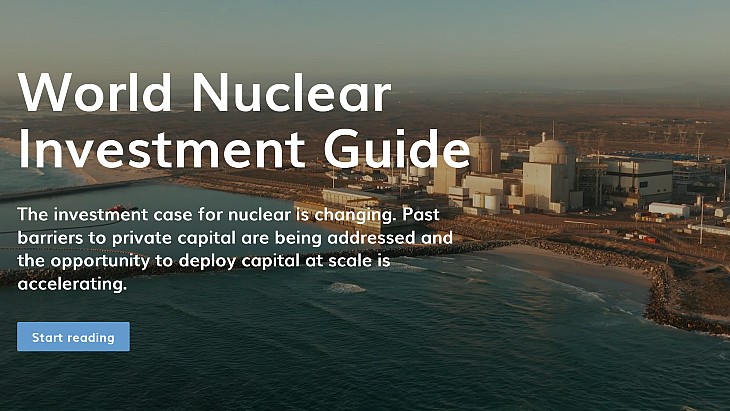
Guide aims to 'unlock mainstream finance' for nuclear
13 hours ago
 Finance
AFRICA FINANCE IN BRIEF: Africa’s markets face fresh growth, debt, investment pressures
21 hours ago
 Finance
Elia Secures $1.1B EIB Loan for Princess Elisabeth Energy Island
22 hours ago