
Michael Taube: Carney underplays U.S. cancellation of 86
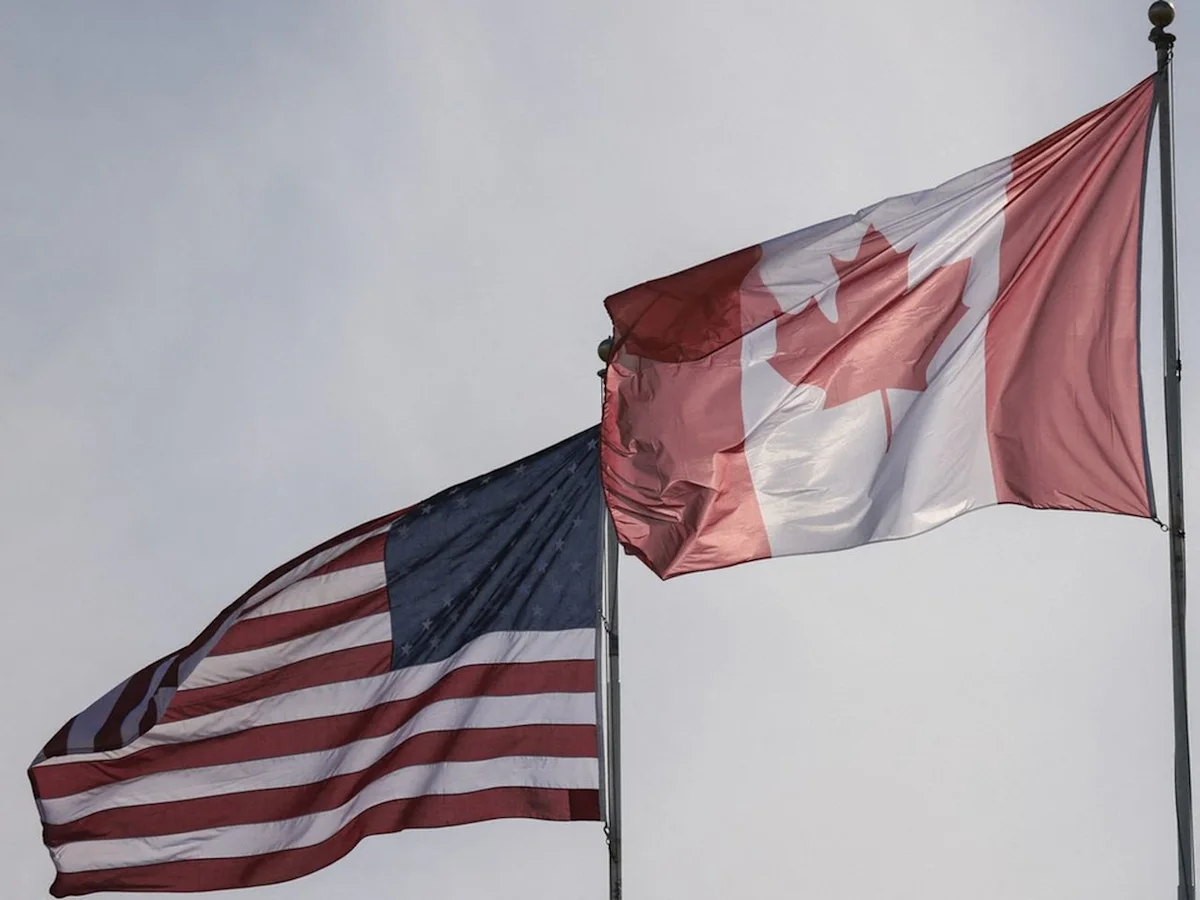
Canada-U.S. relations have reached the lowest point in our collective lifetime. Frustrations with U.S. President Donald Trump and tariffs largely changed the course of last year's federal election. There's been a staggering rise in Canadian nationalism and anti-American sentiments in the Great White North. Unfounded fears about annexation ran wild for a spell. Cross-border business and tourism, retail and supply chain issues have been affected, too.
The latest break in the relationship between our two countries is the one that I and many others feared would eventually materialize: safety and security in North America.
This relates to the recent decision by the U.S. government, through the Pentagon, to pause its participation in the Permanent Joint Board of Defence (PJBD). Under Secretary of War for Policy Elbridge Colby posted on social media that this decision was made because "Canada has failed to make credible progress on its defense commitments." The U.S. Department of War, according to Colby, will now "reassess how this forum benefits shared North American defense…We can no longer avoid the gaps between rhetoric and reality. Real powers must sustain our rhetoric with shared defense and security responsibilities."
That's rather humiliating, when you think about it.
What was Prime Minister Mark Carney's response? Not as serious as it should have been. The PJBD "has a long heritage but I wouldn't overplay the importance of this," he bizarrely said during an unrelated May 19 event in Quebec. "We have many aspects of very close defence co-operation with the United States…There's lots of co-operation we will continue to do so."
That's one of the most ludicrous responses I've ever heard from a Canadian prime minister. Carney doesn't want to "overplay the importance" of the pausing of a senior advisory body dedicated to the safety and security of our continent? Well, he should.
The PJBD was established by Canada and the U.S. in 1940 under the auspices of the Ogdensburg Agreement. As the Brian Mulroney Institute for Government noted, it "helped provide a framework for continental defence cooperation between Canada and the United States during the Second World War." When the war ended in 1945, the PJBD evolved into a "senior advisory body on continental security for Canada and the United States and forum for Canadian and American diplomatic and military leaders to handle politically sensitive matters."
The PJBD has included "both Canadian and American military and civilian members," including former New York City mayor Fiorello H. La Guardia, who served as chairman of the United States section. It's been involved in the North American Aerospace Defense Command (NORAD), Distant Early Warning System, Airborne Warning & Control System and construction of the Alaska Highway and St. Lawrence Seaway. It's worth pointing out that "U.S. military representatives were placed under the Joint Chiefs of Staff" by December 1947.
Pausing the 86-year-old PJBD isn't the end of defence co-operation with the United States. Yet it's a sign that our longtime friend, ally, neighbour and trading partner is beginning to have serious doubts about the Great White North that are unrelated to trade and tariffs. While it's easy to blame Trump for causing the current rift in Canada-U.S. relations, Carney and his mediocre, ineffective predecessor, Justin Trudeau, both played significant roles in contributing to this mess. It takes two to tango, and Canada seems to be stuck in a permanent position of foxtrot.
This is a significant break in the Canada-U.S. relationship when it comes to safety and security – and it's on Carney's watch. He should overplay the U.S. government's announcement, even if it's only behind closed doors, and work hard to adjust things as quickly as possible.
As it happens, there's a way he could do it.
Carney hasn't wavered in his support of the "Fortress North America" concept in spite of significant Canadian distrust about Trump and the U.S. "Canada Strong will help Make America Great Again," the PM recently said at a speech to the Economic Club of New York. "While Canada and the United States have had our differences over the centuries, we have always worked and eventually worked through them because we share values and our common interests run deep." In the PM's view, "a fortress North America is in everyone's interest."
Carney has mostly discussed this concept in economic terms. The Canada-United States-Mexico Agreement joint review and renegotiation process officially begins on July 1 and will be a priority for all three countries. At the same time, "Fortress North America" will also cover defence, security and geopolitical concerns. Carney and the Liberal government could use the latter part to discuss the PJBD with the U.S., emphasize that domestic and international security and safety are of the utmost importance to Canada — and find a way to end this pause and recommit to working together for the betterment of our citizens and countries.
Canada needs to thaw out its icy relationship with the U.S. Supporting a fortress mentality in North America, which utilizes some of the President's rhetoric about trade and security, will hopefully prove to Trump, Colby and other U.S. politicians that Canada still wants to be a real power.
Marty York: Jewish athletes still facing hateful slurs despite warnings to fans
Geoff Russ: Conservatives exist in B.C., even if that shocks Globe and Mail writers
Related Stories
 Canada
Albertans head to polls in historic referendum on whether they want to stay in Canada
4 days ago
 Canada
In the news today: four soldiers killed, Alberta referendum, AI privacy fears
4 days ago
 Canada
How a grass fire at a Canadian military base killed four soldiers
4 days ago
 Canada
How will household electricity rebate reduction, temporary winter pricing change impact Ontarians?
4 days ago
 Canada
Residents told to boil tap water due to bacteria
4 days ago
 Canada
Oil
4 days ago
 Canada
Albertans vote on path to independence as Carney fights to keep Canada united
4 days ago
 Canada
Two of 4 soldiers killed in fast
4 days ago