
Michael Higgins: Mark Carney's EU adventure isn't about Canadians
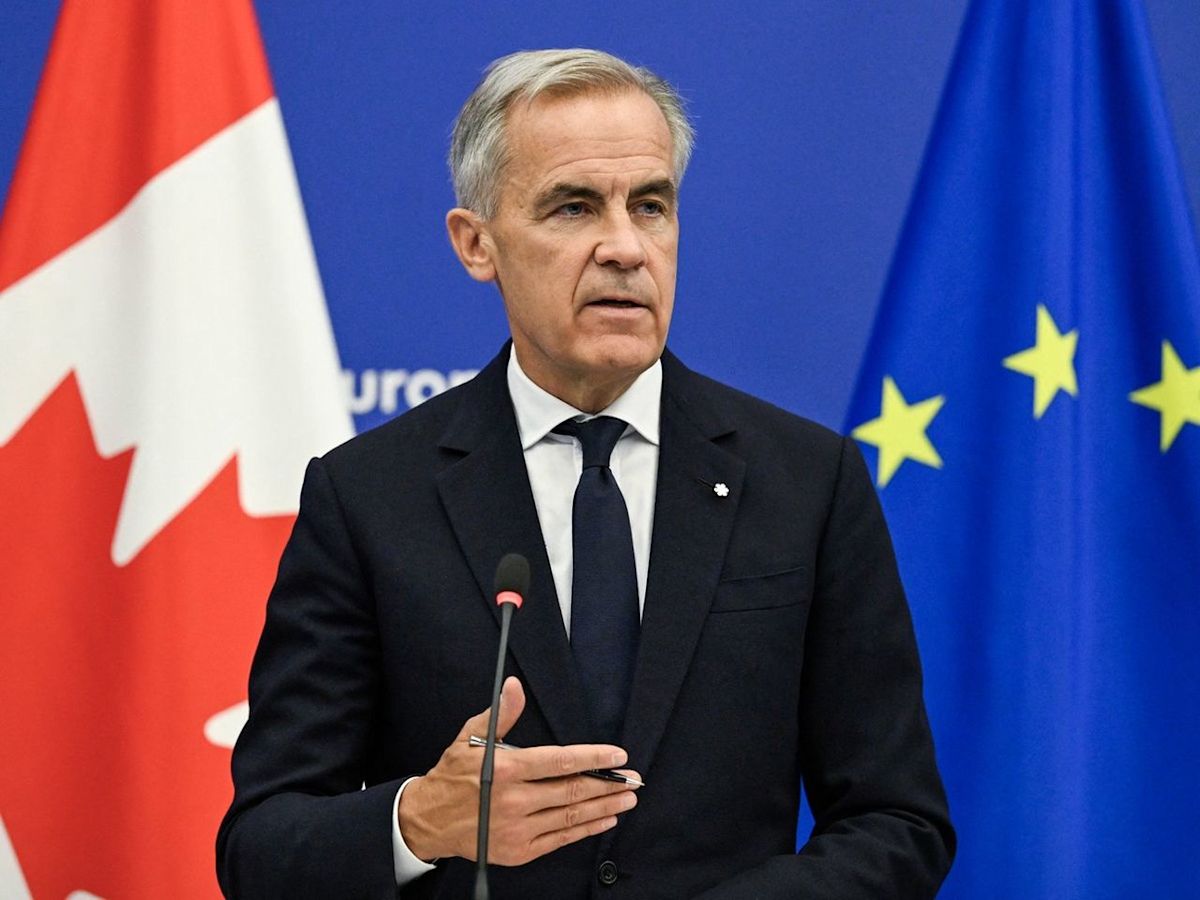
The problem with Prime Minister Mark Carney's coy courtship of the European Union is that it leaves Canadians bewildered as to the nature of the relationship.
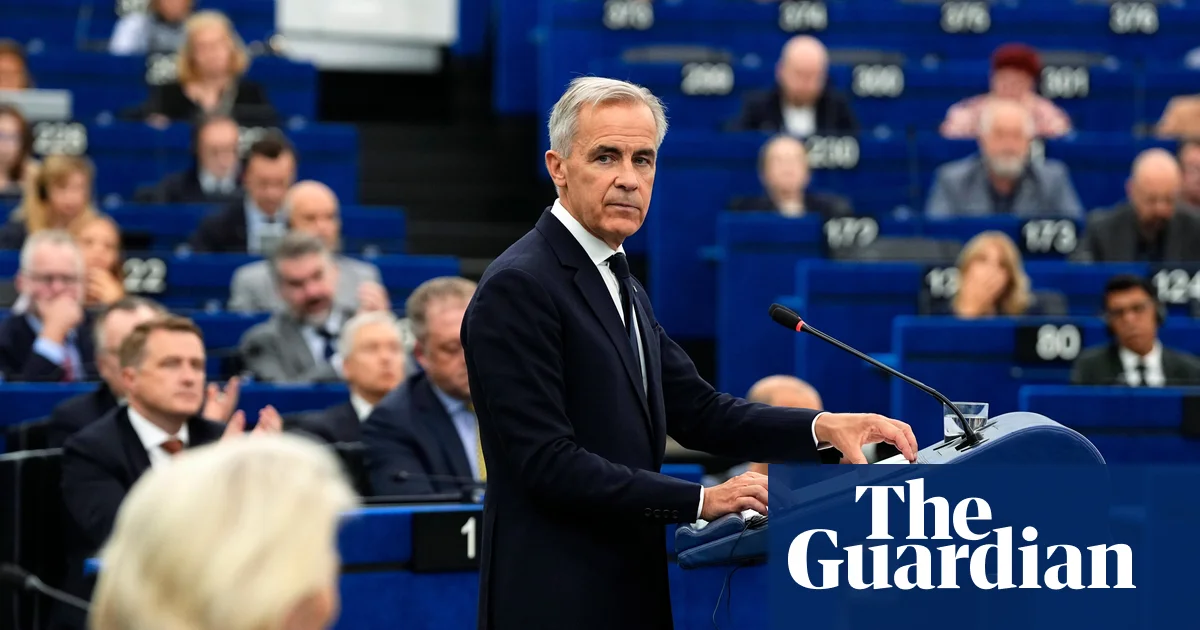
In his speech to the European Parliament Thursday, Carney showered the EU and its officials with praise, pledged strategic cooperation, called for closer ties and predicted an "alliance for the future."
He also "welcomed" European Commission President Ursula von der Leyen's proposal on Wednesday that Canada should become an "associate member" of the EU although that status doesn't exist and hasn't been defined.
Considering that Canadian officials pushed back hard after the Wall St Journal reported on the "associate member" plan, Carney's speech is perplexing. What exactly is the Canada-EU plan?
"Mark Carney's Audacious Bid to Make Canada an 'Associate Member' of the EU," was the Wall St Journal headline on Sept. 12.
The paper said Carney had been phoning European leaders seeking a new relationship following the start of a trade tensions with the United States. The paper claimed the "associate member" plan was proposed by Carney.
But the following day, Canadian government officials were swift to pour cold water on the article.
A senior government source told CTV News that the WSJ had "overstated" what Carney was doing. The prime minister was trying to deepen ties with the EU but that was "nothing new," said the source.
The same day Carney denied that Canada was looking to become a member of the European Union (although no one had suggested or reported that Canada was trying to become a full member.)
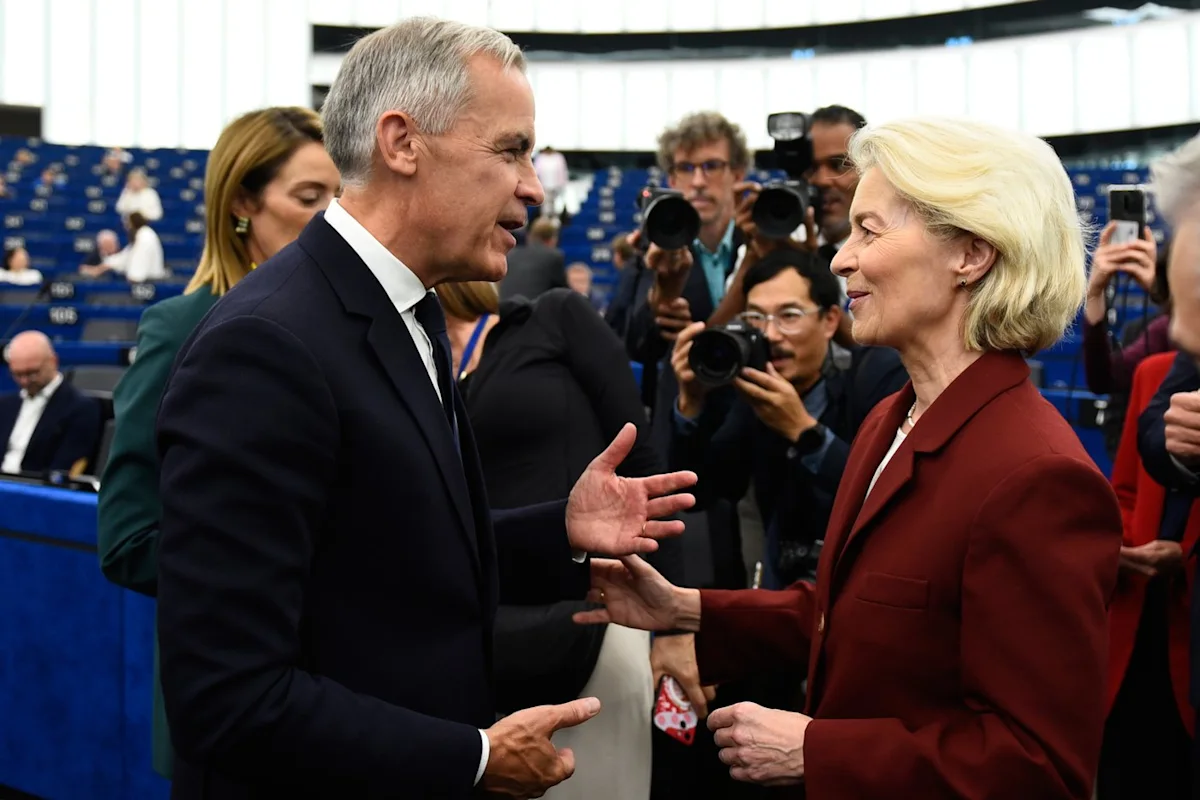
Then on Wednesday, von der Leyen publicly endorsed the associate member proposal in her speech to the European parliament.
"I would like to work with you on opening the door for Canada to be the first associate member of the EU," she said, directly addressing Carney before the two leaders embraced.
But it wasn't very long before Canadian officials were muddying the waters again.
"We're not there," Jonathan Wilkinson, Canada's incoming ambassador to the EU, said when asked by reporters about the associate member plan. He said officials were still trying to work out how best to describe what was being proposed.
Politico also reported that other foreign European leaders had not been told about the proposal and one diplomat said the secrecy around the plan was "dangerous" and "unwise."
Anyone hoping for clarity from Carney's speech on Thursday, was sure to be disappointed.
Referencing the associate member plan, Carney said, "Canada welcomes this ambition and I can tell you that polling shows that an overwhelming majority of Canadians support much closer ties with Europe. An alliance for the future is a unique positive approach that we will define together, building on our common strengths and based on our shared values."
The prime minister then outlined how Canada and the EU could "deepen cooperation" through critical minerals, defence, industrial capacity, AI and computing, energy security and space.
"We should move towards seamless digital trade in non-agriculture goods and a wide range of services. We should deepen our people-to-people ties allowing our youth to work, study and live where they want on either side of the Atlantic," he added.
"These are some of the opportunities, but the fundamental point is that the opportunities that can be created by an alliance for the future are the product of our common values, our compatible systems, our complementary strengths. And deepening and widening our relationships will strengthen our sovereignty, improve affordability and opportunity and security for our citizens while safeguarding our ability to live our lives as we choose," he said.
Scattered throughout his speech were references to pooling resources, common objectives and common standards.
It sure sounded like a marriage plan. But the one thing that the EU likes is conformity. So what exactly will Canada have to give up to fit in with the EU?
Carney's speech was greeted enthusiastically by members of the European Parliament who gave him a standing ovation at the end. His address was even delayed by 10 minutes as lawmakers were keen to shake his hand and get a selfie with the prime minister.
Europe, it appears, is head over heels in love with Carney.
Any new romance is an exciting and thrilling time, especially if you've just broken up with a long-term partner. But if Canada and the EU are going to get into bed together is it asking too much to simply and clearly tell Canadians what's the plan and define the relationship?
Will Canada become an "associate member" of the EU or not? To listen to Carney is to hear a man kiss and not tell.
Jamie Sarkonak: Don't trust Carney to tell us what EU 'associate membership' means
Jesse Kline: The conservative case for becoming an 'associate member' of the EU
Related Stories
 Canada
Ottawa mayoral candidate charged for alleged death threats against Doug Ford and Mark Sutcliffe
3 minutes ago
 Canada
Hundreds of Iranian families in limbo as Canada labels their mandatory military service ‘inadmissible’
3 minutes ago
 Canada
As Carney's popularity soars, Conservatives weigh what to do about their own leader
3 minutes ago
 Canada
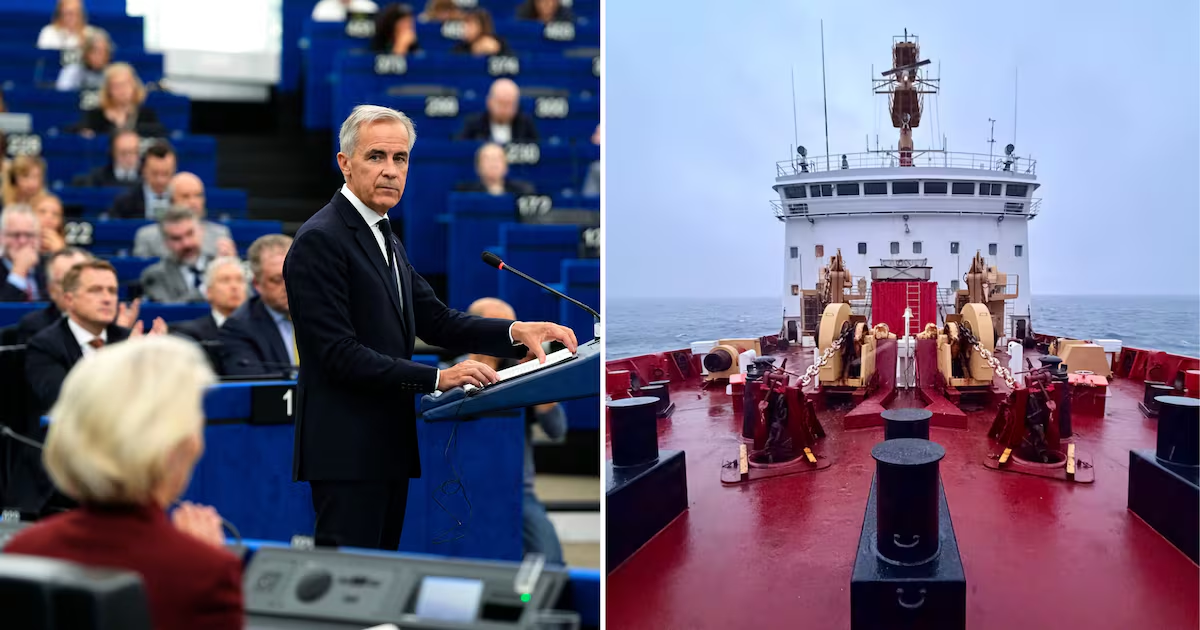
CTV News in the Arctic: Why Canada has shifted focus up north
4 minutes ago
 Canada
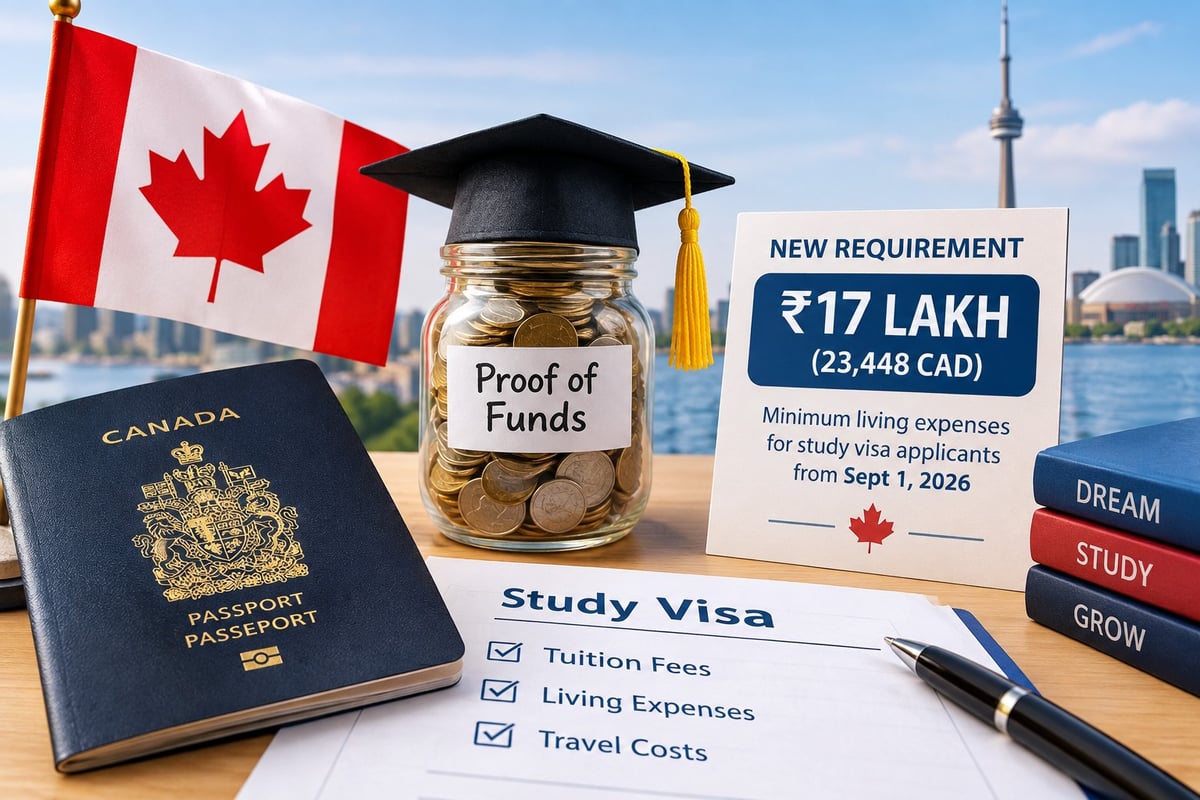
Canada tightens study visa rules, Indian students must show higher funds
5 minutes ago
 Canada
Canada’s Carney embraces EU associate membership proposal
36 minutes ago
 Canada
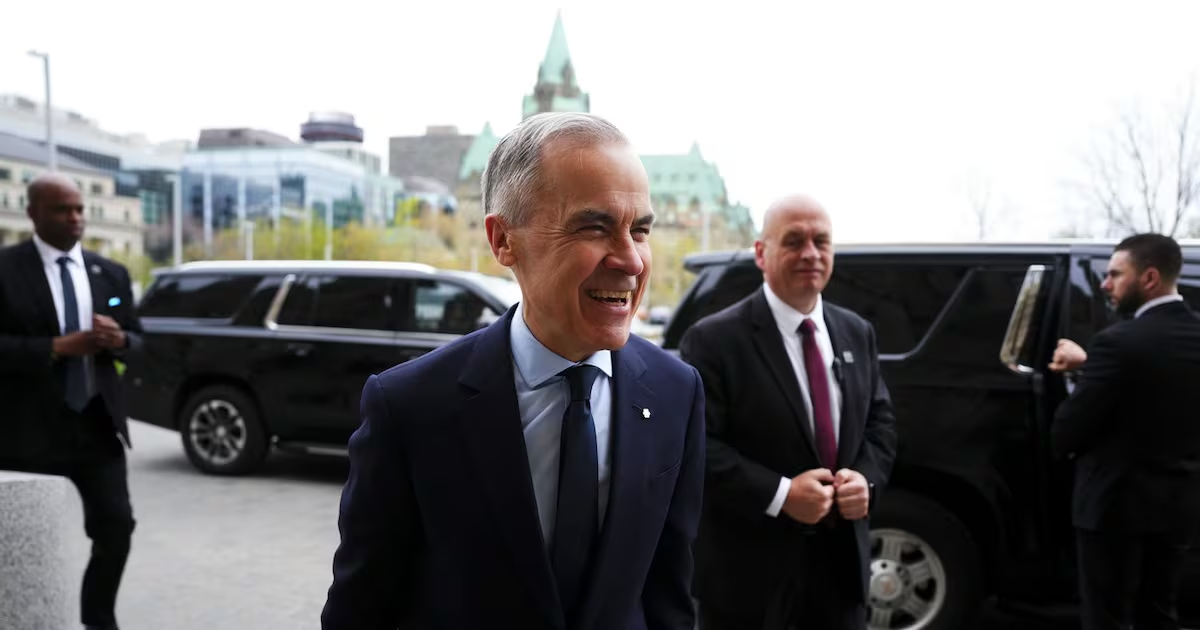
PM Carney to deliver remarks at caucus meeting in Ottawa today
1 hour ago
 Canada
EU chief floats 'associate membership' for Canada. But that doesn't exist yet
1 hour ago