
McMaster scientists develop tech to reproduce rare medicinal molecules
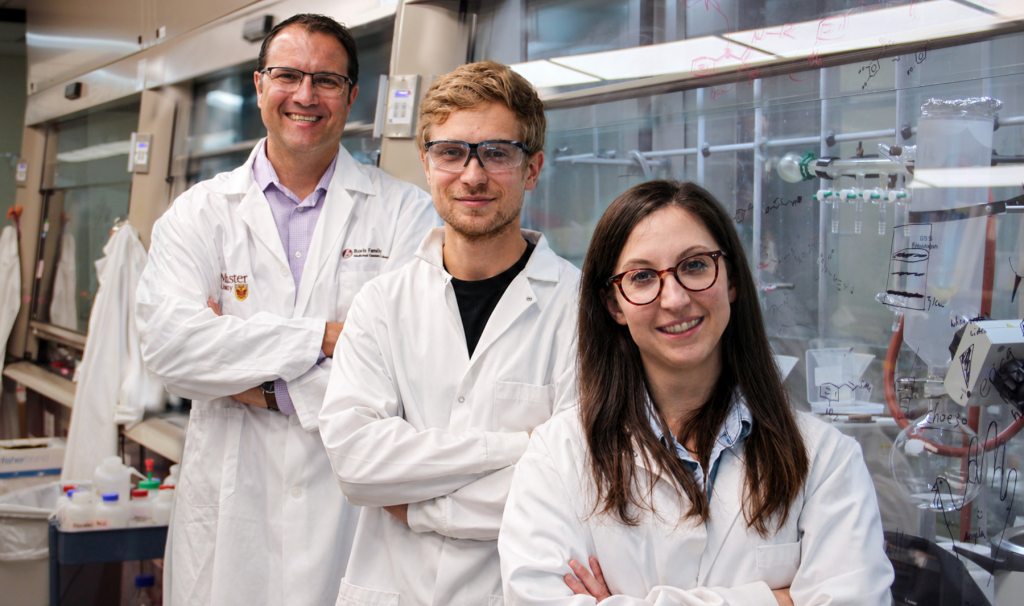
Plants and fungi are packed with molecules that could one day become new medicines, but many occur in such small quantities that studying them at scale has been nearly impossible — until now.
In a new study out of McMaster University, researchers have developed a novel chemistry technology that allows scientists to efficiently make lab-created copies of some of nature’s most sought-after molecules, a discovery that could accelerate broad drug development efforts.
The new tech, detailed in the journal Nature Communications, allows researchers to create many of these compounds in a single reaction, dramatically improving yields while reducing cost and complexity. It leverages an inexpensive and abundant material called alumina to weld smaller molecular building blocks into rare plant-derived compounds known as “prenylated phenols,” many of which have shown promising biological activity.
“Small molecules derived from plants have always been of immense interest to both pharma and traditional medicine,” says Jakob Magolan, a professor of Biochemistry and Biomedical Sciences at McMaster and principal investigator on the new study.
“We know many of these molecules are promising drug leads, but researchers simply can’t get their hands on them in sufficient enough quantities to investigate them in a meaningful way.”
The solution, Magolan says, is to synthesize the same molecules in the lab. But that too comes with significant challenges: To produce synthetic copies of rare prenylated phenols, scientists must connect smaller molecular fragments in very precise orientations, “like you would the pieces of a puzzle,” says Magolan.
“In nature, organisms produce these molecules with 100-per-cent accuracy,” explains research associate Lauren Irwin, who co-first authored the new paper with colleague Mathew Piotrowski.
“Prior to our method, you would get the correct chemical reaction 20 per cent of the time, alongside mostly unwanted byproducts. Our method flips that ratio and gives us what we’re looking for at a rate of 80 per cent.”
There are thousands of known biologically active plant-derived molecules that remain effectively out of reach because they cannot be extracted and obtained at a scale required for drug development, says Magolan, the Boris Family Chair of Drug Discovery at McMaster and a member of the Michael G. DeGroote Institute for Infectious Disease Research.
The molecule grifolin is a great example, Magolan says.
Found in mushrooms long used in traditional medicine, grifolin has drawn interest for its reported anti-cancer, anti-inflammatory, and neuroprotective properties. But it occurs naturally in such minuscule amounts that obtaining enough material for extensive medical research has been impractical.
“With our new process, we can easily make grams of grifolin for research use,” says Magolan. “More importantly, we can scale it up to kilograms, and much more, without costs exploding. To get a kilogram of grifolin from nature would require the very costly harvesting and processing of thousands of kilos of slow-growing mushrooms. It simply isn’t realistic.”
To demonstrate the broad efficacy of their new technique, Magolan’s team successfully produced 15 such hard-to-obtain bioactive natural products in the lab. Among them were arachidin 2, a potent anti-inflammatory compound found in peanuts; and iroko, an antimicrobial candidate extracted from the bark of the African teak tree.
Producing these compounds synthetically previously required lengthy, multi-step processes — sometimes involving several sequential chemical reactions — but, using their new method, the McMaster team was able to make them in just a single step.
Magolan, an executive member of NexusHealth at McMaster, anticipates that the new platform will bring hundreds of new therapeutic leads to lab settings in the next few years. His group has already patented the new discovery with plans to commercialize the fruit that it bears through a startup company called Naturally Synthetic.
“This technology allows us to study nature’s hard-to-reach potential medicines in a way that’s faster, cheaper, and more effective,” he says.
“It can have major implications for drug discovery in all disease areas, ranging from infectious disease and cancer to neurology, metabolic disorders, and beyond.”
Related Stories
 Technology
Rescue satellite gets close to NASA's doomed telescope, even if it can't save it
1 hour ago
 Technology
US judge extends block on Trump order to restrict mail
3 hours ago
 Technology
Siemens Energy to produce Rolls
3 hours ago
 Technology
KRAFTON To Invest $250 Mn In Indian AI & Deeptech Startups
3 hours ago
 Technology
Jane Fonda Slams “Tech Bros, Oligarchs and Billionaires” for Wanting to Live Forever With Robots: “That’ll Be Their Babies”
5 hours ago
 Technology
Saltfoss enlists Korean services for MSR development
6 hours ago
 Technology
Cascador selects 10 Nigerian companies for 2026 ScaleUp Programme
6 hours ago
 Technology
Village Capital invests $450,000 in two Nigerian startups
6 hours ago