
Mass

Mass-produced does not have to mean low quality. Your favorite clothes, dear reader, are made from mass-produced fabric, and you would not have clothes as nice if all fabric were hand-woven.
Thanks to artificial intelligence (AI), we will soon enter a world in which high-quality scientific research can also be mass-produced, at low cost—not just summaries of what scientists already know but new analyses, new figures and new conclusions, at the request of anyone asking. AI will also enable production of low-quality science in even greater quantities, and discerning between the two will be a key challenge. But if we can solve that problem—if we can find ways to identify reliable and important results within the vast quantities produced—then both the quantity and quality of science produced will be higher than ever before.
For consumers of science—the public, medical patients, technology users—the effects will be positive. For producers, the effects will be as disruptive as industrial mass production was for artisan fabric makers. The way scientists publish and communicate their work will likely change completely, as will the way they evaluate, fund and promote human researchers. Some current jobs will vanish, and other yet-unnamed roles will take their place.
To get a feeling for what’s coming, consider pure mathematics, in which AI-driven research is most advanced. On 20 May, OpenAI announced that an as-yet-unreleased AI model solved an 80-year-old conjecture in pure mathematics. The AI solution exploited methods from a different mathematical subdiscipline, previously missed by human experts. Human mathematicians judged the solution to be valid and publishable in the top journals of the field.
There is every reason to think that AI will continue improving at pure math: Because mathematical proofs can be checked automatically, AI can be trained by reinforcement learning, without being limited by human-generated training data. There is a real possibility that, as happened with chess decades ago, AI will overtake all humans’ abilities in pure math within the next few years.
What about experimental biology, and neuroscience in particular? Institutions such as the Allen Institute and the International Brain Lab have released large, high-quality datasets that can answer many more questions than they have been used for so far. Tools such as the International Brain Lab AI agent already enable scientists to draw previously unpublished conclusions in a matter of minutes. If I have a factual question—whether neurons in a particular brain area respond to visual stimuli, for example—it will soon be easier to ask an agent to compute this from open data than to search the literature. The agent can also help me understand subtleties in the question that I might not have anticipated, such as the effects of cell type and behavioral state, and interactively craft an answer tailored for me.
One implication of these tools, especially for a field as diverse and fragmented as neuroscience, might be to generate new types of conclusions by integrating diverse datasets. Funders have for years encouraged or mandated open data and code, and scientists have largely complied; the DANDI Archive contains more than 1,000 datasets. But use of these resources has been relatively limited. Even with standardized data formats, using a new dataset requires substantial cognitive investment from the researcher, making integrating tens or hundreds of datasets impractical. AI agents that could automate this process—while also archiving notes on technical aspects of the data, such as caveats on data quality—could make entirely new data integrative projects feasible and cheap.
The biggest challenge will be ensuring that results produced by AI research are reliable. Early AI models often “hallucinated” convincing-sounding but false statements. In mathematics, truth can be established by formal proof validation. Experimental science has no equivalent but instead has a powerful, century-old tool kit for limiting false inferences: rigorous statistical methods, preregistered analyses and randomized experiments. Researchers don’t always employ this tool kit, however. For example, preregistration remains rare in neuroscience, and scientists often differ in the conclusions they draw from a single dataset. Employing the methods of classical statistics in the AI age might require new practices. Unleashing thousands of independent AI agents on a single fully open dataset seems like a recipe for industrial-scale p-hacking. Machine-learning competitions often deal with this problem by releasing a public dataset for exploration and training; organizers then use a private dataset to evaluate participants’ algorithms. A similar approach might work in science—a public dataset that researchers can use to explore and develop hypotheses with AI and private data to confirm those hypotheses.
First, direction. In the immediate future, at least, humans will still have a role in steering the direction of AI-accelerated research: deciding which questions are interesting to answer and allocating resources. This will continue until AI becomes better than humans at knowing what scientific questions humans want answered.
Second, conceptual refinement. Scientists often start a project with an incompletely defined, intuitive question, which becomes precise only after contact with data. The philosophical term for turning initially imprecise intuitive ideas into precise concepts that can be answered scientifically is explication. In neuroscience, even simple concepts such as encoding, correlation and activity have multiple definitions, and which one you use can change the answer to the question. Current AI models can help with this but are not yet on par with humans. Humans will have a role in this process of conceptual refinement until AI surpasses them at this kind of reasoning.
Third, experiments. “Closed loop” AI-driven experimental work is already underway in chemistry, using robots; and in neuroscience, based on computer-designed sensory stimuli. Nevertheless, fully autonomous experiments involving animal behavior seem further off: Even if AI designs the experiments, human hands will be required until robotics advances to become better than humans at physical experimentation, which currently seems many years away.
Fourth, validation. Proper statistics, such as preregistered confirmatory analyses of held-out data, can make rejection of null hypotheses reliable. However, most science consumers read verbal conclusions, not exact null hypothesis statements. Confirming that statistical analyses truly support conclusions is currently performed by both authors and peer reviewers, with the former incentivized to make maximal claims. A role for humans in validating scientific results will persist until readers trust AI more than they trust other humans to separate truth from hype. AI may, in fact, become more rigorous than human peer review, given that agents have time to check the data and code underlying all claims.
Fifth, filtration. Scientific papers have long been published faster than any individual person can read. Scientific importance is subjective, but journal editors, peer reviewers and citation counts play a major role in helping readers discern which papers are worth their time. This process is coming under ever more strain as AI accelerates research production; indeed, this may be the first part of our current system to “break.” Peer reviewers are increasingly using AI, even when it is against journal guidance. A role for humans in judging the quality and importance of scientific research will persist until readers trust AI more than humans to guide them to things they want to read. Furthermore, AI may eventually be able to offer a personalized peer review for each reader, taking into account their preferences and views of what constitutes good research.
Most likely, the main roles for humans in the age of mass-produced science will be things we don’t yet have words for. Mass-produced science may enable treatment for diseases previously too rare to justify major research investment, for example. Understanding what affected patients and families need most might always require a human touch. If accelerating scientific production swamps our current review and filtration systems, new roles may arise for humans discerning good from bad research for journal readers, technologists, policymakers and the general public.
The picture for fabric producers was less rosy. Some occupations did better and others worse, in ways that would have been difficult to anticipate. Yarn spinning was industrialized in the 1760s, decades before fabric weaving. Spinners’ fortunes fell, but hand-loom weavers saw a “golden age” of high demand and cheap raw materials, drawing new members to the trade. The manual weaving boom was short-lived, however, succumbing to the installation of power looms in the early 1800s. The transition was difficult for many, generating a period of social, political and economic upheaval; some tried to turn back the clock by destroying the new machines, but the economic changes that technology had produced could not be held back. Instead, entirely new careers opened up, such as civil engineers, railway workers and an ever-increasing number of white-collar office workers.
Scientists today face a similar period of transition. Pure mathematicians may soon go the way of the spinners, unable to compete with machines that can do everything they can, in a fraction of the time. Biologists and other experimental scientists might experience a near-term boom like the weavers. The efficiency of AI science could lead to a surge in science investment, for example as treatments for previously untreatable diseases come into reach. This could lead not only to benefits for patients but to a rise in demand for biological labor, at least until these roles too become automated. How long this will take is as hard to predict today as it would have been in 1790. It could be 30 years, 30 months or 30 weeks.
Related Stories
 AI News
Egypt trials smart irrigation and artificial intelligence technologies to optimise water use in agriculture
32 minutes ago
 AI News
L&T Finance Ltd. Launches The Second Edition Of 'Pitch Point,' A Competition For AI Startups Ahead Of RAISE' 26
1 hour ago
 AI News
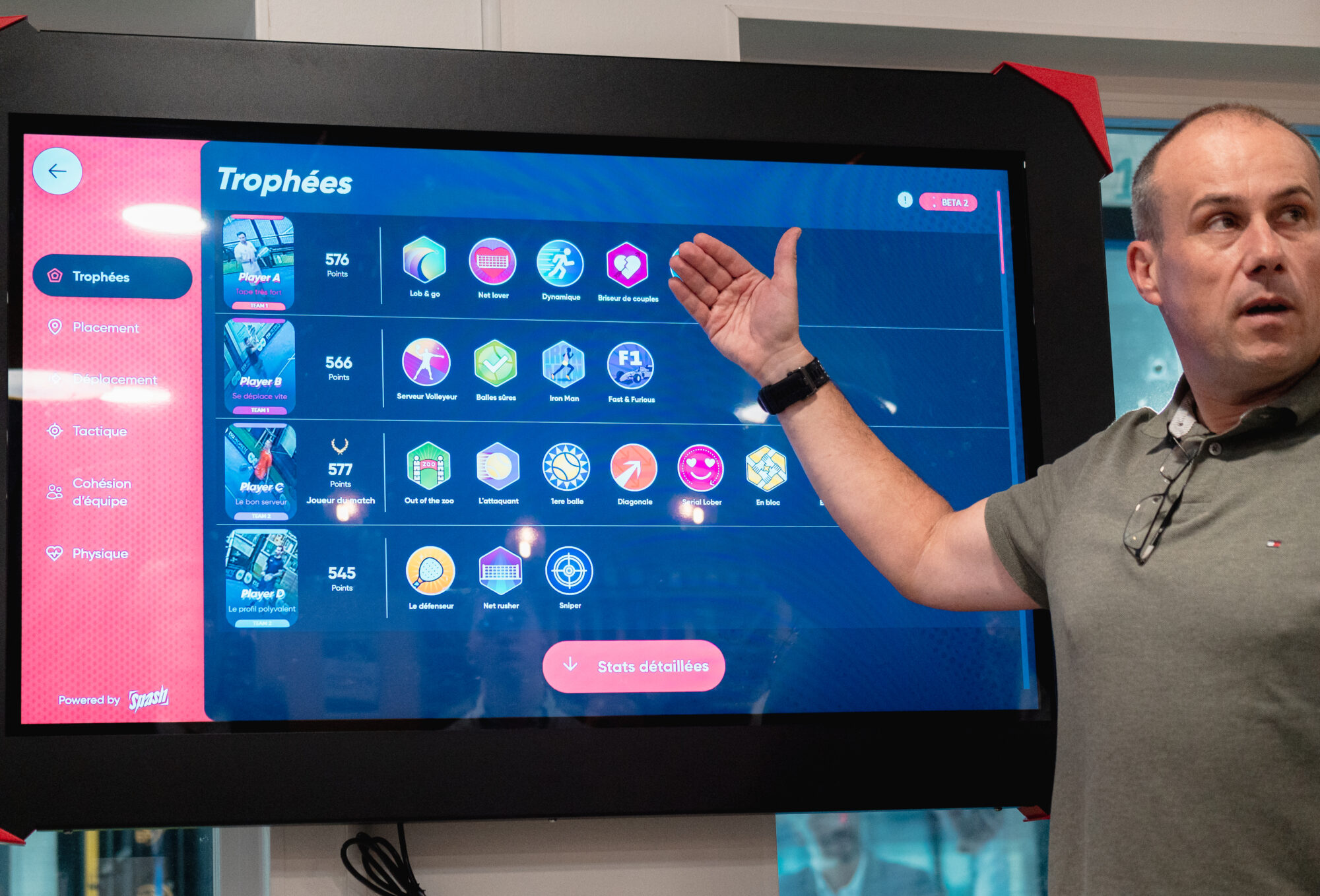
SPASH raises 2 million euros: artificial intelligence at the heart of its strategy for padel clubs
1 hour ago
 AI News
AI can’t just be built. It must be taught.
1 hour ago
 AI News
UC Santa Barbara taking a ‘base camp’ approach to artificial intelligence
1 hour ago
 AI News
Latest News In AI Chips
2 hours ago
 AI News
Britain steps up national defences against growing AI risks
2 hours ago
 AI News
Microsoft President Warns AI Is Less Regulated Than Milk, Washing Machines as He Pushes Governments Towar
2 hours ago