
Live updates: Strikes between Saudi Arabia and Houthi rebels open a new front in Middle East conflict
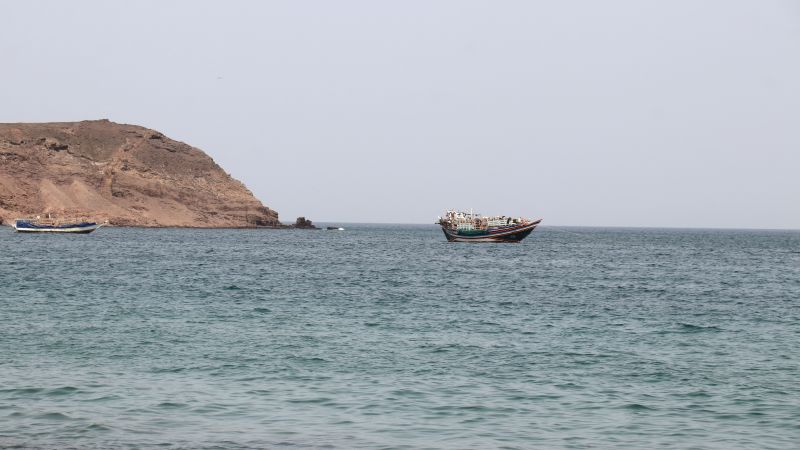
• New front: The Iran-backed Houthis in Yemen said they targeted Saudi installations on the Red Sea coast Saturday, a day after Saudi Arabia launched strikes in retaliation for the rebel group’s attacks on commercial vessels. It’s the latest emerging front in a Middle East conflict that has threatened to spread through the region.
• US-Iran talks: An Iranian military official dismissed comments from US President Donald Trump that Tehran is “getting more serious” about negotiations, even suggesting they welcomed the prospect of an American ground invasion. Trump had claimed Tehran would “love to make a deal” after administration officials met about a potential escalation of the war.
• No reported strikes: US Central Command made no announcement of new military action against Iran on Friday. There were also no immediate reports of overnight strikes on US regional allies. However, the UK’s maritime agency reported an incident involving a tanker in the Gulf of Oman.
The average price for a gallon of gas in the United States rose about a penny to $4.11 on Saturday as hostilities continue in the Middle East.
Gas prices have climbed 11 cents in the past week, with American drivers paying 38% more since the start of the war in late February.
Gas prices peaked at $4.56 in early May but dropped after the initial US-Iran ceasefire agreement signed in mid-June renewed hopes that oil traffic would be restored in the Strait of Hormuz. Renewed fighting dramatically slowed traffic through the strait, cutting off its pre-war supply of 20 million barrels of oil a day.
As we’ve been covering today, the Iran-backed Houthis in Yemen have also targeted commercial ships in the Red Sea, threatening another route for oil exports. The Houthis have effectively blocked the Bab al-Mandeb Strait, through which about 5 million barrels of Saudi oil flow each day.
On Friday, Brent crude, the international benchmark, fell 4% to $96.78, while US crude dropped 3% to $89.31 a barrel.
Crude inventories have also been drained to offset declining oil flows and high prices. The US Strategic Petroleum Reserve has reached its lowest level since 1983.
This post has been updated with additional details and background.
Qatar’s maritime traffic will resume as usual starting on Sunday, the country’s transportation ministry said in a statement.
The ministry urged all vessels to follow regulations to ensure their safety.
In late June, Qatar temporarily suspended all maritime traffic in its coastal waters as the US and Iran traded fire.
The Houthi rebels have long been backed by Iran and reviled by Saudi Arabia. A Shia group from the mountains of northern Yemen, they have controlled the capital Sanaa and much of Yemen’s Red Sea coast since 2014.
Key background: The Saudis launched a large-scale offensive against the militant group in 2015, and the ensuing seven-year conflict provoked one of the worst humanitarian crises in the world.
The Houthis survived, with help from Iran and other pro-Iranian groups such as Hezbollah, carrying out missile and drone strikes against Saudi Arabia and the United Arab Emirates, both of which supported the UN-recognized government the Houthis had driven from Sanaa.
In 2023, the Houthis launched ballistic missiles against Israel in support of Hamas in Gaza, and disrupted Red Sea shipping. That provoked a campaign of US strikes early in 2025, which degraded their capabilities. But they remained defiant, almost relishing their resistance role.
The Trump administration’s determination to eradicate the threat posed by the Houthis ended without success. Ultimately, analysts say, only a ground offensive involving tens of thousands of troops is likely to remove them.
The latest developments: The Houthis have managed to survive a long blockade by Saudi Arabia and last week threatened a campaign against Saudi shipping in the Red Sea unless the blockade was lifted.
They subsequently claimed to have hit two Saudi tankers. Saudi Arabia acknowledged at least one vessel was struck and retaliated with airstrikes against Hodeidah, the main port under Houthi control.
Oil topped $100 a barrel for the first time since May after Yemen's Houthi rebels targeted Saudi ships in the Red Sea, threatening to cut off another route for oil exports already choked by the effective closure of the Strait of Hormuz. CNN's Nic Robertson explains who the Iran-backed rebel group is.
Big picture: Analysts now see a real risk of uncontrolled retaliation as each side targets the other, with the growing importance of the Red Sea as a route to export Saudi oil an additional ingredient in a combustible situation.
The southern city of Jizan, which the Houthis said they targeted in strikes on Saturday, is a significant container port for Saudi Arabia and a key site for energy products and electricity generation. Protecting Jizan from regular Houthi strikes has been a prime motivation for past diplomatic efforts.
CNN’s Nic Robertson contributed to this report.
The Iran-backed Houthi rebels in Yemen say they carried out attacks against Saudi installations on the Red Sea coast on Saturday, after Riyadh targeted the group in strikes a day earlier — as a new front in the Middle East conflict threatens to escalate.
In a statement, the Houthi armed forces said they had “carried out two qualitative military operations.”
“The first targeted sensitive Aramco-affiliated facilities in Jizan with dozens of ballistic missiles and drones. And the second operation targeted sensitive Aramco-affiliated facilities in Yanbu with a number of ballistic and cruise missiles and drones,” the statement said.
Video geolocated by CNN shows large fires burning in an industrial area of Jizan, which is home to a huge oil refinery.
Saudi Arabia has not yet commented on the Houthi claims, but issued security alerts early Saturday for residents of both Yanbu and Jizan.
Referring to the Saudi strikes on Friday against the Yemeni port of Hodeidah, the Houthis said they confirmed “the Saudi enemy’s determination to continue its siege of our people and its violation of our country’s sovereignty.”
“This criminal enemy will find nothing from us but resistance and confrontation from our righteous position,” the Houthi statement added, reaffirming that the blockade against Saudi shipping declared earlier this week “remains in effect.”
“We will not hesitate to expand our operations and escalate our actions based on developments in the coming hours and days,” the statement added.
An Iranian official has dismissed comments from US President Donald Trump that it is “getting more serious” about negotiations, even suggesting that Tehran welcomed the prospect of a ground invasion by American troops.
“Our war with the enemy is a war of attrition, one that will not end,” the military official – named by Iranian media as General Asadi – said Saturday.
“We ask God that the ground forces of the aggressor American army find themselves in a position where we can engage them on the ground.”
The exchange of words came after almost two weeks in which the US has conducted strikes across Iran in the most serious escalation since a Memorandum of Understanding dialed down hostilities between the two sides.
Trump said on Friday that the US and Iran are talking and that he believes Tehran is getting “more serious.”
“We are talking to them. I think they’re getting more and more serious as the days go by, for maybe the obvious reason, but we are talking to them right now,” Trump told reporters in the Oval Office.
Trump also said Friday that he thought Iran would “love to make a deal” but he didn’t “think they’re ready to.”
His comments came after he met with advisers to discuss a possible escalation of the war, a source familiar with the matter told CNN.
“Washington is now seeking to change the playing field and transform the bilateral Iran-US crisis into a confrontation between Iran and the international community,” according to a commentary in the semi-official Nour News on Saturday. Nour News is close to Iran’s Supreme National Security Council.
Referring to US accusations that Iran has blocked shipping from transiting the Strait of Hormuz, the commentary added: “The country that is today accused of threatening global trade was previously attacked twice in the middle of negotiation processes.”
Ukraine has struck ships in the Caspian Sea involved in transporting military goods from Iran to Russia, according to Ukrainian President Volodymyr Zelensky.
Ukraine had “achieved very good results from long-range strikes in the Caspian Sea,” Zelensky said in a post on X Saturday. The Caspian is more than 1,000 kilometers from Ukrainian-controlled territory.
“Specifically, these include ships that were involved in transporting military cargo from Iran, as well as a warship,” Zelensky said.
Ukraine claimed to have struck Russian facilities and naval vessels in the Caspian late last year. In December, Ukraine’s Security Service said two vessels sanctioned by the US for carrying military cargoes between Iran and Russia were struck.
Russia has used ports such as Astrakhan and Olya to move military cargo between Iran and Russia, according to analysts. The two countries have long-standing agreements which include collaboration in fields such as drone and missile technology.
The UK Navy has reported an incident Friday in the Gulf of Oman involving a commercial vessel and “military forces.”
In a bulletin issued Saturday, the UK Maritime Trade Operations (UKMTO) said it had “received a report of an incident involving a tanker and military forces in the Gulf of Oman. Vessels are advised to consider the latest maritime security information and maintain awareness of the evolving operational environment.”
Last week, a similar notice was issued after the United States Navy intercepted and boarded a ship in the Gulf of Oman.
US Central Command has not commented on any interceptions Friday.
Amid growing tensions between Saudi Arabia and the Iranian-backed Houthis in Yemen, Saudi authorities early Saturday activated warnings in two provinces bordering the Red Sea.
Saudi Civil Defense posted the warnings of “potential danger” for Yanbu and Jazan, before rescinding them a short while later.
Yanbu is home to a major Red Sea port capable of shipping millions of barrels of oil daily. Jazan, close to the border with Yemen, has a large oil refinery.
Saudi Civil Defense issued instructions for people to take shelter before saying later that “the danger has passed.”
The warnings did not specify the nature or source of the potential danger.
Satellite images provided by NASA’s fire detection system showed fires east of the refinery in Jazan early Saturday. The cause is not clear.
The Houthis said Saturday that their armed forces would “announce qualitative and extensive military operations” later in the day.
On Friday, Saudi Arabia carried out strikes against what it said were Houthi targets in Yemen’s port city of Hodeidah after a Saudi vessel was attacked in the Red Sea.
In a statement, Saudi Arabia’s Coalition Joint Forces Command described the strikes as a “proportionate military response.”
“If the Houthi militia continues its hostile actions, they will be met with a response without leniency,” the statement continued.
The Houthis’ political bureau described the attack as a dangerous escalation of tensions.
“Saudi Arabia is attempting to compensate for its military and political failures by targeting vital infrastructure and the livelihoods of the Yemeni people,” it said.
It’s Saturday morning in the Middle East and US allies Bahrain, Jordan and Kuwait appear not to have reported any Iranian attacks during the night.
The three countries, which all house US military bases, have borne the brunt of Tehran’s attacks over the past 13 days. They have often reported launches from Iran, interceptions, or impacts through statements on the social media accounts of state media or the authorities. As of Saturday morning local time there were no such updates.
US Central Command made no announcement of new strikes against Iran on Friday Eastern Time after pummeling the country for 13 consecutive nights. It’s not clear if that was because CENTCOM did not take military action against Iran that day.
CNN has reached out to CENTCOM for comment.
Meanwhile in Saudi Arabia, authorities issued multiple warnings of “potential danger” on Friday in Red Sea coastal areas Yanbu and Jazan province. They did not specify the nature or source of the potential danger.
A Saudi vessel sustained minor damage to its hull after an attack in the Red Sea on Friday, the official press agency of Saudi Arabia reported, citing the kingdom’s transport authority.
The crew’s safety was confirmed and the vessel continued to its destination, the agency reported.
Soon after the attack was reported, Houthi affiliate al-Masirah TV said that Saudi airstrikes hit the major port city of Hodeidah in Yemen. Saudi Arabia has not commented on the reported strikes.
Yemen’s Iran-backed Houthis have previously announced a blockade of Saudi shipping in the Red Sea.
US Central Command did not announce it was launching strikes on Iran on Friday, after pummeling the country daily for almost two weeks.
For the past 13 nights, CENTCOM has posted on X it was carrying out strikes on military targets in Iran. There was no such announcement in the hours of Friday Eastern Time. CENTCOM is headquartered in Tampa, Florida, which runs on Eastern Time.
As of Saturday morning local time, Iranian state media had not reported any strikes or explosions in the country overnight.
This post has been updated with additional information.
After pummeling Iran daily for almost two weeks, there was no announcement from US Central Command that it was launching strikes on the country on Friday. It is not clear if that was because the US did not take military action against Iran that day.
In the region, tensions remain as US President Donald Trump said while Washington is actively negotiating with Tehran, it’s possible the military continues its bombing campaign or escalates it.
No update from CENTCOM: For the past 13 nights, CENTCOM had posted on X it was striking military targets in Iran. There was no such announcement on Friday Eastern Time.
Trump weighs in: The president said the war was “going extremely well” and that the US has “hit Iran very hard.” He added that he thinks Iran would “love to make a deal” but that he doesn’t “think they’re ready to.”
Alerts issued: Saudi Arabia issued multiple warnings of “potential danger” at major port Yanbu and Jazan province early Saturday local time. The alerts were lifted shortly after and the authorities did not specify the nature or source of the potential danger. Yanbu is located on the Red Sea and Jazan province has a coastline on the same sea.
Maritime tensions: US forces disabled a tanker in the Gulf of Oman on Friday after the crew attempted to get through the US naval blockade of Iran at least four times prior, a US military official told CNN. And in the Red Sea, Saudi Arabia carried out strikes against what it said were Houthi targets in Yemen’s port city of Hodeidah after the militant group attacked another Saudi vessel.
Netanyahu’s visit: Israeli Prime Minister Benjamin Netanyahu will visit the US next week, Trump confirmed on Friday. The Israeli leader’s office earlier said in a statement Netanyahu will meet Trump at the White House on Tuesday.
Tori B. Powell, Tal Shalev, Laura Sharman, Kareem El Damanhoury, Zachary Cohen, Eyad Kourdi, Mitchell McCluskey and Aditi Sangal contributed reporting.
President Donald Trump on Friday weighed in on the war with Iran and developments in the region.
Here’s a round-up of his comments:
“It’s all going extremely well. Don’t believe the fake news,” Trump said about the status of the war during remarks at the White House Correspondents’ dinner.
He went on to say that the US has “hit Iran very hard” and that Tehran no longer has Navy and Air Force capabilities.
“They have very few drones left, despite what you see,” he said.
Trump also added that he thinks Iran would “love to make a deal” but that he doesn’t “think they’re ready to.”
“I don’t think it’s time yet, but I’m willing to listen,” the president said.
When he spoke to reporters earlier Friday afternoon at the White House, Trump also stressed the US is actively negotiating with Iran, though he added that it’s possible the military continues its bombing campaign or escalates it. The president claimed “there’s a lot of” exit strategies still available.
Those comments came after Trump met with top advisers and Cabinet officials Friday to discuss a potential escalation of the war, according to a source familiar with the matter.
Iran seems to be getting “more serious” in ongoing talks, the president said. “I think they are being by far the most serious that we’ve seen. But that doesn’t mean we get there.”
Trump said he and his energy secretary hadn’t discussed it when asked if he’d authorized Chris Wright to sign the pact. Trump upended the long-negotiated deal after being blindsided by the Energy Department’s announcement this week, a source familiar with the matter told CNN on Thursday.
CNN’s Kristen Holmes, Logan Schiciano, Alejandra Jaramillo and Adam Cancryn contributed to the report.
Related Stories
 World
World
Why is mobile phone signal in London getting worse?
3 hours ago
 World
World
Photos show charred wreckage from deadly crash of news helicopter in LA
4 hours ago
 World
World
These documentarians got a standing ovation in Venice, but their fellow Israelis are furious
4 hours ago
 World
World
US opts not to back Saudi Arabia in Yemen after meeting Houthi leaders
4 hours ago
 World
World
U.S. denies visas to Palestinian delegation for 2nd year in a row for UN assembly in New York
5 hours ago
 World
World
Trump administration again denies visas for Palestinian delegation to attend the UN General Assembly
6 hours ago
 World
World
World Cup
7 hours ago
 World
World
NASA spacecraft discovers a huge new crater on the moon
7 hours ago