
LILLEY: Carney puts politics over paycheques in trade war
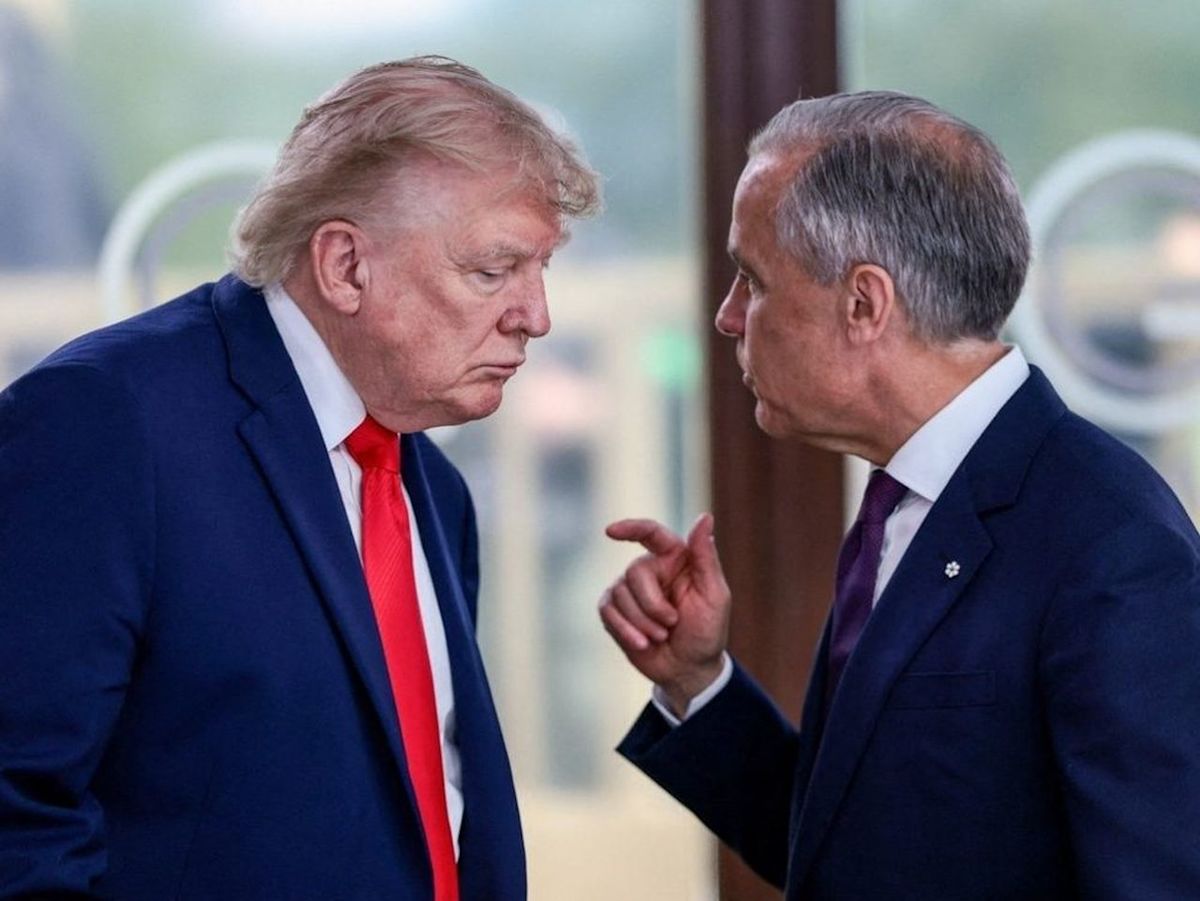
There's no rush for the Trump administration to get back to the negotiating table with Canada and, given how fighting with Donald Trump is helping Mark Carney politically, there may be little urgency in Ottawa either.
With a number of media appearances this week, Trump's chief trade negotiator, Jamieson Greer, has given the public some insight into how he and Trump's team are thinking about Canada.
"I think the reality is President Trump is comfortable where we are on Canada," Greer said Friday morning on CNBC. "We're still getting what we need from them in terms of oil, gas, potash, all of these things."
Greer went to great lengths in the interview to point out that the tariffs Canada is facing are also imposed on the rest of the world.
"Our trade policy is a global policy. It applies to Canada, China, the U.K., Brazil, all kinds of countries," Greer said.
"He has his tariffs on steel, aluminum and autos to reshore. And we're, you know, we're making more steel than we've made in recent years. We ship more steel than Japan did. The auto lines are coming back and putting in new shifts. So that's all happening."
That's the part Canadians don't understand. They don't hear it, and too often that's because our media doesn't report it. The Americans don't think the tariffs are hurting them because, economically, they're doing better than we are.
Their inflation rate is 3.4% annualized over the last year, which is worse than Canada's 3% annualized rate, but not by much. Meanwhile, their real GDP growth since Trump took office sits at 2.9% versus 1.6% in Canada. Their unemployment rate is 4.1% while ours sits at 6.4%, which, calculated using the American formula, would still have us at about 5.4%.
Canada is withstanding the American tariffs and trade disruption better than many thought, but we aren't thriving and we definitely aren't doing better than the Americans.
Next week, a number of trade actions by the Americans take effect, including a ban on Canadian alcohol, motorcycles and certain dairy products. Meanwhile, other dairy products and a long list of other goods will face 50% tariffs.
LILLEY: Mark Carney's currency comments risk more than trade repercussions
LILLEY: Trump's trade war could cost Canada jobs for decades
LILLEY: Carney's Europe pitch works best when he stops taking shots at Trump
I've seen people snicker at the motorcycle ban, thinking Canada doesn't make any, but Can-Am's three-wheeled motorcycles, made in Valcourt, Que., dominate the American market. The 2,500 people employed by the company in Valcourt are watching with anticipation.
Those are exactly the kind of manufacturing jobs Ottawa says it wants to protect.
On the alcohol side, about half of all distilled spirits made in Canada are sold in the United States. The American booze ban won't hurt breweries or wineries as much as it will distillers.
There is an exemption for alcohol sold in containers of four litres or more, which means if a deal isn't reached soon, we can expect Diageo, the owner of Crown Royal, to move bottling for the American market from Gimli, Man., and Valleyfield, Que., to Plainfield, Ill., or Montgomery, Ala.
If those jobs leave, they won't be coming back.
It's one of many reasons that the Canadian side should be looking to get back to the table. Yes, the deal on offer in August was unacceptable due to the 25% tariffs on medium and heavy-duty trucks, but that doesn't mean you walk away forever.
"From my perspective, we have a good relationship in the sense of we can pick up the phone and talk to each other about issues," Prime Minister Mark Carney told the New York Times in an extensive interview earlier this week.
One of the things he should be saying in his calls with Trump is: let's get back to the table and negotiate.
In an interview with Bloomberg Television earlier this week, Greer was asked about the fact that Carney's poll numbers go up when he fights with Trump, meaning he is incentivized to keep the trade war going.
"Oh, for sure. It's politically popular in Canada to be at odds with President Trump. That's certainly true," Greer said.
"What's interesting is that economically, it makes sense for Canada to have more interaction with the United States. This is where the growth is. This is where the consumption is. It's not in Europe, Brazil or China."
On that front, Greer is right. Economically, it is better for us to align with the U.S. while, of course, diversifying our trade.
Politically, though, it's better for Mark Carney to fight with Trump, and it appears he's willing to put politics above economics, above helping Canadians keep their jobs.
Related Stories
 Canada
Canada's Fernandez advances to Singapore semifinals with upset of top seed Andreeva
5 minutes ago
 Canada
AI smart glasses recalled in Canada, U.S. for burn risk: ‘Immediately stop’
5 minutes ago
 Canada
Encampment standoff in Saskatoon underscores growing municipal battles across Canada
5 minutes ago
 Canada
Canadian potash company invests $500M in North Vancouver shipping terminal
1 hour ago
 Canada
Starbucks Canada closing some B.C. locations
1 hour ago
 Canada
Terror suspect arrested in Montreal was in Canada illegally: RCMP
1 hour ago
 Canada
Michigan CEO loses job after posting AI
2 hours ago
 Canada
Élections Québec has told employees not to speak English. Does that violate Anglos' rights?
2 hours ago