
Lawmakers urge Hochul to act sooner rather than later on AI tech bills
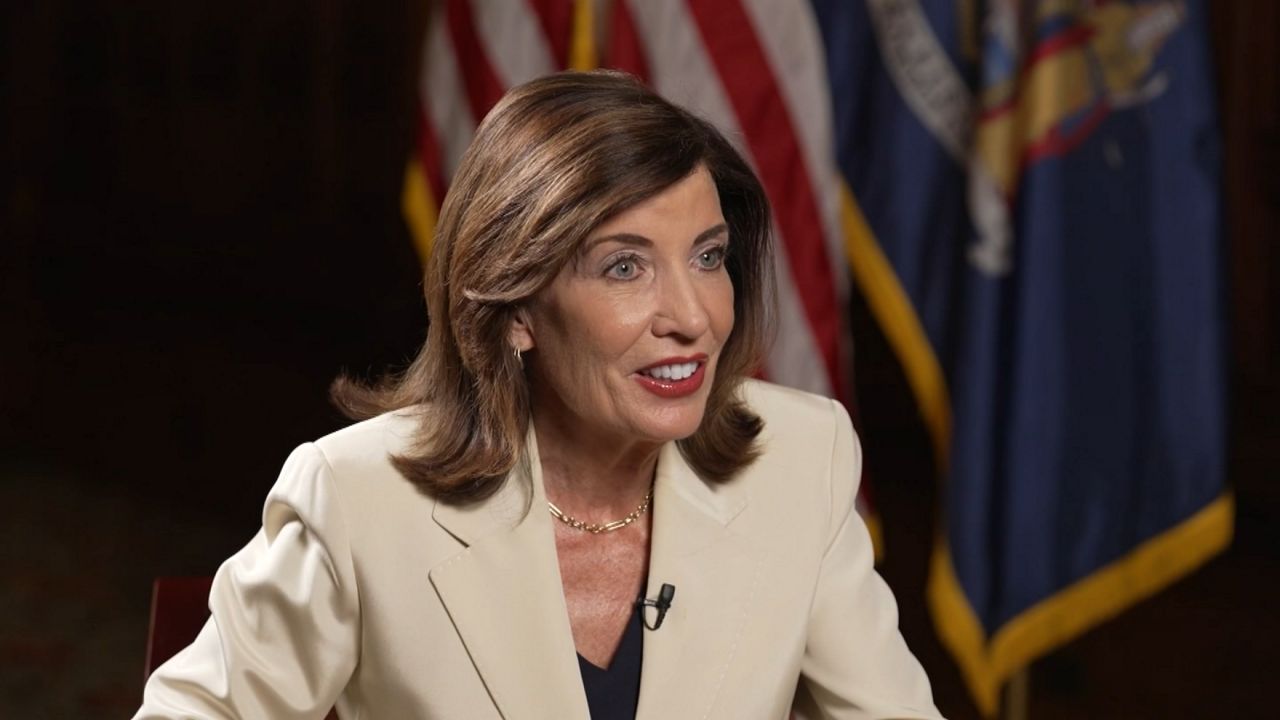
The approach of Labor Day often has minds pointed for the first time toward the end of the year — and with that Gov. Kathy Hochul faces a familiar end-of-year task: deciding the fate of hundreds of bills passed by state lawmakers and awaiting her signature or veto.
Hochul routinely takes until the closing weeks of the year to decide on major legislation, but the sponsors behind some of this year’s bills dealing with artificial intelligence and big tech argue the usual wait carries greater consequences when the technology they are trying to regulate is changing by the day.
State Sen. Michelle Hinchey is among those pushing Hochul to act sooner rather than later, calling on the governor to approve legislation aimed at tracking the impact of artificial intelligence on New York’s workforce. Hinchey and other supporters had urged Hochul to sign the legislation to mark Labor Day, arguing the state needs to begin collecting the information as quickly as possible.
“We need to understand the data. AI is here,” Hinchey said. “We’ve seen Meta lay off 10% of their workforce, Oracle laid off 30,000 people, other companies have laid off seven, eight, 10,000 people. We’re going to have an economic impact.”
The bill would require businesses to report certain information to the state Department of Labor, breaking down how artificial intelligence is affecting their hiring and employment practices.
Businesses would be required to report the number of employees displaced because of AI, reductions in employee hours, jobs created or hours increased because of the technology, positions left unfilled because of AI and the business objectives behind implementing it.
The information would then be used to help state lawmakers develop future policies dealing with artificial intelligence and its impact on workers. Hinchey said collecting the data could help the state determine how to prepare workers for changes driven by artificial intelligence and craft policy to protect the state’s workforce.
“We can help train for the jobs of the future and stabilize our economy right now,” she said.
The legislation passed with bipartisan support, and unlike many bills asking businesses to amp up reporting, has at least some backing from the business community. Upstate United, a coalition representing business and taxpayer interests, also supports the approach.
Executive Director Justin Wilcox told Spectrum News 1 the bill “makes a lot of sense” and avoids some of the typical points of tension business leaders often find with how Albany wades into new regulations.
“They are trying to gather information first before they draft the policy — and that is often one of my primary criticisms of Albany. They shoot first, aim later, and in this I really see a thoughtful approach,” Wilcox said. “Gather the data, let’s find out how it’s impacting employment and businesses and then we’ll craft thoughtful legislation based on that information.”
Waiting for the governor to act on legislation is nothing unusual in Albany, but Hinchey argues the speed at which artificial intelligence and other emerging technologies are developing makes the wait more consequential.
“If we don’t start to act now — we’re going to be looking 10, five, even two years down the road and wishing that we did more now. We see that happening with social media feeds,” Hinchey said. “It’s hard to know we have to act now and we have some waiting to do, that’s why we would love the governor to sign this bill Labor Day.”
Hochul has herself acknowledged the challenge posed by the bill review process when dealing with rapidly developing technology, and taken has taken public action to side-step it when it comes to AI.
Her office told Spectrum News 1 the governor has been proactive through her own initiatives, including launching a commission aimed at developing policy recommendations.
A data center regulation package awaiting action from Hochul includes a one-year moratorium on new data center construction. This summer, Hochul moved forward with an executive order establishing a one year moratorium under different conditions, saying the move allowed her to act with urgency while her administration considers the larger piece of legislation.
“As that process unfolds with that and other bills, I wanted to make sure we get ahead of this right now,” Hochul said in July.
The bill’s sponsor, state Sen. Kristen Gonzalez, has continued pushing Hochul to sign the legislation, including through a statewide tour advocating for the governor to act sooner rather than later to fill gaps in the executive order.
"It was an important first step in the fight against these big AI data centers," she told Capital Tonight.
The debate over data centers is also emerging as an issue in the governor’s race. Hochul’s opponent, Bruce Blakeman, has said he does not support a moratorium and has argued the Hochul administration should have been developing regulations for data centers already.
Related Stories
 AI News
The Incumbents Are Coming
44 minutes ago
 AI News
Child sexual abuse survivor alleges Elon Musk’s AI chatbot used photos of her to generate new illegal images
45 minutes ago
 AI News
AI data centres are booming in Australia
45 minutes ago
 AI News
Technological Leap in Costa Rica: Key Commission Born to Boost Artificial Intelligence and Data Centers
45 minutes ago
 AI News
ChatGPT, Claude, and Grok all went down at once; enterprises need a backup plan
45 minutes ago
 AI News
OpenAI's GPT-6 Astra on ARC-AGI
1 hour ago
 AI News
Artificial Intelligence (AI)
2 hours ago
 AI News
How China’s AI race axes jobs, forcing workers into low
2 hours ago