
Keeping teens safe in a world with artificial intelligence
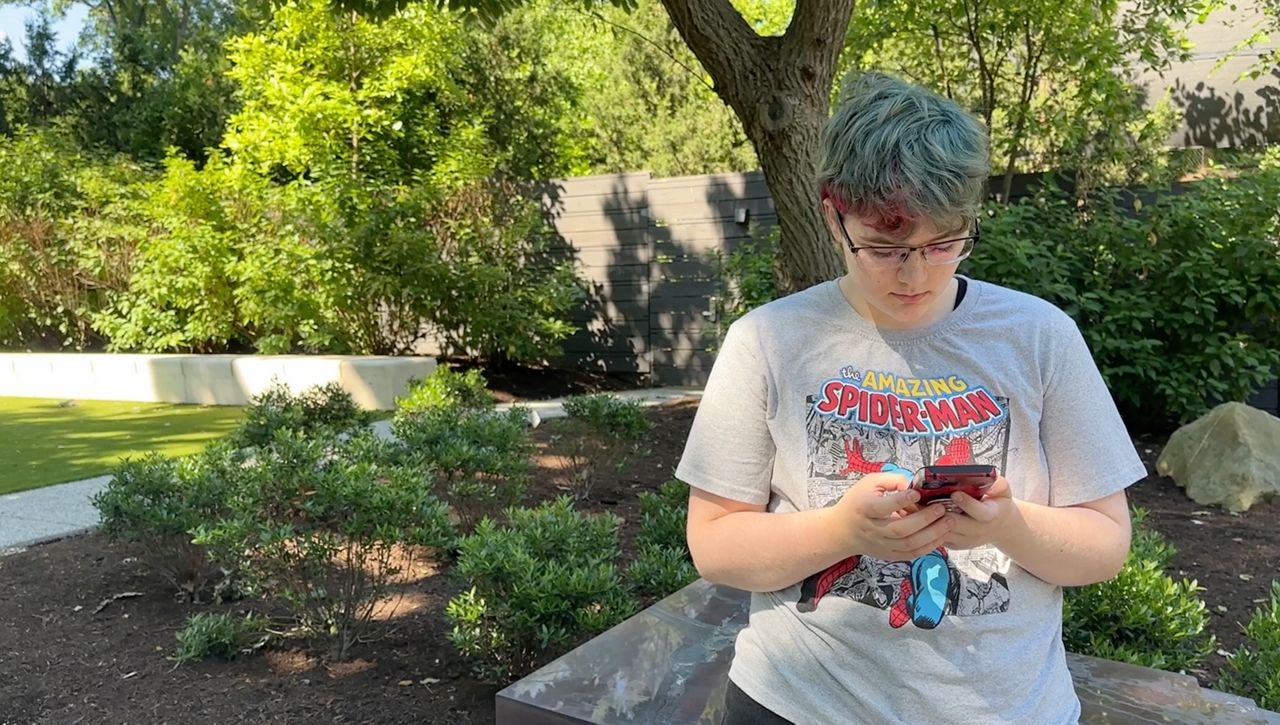
CLEVELAND — About 95% of teenagers in the U.S have cell phones, according to the National Institute of Health. Although they’re great for connecting with friends, there’s a whole new world that poses a possible threat for kids: artificial intelligence.
Parents have always had to worry about real-life bullies, but now they also have to worry about virtual relationships.
“I didn't really get my first ever phone 'till I was in seventh grade,” said Olivia Hollabaugh, who said she was 13 years old when she got her first phone.
She’s now 17 and, even in that short time, things have changed dramatically. Hollabaugh is well aware of artificial intelligence, or AI, and that there are AI generated people that she can talk to. She said she has a friend who has done it as a way to connect.
“Because teenagers can be really judgy,” she said.
“AI continues to evolve much faster than our ability to understand its impact,” said Dr. Mary Gabriel, a child and adolescent psychiatrist at UH Rainbow Babies & Children's.
Gabriel said we don’t know yet what AI means for our social and emotional development.
“If you're an adolescent and you're still learning how to do that in effective ways, it starts influencing the way you engage,” Gabriel said.
She said it can be tricky for parents to teach kids how to be safe about AI when they themselves are figuring it out. She said the best way to teach them is by modeling good behavior.
“Because we are adults, like we can say, ‘Oh, you know what? That response isn’t actually very helpful.'” Or “'Oh, you know what? This AI response that's not healthy,’ and so, they start to learn that they can question AI,” Gabriel said.
Gabriel said parents should pay attention to how kids maintain relationships in real life. That tells them what social skills they bring to AI. She said if kids speak up for themselves in real life, that’s a good sign.
She said if a parent does suspect their child is engaging in a virtual relationship, it’s important to approach them with an air of curiosity.
“And not judgment. So, ‘hey, I see you talk spending a lot of time on this particular platform. Like, what's that like? Like how has it been?’”
Hollabaugh said she’s pretty good about distinguishing between real life and AI, but not always.
“You can tell it is, but at first glance I cannot tell,” Hollabaugh said.
Related Stories
 AI News
Bill Gross bets AI can help mass
2 days ago
 AI News
Nigeria records 93% rise in AI micro
2 days ago
 AI News
The Italian gelato maker using AI to invent new flavours
2 days ago
 AI News
Closing the Gap Between Agentic CX Pilots and Production
2 days ago
 AI News
New Brunswick data centre debate highlights cross
2 days ago
 AI News
How to Structure an AI Agent Referral Fee Agreement Between Startups
2 days ago
 AI News
No, AI didn’t delete a Swedish reality TV series
2 days ago
 AI News
There is no AI in Armageddon. Artificial intelligence is a tool, not an apocalypse
2 days ago