
Is loneliness the next big startup opportunity?

Is loneliness the next big startup opportunity?
The first salvo was a flyer. Alex posted one in the laundry room of the New York apartment complex where she’s lived for more than three decades. The 60-year-old, who works in operations, invited her neighbours to stop by, one morning, for coffee. “I hardly knew anybody, and nobody else really knew anybody.”
No one responded at first, but she wasn’t deterred. Eventually a few people started gathering in her apartment. Alex deliberately described that klatch as a place for “small talk”, somewhere to make conversation and find company. Her own motivation was simple: making new friends, ideally people unlike those already in her circle.
“I’m a very accomplished loner,” she says now. “But we don’t talk about relationships at all in our culture, other than how to get a mate.” She had plenty of acquaintances but was craving more people whose interests overlapped more closely with hers.
Alex credits coaching sessions with Kat Vellos for pushing her to make that first gesture and face her embarrassment, although requests we only use her first name. There is still shame around admitting loneliness then seeking — and paying for — support.
“People have coaches and therapists for romantic relationships or parenting skills or physical fitness,” says the San Francisco Bay Area-based Vellos, who founded Platonic Action Lab (PAL) with the simple mission to help people expand and deepen their social circles. “This is no different. There’s nothing wrong with going to an expert who knows more about that than you do to help you be successful if you want to have a good life.”
Loneliness is a chronic state of mind for 1 in 10 American adults, according to the Social Connection in America report published at the end of 2025. And it has tangible outcomes: The World Health Organization reports that 1 in 6 people worldwide is affected by loneliness, with significant impacts on health and well-being. Loneliness is linked to an estimated 100 deaths every hour — more than 871,000 deaths annually.
It’s a trend that’s more pressing when taken in the longer term. In the 1990s, the Friends decade, just 3% of American men and 2% of women said they had no close friends at all. In 2021, that number had risen to 15% of men and 10% of women, per the Survey Center on American Life. Feelings of isolation have quintupled in 30 years.
A new niche of companies, community builders and coaches are stepping into the void. Call it the connection economy. But even as these businesses meet a deep human need, their struggles to become scalable businesses show the challenges in making money out of making those connections.
Alex readily admits that living in the heart of Manhattan can feel deeply isolating; her Turtle Bay neighborhood in Midtown might be densely residential but New York norms mean one coexists with millions by generally ignoring one another. Her goal with PAL was twofold: to broaden her circle to incorporate more like-minded folks, as well as foster a sense of community in her immediate neighborhood.
“I said to myself, ‘I don’t even care if I like people. I want to be in my life living with my neighbors as connected people. I’m not looking for them to light me up.’” She relished how practical and actionable her courses at PAL proved, with concrete takeaways evident at every juncture, and assignments to experiment — hence that laundry room flyer.
Vellos, a trained facilitator, spent five years researching We Should Get Together, which she published in 2020 and intended to address the mounting disconnection evident even before the pandemic. Out of that grew what she calls a “bootcamp for developing your skills and making and deepening friendships” with a curriculum built on case studies and best practices, including six different types of invitations and strategies for getting closer to existing acquaintances. Costs range from $398 for a three-month, self-guided course to $499 for a live, nine-week group program (an extra $100 buys one-on-one coaching from Vellos).
In addition to her sessions with PAL, Alex also picked up a copy of The Art of Gathering, a 2018 guide by Priya Parker, a conflict resolution expert, which breaks down how to invite and host people. The book has sold steadily, hitting half a million copies this February, according to its publisher. It’s part of a growing niche of connection-making manuals such as How We Show Up by Mia Birdsong and Big Friendship by Aminatou Sow and Ann Friedman.
For others, the problem isn’t a lack of opportunities to meet people, but a fear of acting on them. Marisol is another New Yorker who felt that same sense of disconnection, albeit for different reasons. The 39-year-old, who lives with her boyfriend and cat in Park Slope, Brooklyn, works remotely in marketing; she also asked that only her first name due to her social anxiety.
Working from home “takes away a lot of the social aspect,” she says, which compounded existing feelings of social dissatisfaction. “I always wanted to, I guess, just not be afraid to exist, to do whatever you want, talk to whoever you want, and just be.”
She was walking around her neighbourhood when she saw a sign that piqued her curiosity: Shyness steals your life, it warned. “I remember thinking: ‘That is such a dramatic but true sign.’”
The second time she passed it, Marisol checked the website behind it: Unshyness.com. There, she was offered classes to help her build social confidence and connections — albeit very differently than the coaching Alex received. Marisol’s curriculum consisted of weekly, one-hour in-person exercises for eight weeks that pushed her to behave like the ultimate extrovert, whether dancing to a song in the middle of a crowded street or approaching strangers and high-fiving them, unprompted.
“My entire nervous system was, like ‘I cannot believe we’re doing this!’ But it turned out to be so much fun to break out of my shell and get to know people,” she says. She’s swapped numbers with five strangers via those efforts and says she loves their lasting impact. “I just feel more connected to the world around me.”
Unshyness founder Marsel Maza, 36, moved to America for political reasons from Moscow five years ago, speaking no English. He had started his anti-antisocial efforts in Russia a decade earlier as raskreposhchenie, or “liberation”. By February 2024, he was fluent enough to road test the same idea here — rewiring people to experience rejection then shrug it off — and has put 100 people through his bootcamp since then, leading by example and never asking students to do anything he’s not already demonstrated. Two-day weekend courses cost $1 440 per person in New York and other cities.
“Ask some average person what is confidence, and they’re going to say James Bond or something,” he explains. “But the real confidence is when everything goes wrong and you’re still light and easy — that is magnetic for the people around you. That is real charisma.”
Sara Bonacina, a 44-year-old life coach who divides her time between New York and Italy, took the same course as Marisol. “The toughest exercise I had to do was stand in the middle of the sidewalk and roar like a lion for five minutes. It was like eternity to me,” she recalls. “And I had to go up to people and ask them for a hundred dollar bill.” Bonacina braved her way through the discomfort and was happy to befriend one stranger within 15 minutes of saying hello. “It was a great conversation and we exchanged contacts,” she says — even if it wasn’t the start of an enduring friendship.
Maza says online random question generators are vital tools, offering innocent yet absurd conversation-starters that his students would deploy on passersby. As for discomfort? “Clients have a tendency not to do it in their city, because mentally it’s kind of tough,” he says. Instead, they’ll often fly into an unfamiliar place before attempting to step outside their comfort zone. “It’s immersion in another environment.”
Around 80% of Unshyness students are men, 20% are women, including one in her twenties whose mother paid her course fee hoping to help her daughter feel less self-conscious.
British-born Natasha Slater, who followed a fashion PR career to Milan before branching out into party promoting, takes a different tack with the Robin. She acts less as a coach and more like a well-connected friend. Around 250 Robin members pay €2 000 ($2 285) per year to access private social gatherings (gallery viewings, studio visits) and have her bridge the awkward moments. “They arrive, we know their name, what they’re looking for, and we’ve already clocked who they probably want to meet,” says Slater. “We introduce them into the circle.”
The core of Slater’s members is age 35 to 50, and 60% female. “After Covid, I saw a massive opportunity because everybody’s lives went AWOL,” she says. “People started suffering from social anxiety and suddenly everyone’s talking about mental health.” Her rationale was bolstered by an influx of wealthy global nomads to Italy. “You’ve got to build a new network — your business side is already sorted out, but your personal life is not.” She’s just launched a similar service in Miami.
Solvency and scalability remain a challenge. Bay Area-based McKinsey & Co. alum Saumya Gupta and her co-founder, Colton Heward-Mills, a former Fulbright scholar whose career focus was educational technology, launched Build IRL two years ago as a connection economy accelerator, like a Y Combinator for social clubs. Its goal was to help clubs like Pawrents, for dog-sitters, or swing dance group Doghouse, grow and stabilise.
They ran three cohorts through a 6- to 8-week builder bootcamp, but after helping more than 60 such clubs, the business never proved profitable. Neither of the pair drew a wage of any kind; funding came mostly via a grant of a few hundred thousand dollars from dating app Hinge.
“It’s really hard to build a business that’s prosocial right now,” says Gupta. There’s a need, but people aren’t willing to pay to help these businesses truly thrive, she explains. “IRL [meeting] doesn’t scale the same as online would,” says Gupta. “And a lot of VCs have a mandate of only investing in AI right now,” which has made unlimited companionship part of its selling point.
Furthermore, potential investors have experienced what Gupta calls “a lot of heartbreaks” from previous social-focused startups. Eventbrite, for instance, was valued at nearly $2 billion during its 2018 IPO before being sold for just $500 million this spring and delisting; Meetup was swallowed by WeWork before the latter’s notorious implosion. “Even the big ones like that, these have not been companies that have given them the returns they would like to have,” says Gupta.
In May, BuildIRL shut down and the founders released all their strategies and insights to the public for free. Their tech platform lives on at nonprofit Relational Tech Project.
And yet, these very frictions suggest that services supporting real-life connections and community building are more valuable, and valued, than ever, according to Julia Freeland-Fisher. The director of education research at the Clayton Christensen Institute think tank has spent the last decade focusing on young people and social capital — how our network of friends has economic value to an individual.
Freeland-Fisher points to the AI-powered companions coming to market that are aimed at addressing this friendship recession. Some are simple app-based chatbots, while others go further, like the wearable pendant Friend, which received no small amount of ire upon its debut. (Graffiti scrawled on adverts for it on the New York subway included “stop profiting off loneliness”.)
Research shows the real-time impact of AI companions is on par with a real-life coffee klatch, at least at first. A recent study tracked the mood of students for two weeks as some were chatting with flesh-and-blood friends while others focused on AI companionship.
“While it was happening, both types of participants felt good, but at the end of those two weeks, only the students who had been talking to other students had reported lower levels of loneliness,” Freeland-Fisher says. Traditional socialising, then, is the equivalent of a nutritionally balanced meal for our mood; AI socialising is more like a bag of candy — a quick rush that leads to a crash.
Back in Turtle Bay, Alex says the new social networks she’s established after her proactive friend-making outreach have been nourishing, even in a city that’s notorious for self-sufficiency.
“I’m not telling people that I’m needy. I’m telling people that I want things,” she explains of the shift in mindset she’s adopted in the wake of her coaching sessions. “Just ask for directions or turn to someone at a bar and start talking,” she advises. “Once somebody asks a question, I find that New Yorkers are the friendliest people ever.”
Related Stories
 Business
Robot factories and hypersonic missiles: JPMorgan Chase’s first $5 billion of defense investments
5 minutes ago
 Business
Police say a car has hit an Australian lawmaker, critically injuring her; the driver was arrested
1 hour ago
 Business
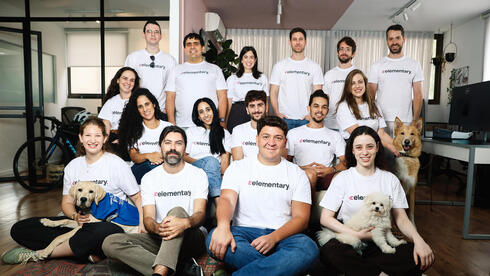
Boomi acquires Israeli startup Elementary for $43 million
1 hour ago
 Business
Mega chicken farm expansion plan withdrawn
3 hours ago
 Business
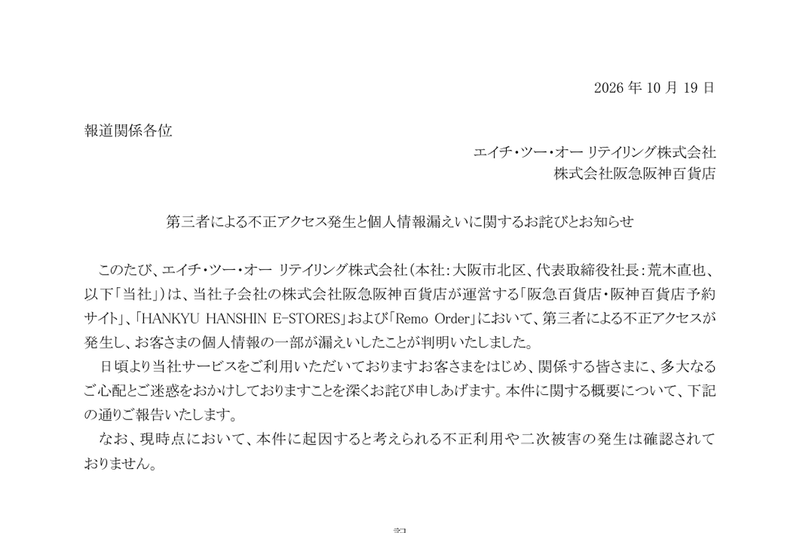
Data Breach at Hankyu Hanshin Department Store Common ID System Affects Nearly All 1.26 Million Members
3 hours ago
 Business
Global Startup EXPO and Nippon Startup Awards 2026: METI Showcases Japan's Deep
3 hours ago
 Business
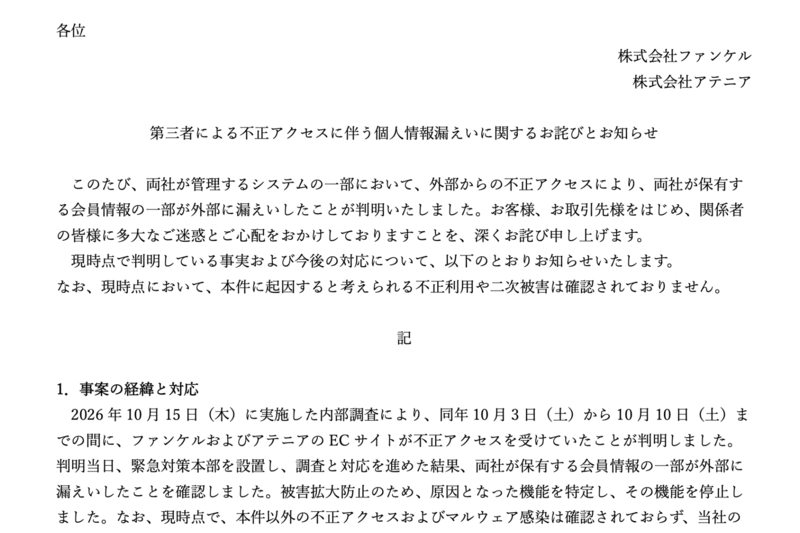
FANCL and Attenir Suffer Data Breach Affecting 780,000 Customers, Exposing Addresses, Names, Phone Numbers
5 hours ago
 Business
DeepSeek Quietly Ships V4.1-Flash
5 hours ago