
INDIA's coalition conundrum: The Opposition's missing bridge
INDIA's coalition conundrum: The Opposition's missing bridge-builder
Why the INDIA alliance needs a HKS Surjeet-like bridge before 2029
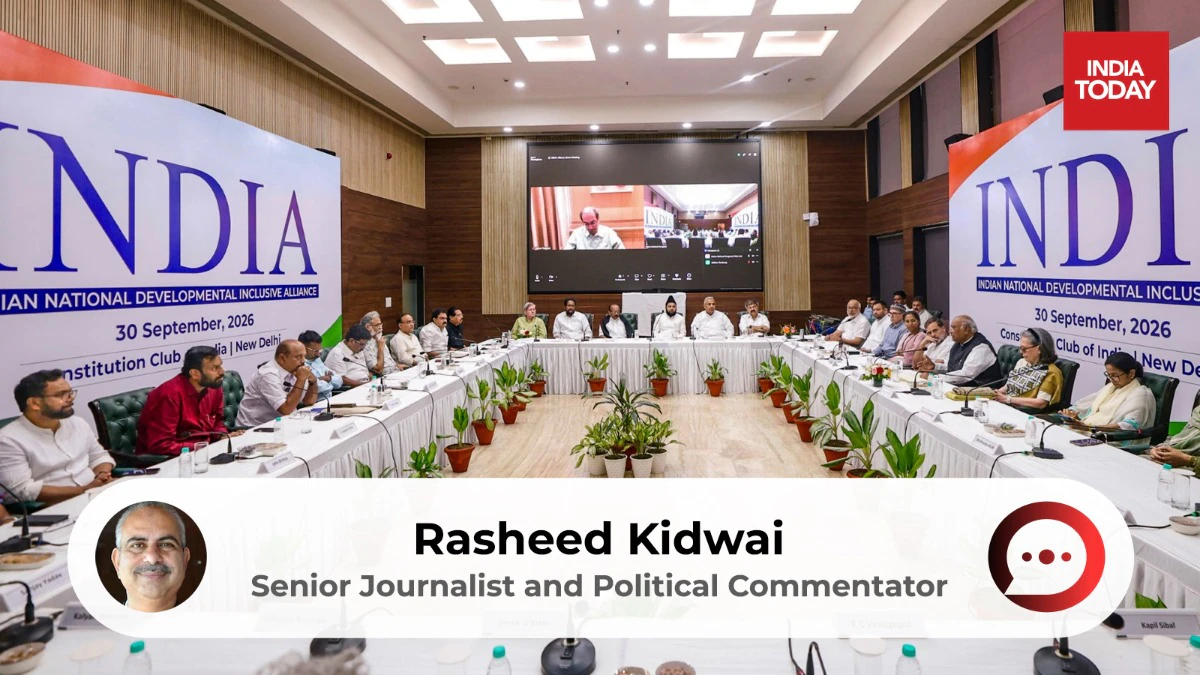
As a truncated INDIA bloc met at the Constitution Club on Wednesday, several unanswered questions — including the leadership issue and a coherent strategy for the upcoming Assembly polls in Uttar Pradesh, Goa, Punjab and Uttarakhand — was before the allies.
A closer scrutiny reveals how an anti-Narendra Modi front is struggling to operate without a formally binding dispute-resolution mechanism or a permanent joint seat-sharing framework.
Behind bravado and aggressive posturing, top INDIA partners are trying to gloss over the fact that in Indian coalition politics, there have always been its unsung craftsmen. They rarely occupy the front pages, command the largest crowds, or become the face of the government they help create. Yet, when history turns, their role becomes unmistakable.
Harkishan Singh Surjeet was one such political architect.
He did not seek the prime minister’s chair. He did not lead the largest party. He did not possess the mass appeal of many regional satraps, whose fortunes he helped negotiate. But in the complicated arithmetic of Indian politics, Surjeet understood something fundamental: governments are not formed merely by numbers — they are formed by relationships.
In 1996, when the Bharatiya Janata Party emerged as the single largest party after the Lok Sabha elections, but could not sustain a government, Surjeet played a crucial role in bringing together the United Front arrangement with outside support from the Congress. Eight years later, in 2004, he was again among those who helped construct the political architecture that became the United Progressive Alliance.
His strength was not command. It was credibility.
As India moves towards 2029, the Opposition’s challenge may not simply be about finding a common electoral programme. The larger challenge is finding a political interlocutor — someone who can speak to parties that do not naturally speak to each other, absorb egos, negotiate contradictions, and keep channels open even when alliances appear fragile.
The history of Indian politics offers repeated evidence that alliances are rarely built only through ideological similarity.
The National Front government of 1989, the United Front experiments of the mid-1990s, and the United Progressive Alliance era after 2004 all emerged from conversations among parties with different histories, ambitions, and voter bases.
The Congress and the Left had sharp ideological disagreements. Regional parties often carried strong anti-Congress traditions. Yet political negotiations created workable arrangements because there were individuals who could bridge these contradictions.
Surjeet understood the psychology of regional leaders. He knew that a chief minister in Chennai, Kolkata, Srinagar, or Patna was not merely negotiating seats; he was negotiating dignity, relevance, and political space. That is why his role was unique.
A coalition does not collapse only because parties disagree. It collapses when nobody has the authority, patience, or credibility to settle disagreements.
The Opposition today faces precisely this vacuum.
There are several parties with national ambitions but largely regional foundations. The Dravida Munnetra Kazhagam has enormous influence in Tamil Nadu, but limited organisational presence beyond the state. The Trinamool Congress, despite factionalism, remains relevant. But its political universe is deeply connected to Bengal’s electoral landscape. Parties in Andhra Pradesh, Odisha, Telangana, Jammu and Kashmir, and the Northeast have their own calculations and histories.
A national opposition formation must therefore answer a difficult question: who talks to everyone? The answer cannot always be the largest party. The largest party brings electoral weight. The interlocutor brings trust.
The Congress remains the central national opposition party by organisational spread and historical presence. In the 2024 elections, it increased its Lok Sabha tally significantly compared to 2019, winning 99 seats. Yet the Congress also faces a political paradox.
Many regional parties want the Congress as a partner, but not always as a dominant force. They seek its national footprint while guarding their own regional space. This tension has existed for decades. The Congress, therefore, requires not only organisational revival but also a coalition strategy built around accommodation.
The INDIA bloc’s internal challenge is that every regional leader has a legitimate claim to political importance. Mamata Banerjee represents one of the country’s most electorally significant states. MK Stalin commands a powerful Dravidian political tradition. Akhilesh Yadav has rebuilt the Samajwadi Party’s relevance in Uttar Pradesh. Other leaders in Maharashtra, Bihar, Punjab, and Jammu and Kashmir bring their own histories and constituencies.
The Northeast presents another layer of coalition complexity. Leaders such as Meghalaya Chief Minister Conrad Sangma and the National People’s Party represent a political space that has traditionally maintained an independent regional identity while engaging with different formations in New Delhi.
Any serious Opposition strategy before 2029 would have to explore whether such regional forces can be brought into a broader national conversation. That would require sensitivity to the Northeast’s distinct political aspirations and an understanding that alliances there cannot be built merely through arithmetic, but through sustained engagement and trust.
Managing such a coalition requires a person who can provide reassurance without appearing to impose. India has had many such figures: Jayaprakash Narayan, Chandrashekhar, George Fernandes, and Surjeet. Their influence came from the ability to listen.
Surjeet succeeded partly because nobody saw him as a competitor for the ultimate prize. His role was that of a facilitator. Modern politics needs similar figures.
The urgency of finding an appropriate interlocutor becomes clearer when one looks at the anxieties confronting regional parties today. Recent controversies around party symbols, organisational splits, and candidate movements have reinforced a larger concern among Opposition leaders: regional strength may not always be enough protection against the pressures of national politics.
The lesson is that Opposition unity has rarely emerged automatically from anti-incumbency. It has been negotiated, patiently and painstakingly, by individuals who understood that politics is not only about defeating an opponent but also about managing partners.
The obvious question is whether such a role can be performed by Rahul Gandhi. As the principal face of the Congress and the leader who has emerged as the party’s most prominent national campaigner, he occupies a central position within the landscape. However, coalition management requires a particular skill set — one that goes beyond mass mobilisation and electoral messaging.
It requires sustained conversations, private negotiations, and the ability to make partners feel heard even when their ambitions do not entirely align. Whether Rahul Gandhi chooses to expand his role from Opposition leader to coalition architect will be one of the defining questions for the Congress in the run-up to 2029.
Alternatively, the Congress may have to look within its broader political ecosystem for figures who can complement its central leadership with the art of negotiation. Leaders like Mallikarjun Kharge, with his decades of experience across Karnataka and Parliament, or senior figures like Sonia Gandhi, whose tenure saw the construction of the UPA coalition model, represent different traditions of consensus-building.
Beyond the Gandhi family, experienced Congress leaders with long-standing relationships across parties could potentially play the role of bridge-builders. The challenge, however, is not merely finding a senior leader; it is finding someone whose political credibility extends beyond the Congress organisation and is trusted by parties that have their own ambitions and reservations.
The Opposition before 2029, therefore, needs more than a prime ministerial conversation. It needs a political mechanism. Because the biggest challenge before the Opposition may not be winning the next election. It may be holding together the political space required to fight it.
Related Stories
 India
India
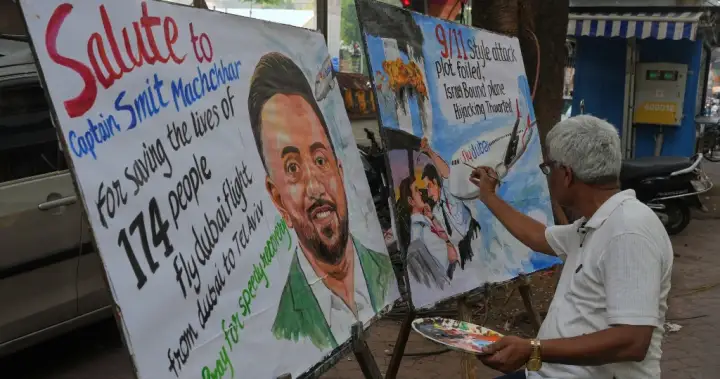
Indian airline captain hailed as hero after cockpit attack on FlyDubai flight
46 minutes ago
 India
India
CPM Ernakulam meet discusses measures to strengthen working
46 minutes ago
 India
India
‘Dumping ground for anti
1 hour ago
 India
India
The Indian government has warned its citizens of the "deadly dangers" of joining the Russian military
5 hours ago
 India
India
When politics stalls the city: How TVK
6 hours ago
 India
India
Rahul Gandhi is ‘pre
7 hours ago
 India
India
Rahul Gandhi is 'pre
8 hours ago
 India
India
INDIA bloc leaders call for political, legal and ground fight over EC row
9 hours ago