
Indiana looks to artificial intelligence to root out Medicaid fraud
INDIANAPOLIS (WRTV) — Indiana is testing whether artificial intelligence can identify and prevent Medicaid fraud.
The Indiana Family and Social Services Administration (FSSA) has entered a 90-day pilot program with the U.S. Centers for Medicare & Medicaid Services (CMS) and Texas-based tech company Oracle, testing whether AI can stop “waste, fraud, and abuse”.
“We want to make sure every dollar is being spent correctly,” FSSA Deputy Chief of Staff Marcus Barlow told Indiana’s I-Team in an interview. “It makes (Medicaid programs) more sustainable for the long term.”
The pilot program will use FSSA data to identify suspicious billing patterns, prevent improper payments, and even provide AI-generated case packages ready for investigation.
The AI is expected to be able to do this work in real time, flagging claims before they’re paid and allowing regulators to immediately intervene.
Barlow said the AI-enforcement tools will scrutinize Medicaid providers as well as the more than 1 in 4 Hoosiers who rely on some form of Medicaid.
“They should be happy that Indiana is being serious about fighting waste, fraud, and abuse,” Barlow said.
Indiana’s I-Team requested the data use agreement Oracle signed as part of the pilot program.
It says the state will remove personal information and protected health information from the data it shares with Oracle. The agreement requires Oracle to destroy any restricted information it obtains. There are restrictions on how information is stored, and Oracle isn’t allowed to share FSSA data with outside parties.
Oracle began analyzing FSSA data on Wednesday morning, Barlow said.
Medicaid spending has been a focus of the Braun Administration.
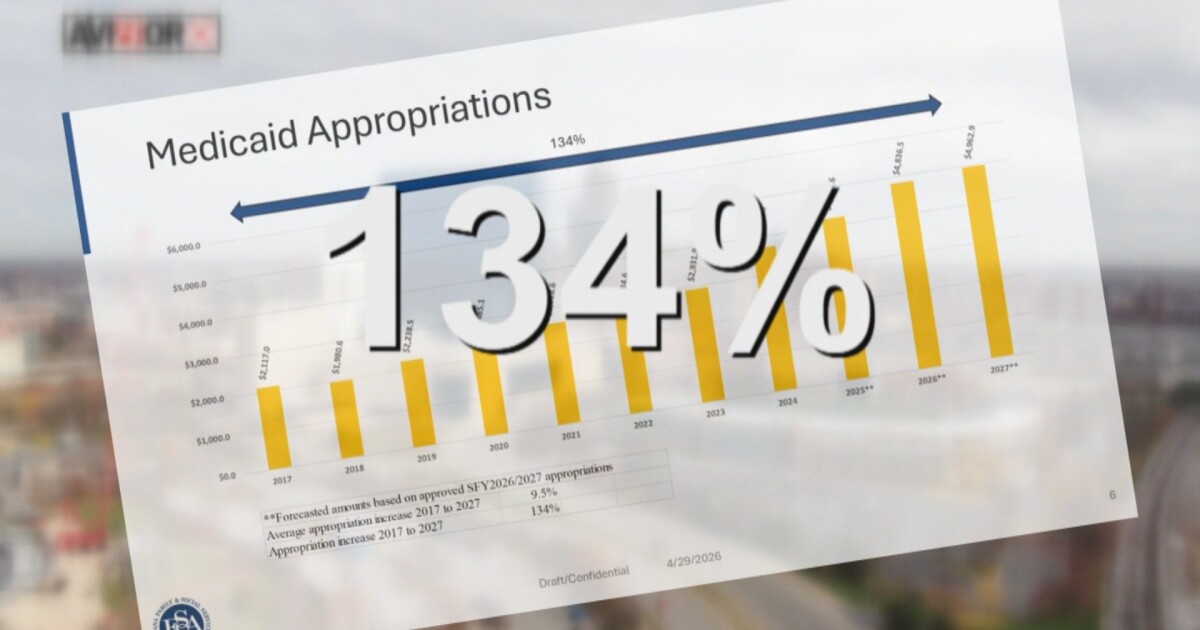
Indiana’s Medicaid appropriations have jumped 134% over the last ten years, according to the FSSA, from roughly $2.1 billion in 2017 to nearly $5 billion for fiscal year ‘27.
Since Gov. Mike Braun, a Republican, took office, Indiana has added work requirements to the Healthy Indiana Plan (HIP), created new limits for a popular autism therapy known as Applied Behavior Analysis, and ordered some providers to stop advertising Medicaid programs.
The FSSA recently announced a period of “expanded oversight”, with a series of audits. It’s currently adding 400 new employees to help manage increased eligibility checks for HIP starting next year.
Barlow said the AI pilot program isn’t meant to replace any FSSA workers or regulators. It won’t be able to initiate regulatory action even while flagging potential abuse.
Along with addressing real-time issues of abuse in Indiana, the program is meant to evaluate possible challenges and whether similar models can be expanded to other states. After the 90-day pilot program, CMS will review a “proof of concept report” to guide future strategies and investments.
“We’re excited to see what results it produces,” Barlow said.
Related Stories
 AI News
What Battery Recycling Could Tell Us About AI’s Role in Experimentation
38 minutes ago
 AI News
Outrage over Claude’s AI watermark is missing the most important point
38 minutes ago
 AI News
Tech Mahindra expands ServiceNow partnership for enterprise AI adoption
1 hour ago
 AI News
Opinion: There are lies, damned lies and AI: why I despise ‘artificial intelligence’
1 hour ago
 AI News
AI leaves its mark: One in three web texts is now generated by chatbots
1 hour ago
 AI News
Israeli scientists: AI can make personality tests, predict responses
2 hours ago
 AI News
Artificial intelligence could push up inflation
2 hours ago
 AI News
Alberta technology minister heckled at second town hall on AI data centres as Meta project stokes distrust
3 hours ago