
I don't want a US tech bro as a patron
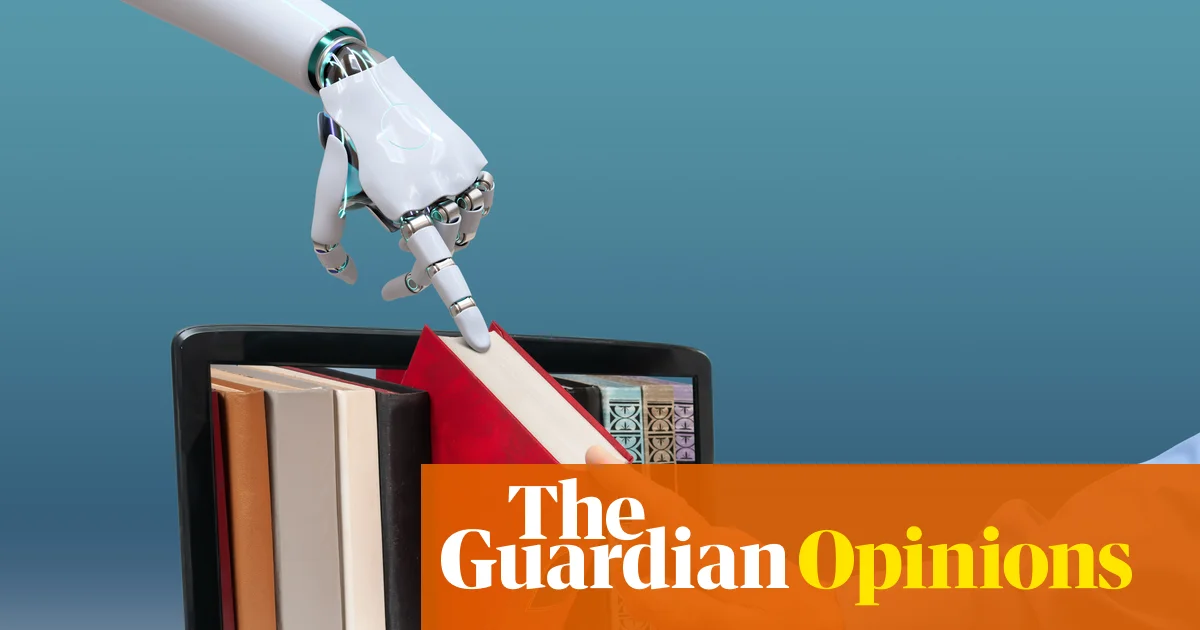
Last week I went to Canberra with a group of other people who live by selling our creative work. We make the books, songs, artwork, First Nations artworks, films, music and TV shows that delight and entertain us, reveal us to ourselves as humans, and connect us as Australians.
The works we make are our property. They are ours to sell. In my case, this involves licensing my books to publishers around the world, who produce and distribute them for money, 8-12% of which comes back to me as royalties. This is how copyright works. It is the law, in the same way as Torrens Title is the law for real estate property. Without copyright, no one would make anything. Why would you, if it could immediately be stolen from you? But this is what has happened. All my books have been ingested into AI computer programs without my consent and without payment.
Big tech is hoping to make vast fortunes from AI, and the valuations of these companies are based on them not paying their suppliers for the ingredients, which are our works. Of course your balance sheet looks better if you do not pay your suppliers.
The big tech companies are facing dozens of lawsuits on this issue in the US. They are now lobbying governments there and around the world to change the law so that what they have done is not illegal. They have not succeeded, but they are trying it on here in Australia now.
Indeed, in Bartz v Anthropic last year, a US$1.5bn settlement was awarded to authors, of whom I am one. Though all my works in many languages have been used illegally, only one title was compensable: I will get, eventually, US$3,000 for one stolen edition of All That I Am.
Legal action is not the way to go here.
We needed to go to Canberra because cashed-up representatives of big tech – including Google, Meta and Anthropic – have been lobbying the government hard to get rid of our right to our property. But they are not talking to us, who own the property they want. Big tech is falsely linking the gutting of our copyright with the building of AI centres here. That’s a total furphy. The datacentres are being built already. What they really want is to find a way to make the creative product of our country available to them for free, or for peanuts.
Last year the government firmly rejected the first attempt by big tech to get rid of copyright (and so the creative industries) in Australia. They called it a “text and data mining exemption” from copyright law. They wanted their taking of our work to be made legal, by “exempting” our work from copyright law. Calling it “mining” is interesting. Our government sets mining licences and terms, because all Australians are entitled to share in the profits of what we collectively own. But creative works are not ore in the ground. They are made by, and so owned by, individuals like me. I do not want the government to expropriate my life’s work from me.
Now, big tech is said to be secretly proposing a way for the government to compulsorily acquire my property, and hand it over to them for a pittance. Big tech is said to be proposing to donate money to a fund for the government to administer, and give me some kind of statutory handout for my work. This would turn me from someone who owns property I can sell and license as I decide, to someone who has to apply to a government fund for a government administered statutory handout.
It is out of the question. The reason they are giving, apparently, is that it is hard to find rights holders and negotiate payment. They know this is not true. Not to mention ironic, considering the first tech fortunes were made by mining our personal data. They know where we all live. And they know what we’re worth. That’s why they’ve taken our work.
It is not difficult to negotiate consent to use my books, or anyone else’s artworks. In Canberra, the feeling among us creatives was that we’d love to negotiate. In my case it would involve a call to my publisher, and a negotiation of price. This is how many industries based on intellectual property work, from global publishing to pharmaceuticals: you negotiate consent (licence terms) and price for the product. Collecting societies for film, songs, books and art exist in this country, and were all with us in Parliament House. The Australian Society of Authors estimates it would take six phone calls to find rights holders and start negotiating for most of the book industry’s copyright work. That’s a lot less effortful than what big tech had to do to ingest the books in the first place. And that’s a truly shocking story.
To make the “large language models”, first the AI programs “scraped” the internet for text to ingest – all sorts of material, from Reddit posts to people’s emails, was taken.
But to get high quality words, ideas, facts that have been checked and history that is not a rumour, they had to turn to books. I was curious as to how this was actually done. Big tech of course don’t want it known, because it’s how they broke the law. They went to illegal sites which had already pirated our books and downloaded these stolen works holus-bolus. There is no world in which taking books from pirate websites could have felt legal. The other way they took our work was to send people out to find physical books, often secondhand, and then conduct a huge operation whereby the spines were ripped off, and the pages fed en masse into scanners.
Words fail me here. Aware that books are the high quality text AI needs, big tech calls our product their “special sauce”. They know its value, and they did anything to get it.
American big tech might think that because we speak the same language, our democracies resemble one another. But Australia is by some measures both the richest and fairest country in the world. Fairness is fundamental here. We trust our government, of whatever stripe. And we have faith that this one will not give away our rights as property owners to overseas big tech.
Copyright has existed for 316 years, since the 1710 Statute of Anne. Before that, artists, writers, musicians could not own their work. They could not publish and live independently from royalties. Like Mozart or Goethe, or many lesser lights, they had to find some amenable duke or despot to be their patron. The development of democracy has gone hand in hand with copyright, and the many voices and views it allows to exist. In places where copyright was not respected – like the East Germany of Stasiland – it doesn’t go well for the people, or the places. We don’t want to live in a country where copyright is not respected. And I for one certainly don’t want a US tech bro fund as a patron.
Related Stories
 AI News
World Cup 2026: Belgium has appeal denied after FIFA reversed USMNT's Folarin Balogun 1
12 minutes ago
 AI News
Mbappé calls out Paraguayan senator’s racist remarks after France’s win
12 minutes ago
 AI News
Cristiano Ronaldo fights back tears after his final World Cup appearance for Portugal
12 minutes ago
 AI News
Spain advances to quarterfinals in Portugal star Ronaldo's potential final World Cup game
12 minutes ago
 AI News
News Live: Watch Times Now Live Streaming | Live News India, World, Politics, Sports News
13 minutes ago
 AI News
News of the day: New Alberta
13 minutes ago
 AI News
Alberta pharmacies continue to be plagued by forged prescriptions
13 minutes ago
 AI News
Lime to take over some e
13 minutes ago