
How can we help our fathers live longer?
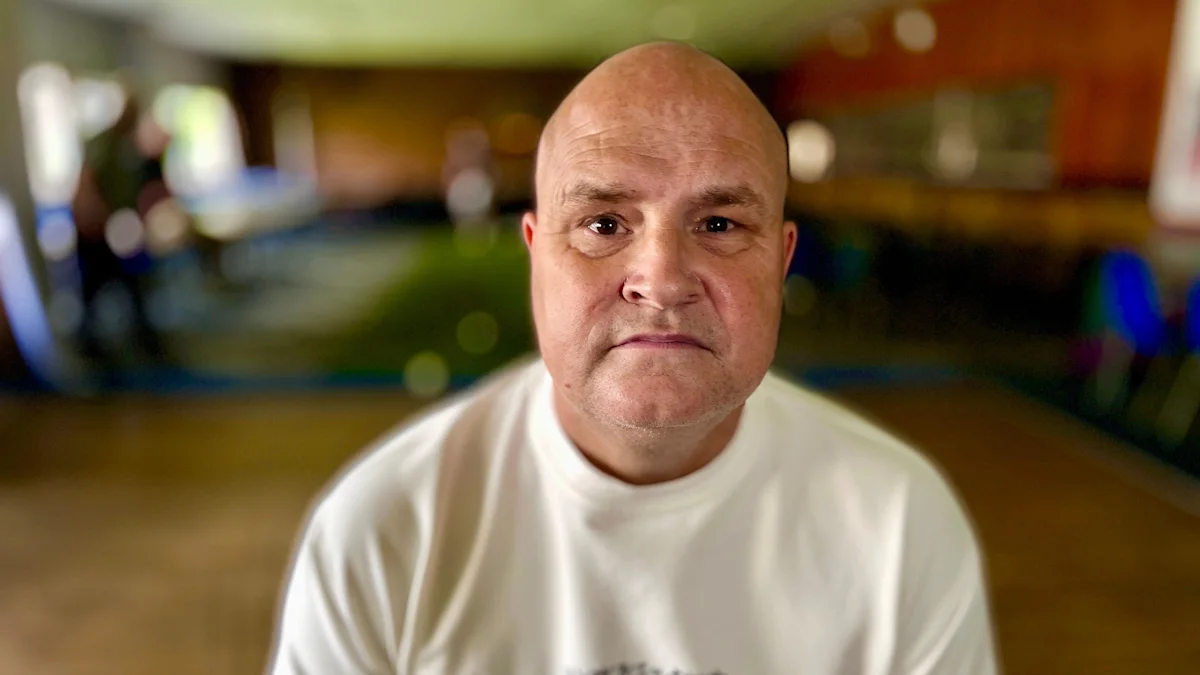
When 56-year-old Shane Newton, a father from Huntingdon in Cambridgeshire, finally decided to visit his GP, it was too late.
The cancer, which was in his prostate, had already spread to his bones - something doctors say is much harder to treat and is now incurable.
Prostate cancer is relatively straightforward to manage if caught early, and he says, looking back, he "wished" he'd seen a doctor "seven or eight months before".
He put his tiredness down to working long hours in a factory and did not think it was necessary to go to the GP.
"I kept putting it off, and just left it too long, I realise that now," he says.
"It's just a man thing.. You just don't like to admit you're not feeling good, you just sort of get on with life, you have aches and pains...
"Because of work, I did 12-hour shifts, and so I didn't really get much spare time... so I just slept and went back to work the next morning."
By the time he sought help, the PSA test - used by GPs to flag prostate cancer - was dangerously high.
"They said anything over 4 for my age is a red flag; mine was 78."
Newton's story reflects a wider picture. Men are less likely to visit the GP than women. In Cambridgeshire, around 40% of those attending health checks in surgeries are men, compared with 60% women.
In England, one in five men will die before the age of 65, compared with roughly one in eight women. Women also live, on average, almost four years longer than men.
Cancer accounts for the largest share of male deaths, while heart disease - much of it linked to blood pressure and lifestyle - remains the single biggest killer.
They are statistics that underline why the government's men's health strategy, launched in November, has been described as long overdue.
So, is anything changing, and how can men be kept healthier and living longer?
At the Onyx Tribe CrossFit gym in Huntingdon, some believe attitudes are shifting. But even among those who prioritise fitness, health can still be overlooked.
Louis Pearce, 24, a field sales executive, said despite being very fit, he sometimes ignored symptoms.
"The last time I went to the GP was four, maybe five years ago."
"I often get into a cul-de-sac, searching up myself about what the problems are with me, and I usually assume that in time, these things will pass, so I only go if it's really serious."
He suggested more accessible services - such as walk-in centres or helplines - could make a difference.
Others say they see the same thing. Lukas Koziel, 42, said he had been putting off a GP visit.
"I haven't seen a GP for about two years. I've booked an appointment next Friday, but I've been avoiding it — and to be honest, I don't know why."
GPs say they are having to adapt to these behaviours.
Dr Neil Modha, at Thistlemoor Medical Centre in Peterborough, said some men still delayed seeking help until symptoms became serious.
"They may come in, for example, telling us they've lost two stones in weight, and we would hope they would have come sooner"
He said that meant making every interaction count. A visit for back pain, for example, could become an opportunity to check blood pressure or discuss mental health.
Dr Modha said services needed to be more proactive, reaching out instead of relying on patients booking appointments and being flexible.
"Many people might be in really busy jobs, and so Monday to Friday services may not work for them.
"We need to offer Saturdays, and here, we do open up on Saturdays until five o'clock."
The approach reflects a wider shift in the government's strategy - taking services into the community rather than expecting men to come forward.
Taking health checks to the public
In Cambridgeshire, this includes mobile and self-service health checks in everyday settings.
Machines in supermarkets, leisure centres and libraries can assess body mass index, blood pressure, heart health and body fat in around ten minutes.
Michael Hadley, 49, a business consultant, tried one during his lunch break at Huntingdon library, describing it as "simple" and "painless to use".
He said the results were "surprising" and had given him "something to think about", after being told his blood pressure was slightly raised and his body fat was classified as "high".
Councillor Luis Navarro, of Cambridgeshire County Council, said uptake had been encouraging.
"It's free, accessible, and the results are almost instant."
He added that use was now almost evenly split between men and women — something he described as "positive".
The machines are linked to GP records and trigger follow-up calls where needed.
But for many men, illness is not just physical - it can take a mental toll.
Places like the Montagu Working Men's Club, once associated with drinking and smoking, are now hosting something very different.
Run by Hunts Community Cancer Network, the support group brings together men living with cancer - talking, playing darts and cards, and supporting each other in person and online.
For Jim Smith, a long-time member who survived pancreatic cancer, it has been life-changing.
"You sort of descend into this vacuum. You've been looked after and cared for, and now you're on your own," he said.
"You could be surrounded by family, but you feel very alone. And that is the only way I can describe it, feeling very alone, but surrounded by people.
"When you're with people like these guys, they get it. They know how you feel.
"Psychologically, I've improved a great deal, and that is due to this group."
He said support like this was essential - and that men should not try to cope alone.
Newton agrees. "Get yourself checked… otherwise you'd be like me and leave it too late," he warned.
A Department of Health and Social Care spokesperson said:
"The Men's Health Strategy marked a turning point in how we're taking comprehensive, coordinated action to address the health challenges facing men and boys."
The department said it was investing up to £3.6m in suicide prevention projects for men and boys and working with Premier League clubs to reach wider audiences.
Do you have a story suggestion for Cambridgeshire? Contact us below.
BBC Politics East will be broadcast on Sunday 1 February at 10:00 GMT on BBC One in the East of England, and will be available after broadcast on BBC iPlayer.
Follow Cambridgeshire news on BBC Sounds, Facebook, Instagram and X.
The table tennis club where you can see a doctor
Men's group hopes to ease strain on NHS services
'Men need to speak up when they don't feel well'
Related Stories
 Community
After the shuffle: N.L. cabinet settling in after shakeup
7 hours ago
 Community
Air ambulances report busy summer as demand rises
9 hours ago
 Community
Hopes porpoise net recording can help stop deaths
10 hours ago
 Community
3 states battling new measles outbreaks. What to know
13 hours ago
 Community
Number of Australians missing in Nepal’s deadly floods rises again, as Albanese deploys more personnel
16 hours ago
 Community
Russian strike on warehouse near Kyiv kills at least 37
1 day ago
 Community
Rescuers search for thousands following deadly Nepal
1 day ago
 Community
Three charged after Calgary man kidnapped, robbed and forced into car trunk
1 day ago