
Housing projects are piling up across Canada as the pipes underneath can't keep up
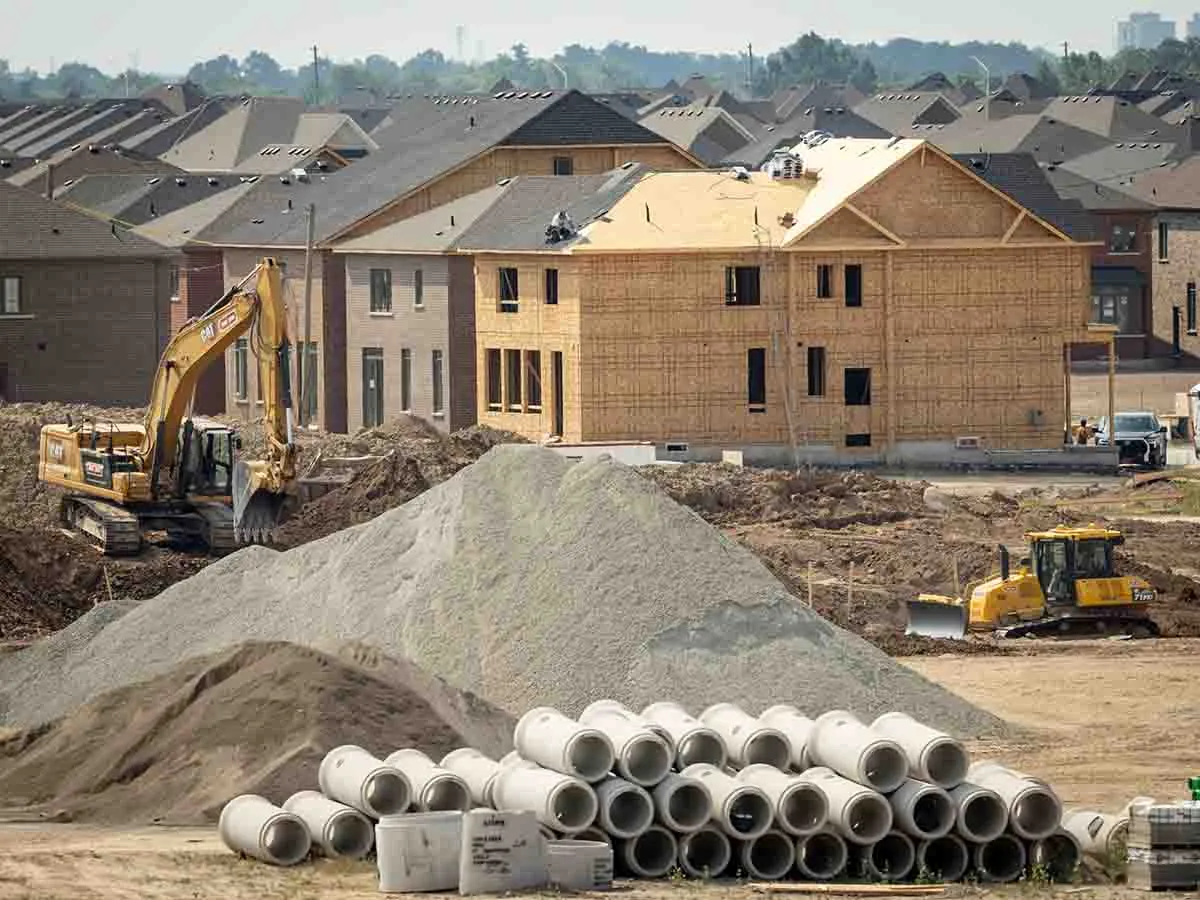
Quebec developer Francis Roy has worked for six years toward what was supposed to become one of the province’s largest residential projects. His company, Groupe Humaco Inc., assembled land in Lévis, across the St. Lawrence River from Quebec City, negotiated with the municipality and signed an infrastructure agreement in 2020.
It invested tens of millions of dollars preparing the site for an approximately $800-million mixed-use neighbourhood that would feature about a dozen buildings, including seven multiresidential complexes with roughly 1,800 housing units.
Today, the roads are in place, the underground infrastructure has been installed and the development is ready to move forward. The only thing missing is permission to build.
Before Roy’s company could get building permits, the city imposed a moratorium after its wastewater treatment system reached its capacity, leaving his project stalled while officials work on expanding the aging infrastructure needed to serve it.
Construction executives, municipal engineers and developers say aging water and wastewater systems are emerging as one of the country’s biggest constraints on housing construction, leaving approved projects to possibly sit idle for years while improvements are made. As a result, new homes do not reach the market and developers face added carrying and financing costs that may ultimately be reflected in consumer housing prices.
“It’s a huge impact on developers like me,” Roy said. “We invested a lot of money and now it’s stuck there. Even though I want to take that money and go somewhere else where they have the infrastructure, I just can’t.”
We invested a lot of money and now it's stuck there
Canada has about $555-billion worth of wastewater, drinking water and solid waste infrastructure, according to Statistics Canada estimates. As of 2022, roughly $65.6 billion — about 12 per cent — was in poor or very poor condition.
In Roy’s case, the moratorium on new developments has dragged on, and could continue to do so for several more years, he said. Following the freeze, Groupe Humaco joined three other developers in a lawsuit seeking more than $30 million in damages from the municipality.
In the meantime, Roy’s company is left with tens of millions of dollars tied up in a project it cannot build, preventing it from moving that capital into other housing developments where municipalities have the treatment plants, pumping stations and sewer networks to accommodate a surge in population growth.
That might be difficult in Quebec, since 43 municipalities imposed construction moratoriums in 2025 because their water or wastewater systems lacked sufficient capacity, preventing more than 36,000 housing units from being built., according to a report by Quebec economic consulting firm Aviseo in March.
The report estimated it would cost $49 billion to replace Quebec’s water infrastructure that is at high or very high risk of failure, including associated road surfaces. It concluded that aging municipal water infrastructure has become a “structural obstacle” to residential development at a time when housing demand has never been higher.
Related Stories
 Canada
Priyanka Chopra Jonas on love at a distance
32 minutes ago
 Canada
P.E.I. archives handling huge surge in requests
32 minutes ago
 Canada
As Canadian booze bans dominate tariff talks with U.S., winemakers and distillers feel caught in the middle
32 minutes ago
 Canada
Port Hope’s past fuels pushback on nuclear reactor
1 hour ago
 Canada
Europe, Canada condemn Israeli plans for new West Bank settlement
1 hour ago
 Canada
Provincial leader says Trump is a ‘bad person’ as Canada weighs concessions for trade deal
2 hours ago
 Canada
‘Let it sit on the shelf’: Manitoba premier says Canadians should continue avoiding purchase of U.S. liquor
3 hours ago
 Canada
Do Canadians plan to buy U.S. booze when it returns? Here’s what we learned
3 hours ago