
Hot startup of the month: Trashformas Nigeria Limited
The African continent's sustainability ecosystem has reached a critical point, marked by an unprecedented surge in green innovation, with waste management emerging as one of the most promising sectors for both investment and impact.
In this evolving landscape, Nigeria is leading the shift from a culture of disposal to one of reinvention and value creation.
Recycling hubs and upcycling startups are transforming plastic, metal and organic waste into viable products and sustainable businesses that drive innovation, create jobs and deliver meaningful environmental impact.
At the forefront of this transformation is Trashformas Nigeria Limited, an Abuja-based clean-energy and waste-to-wealth startup that converts organic waste, including animal and agricultural waste, into biogas for cooking and commercial use.
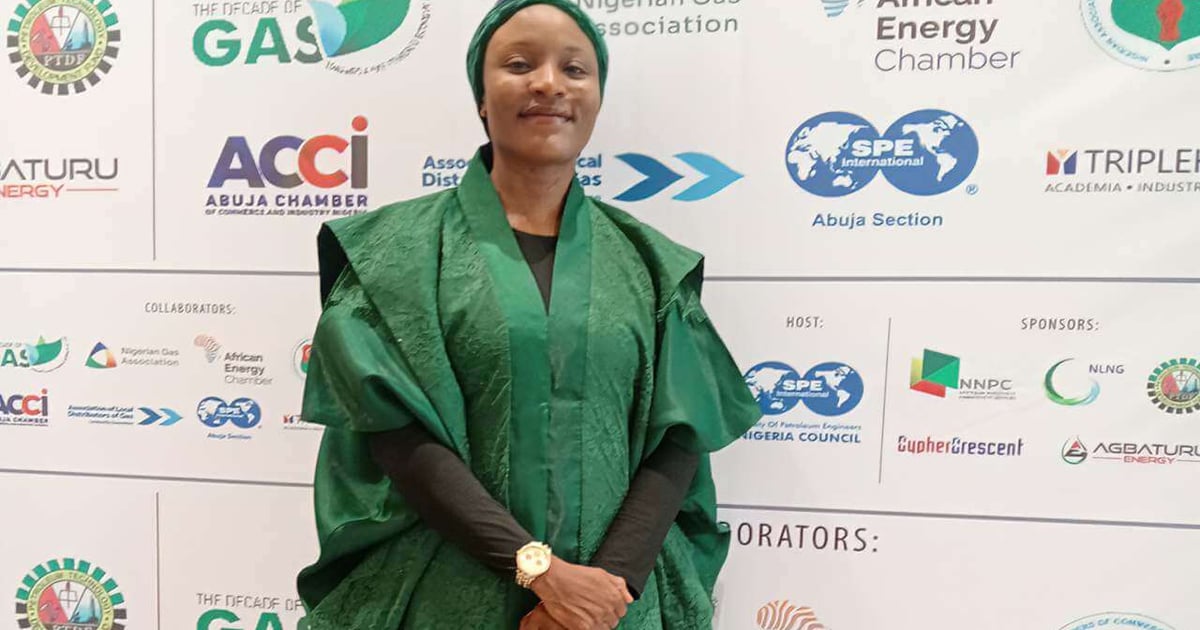
Connecting Africa Associate Editor Matshepo Sehloho spoke to Trashformas Nigeria Limited Founder and CEO Thara Aisha Atta to gain more insights into the company's work.
Related:Hot startup of the month: Kenya's eBiashara
Matshepo Sehloho (MS): What pivotal moment or experience sparked your decision to found Trashformas Nigeria Limited and dedicate your career to waste-to-energy solutions in Nigeria?
Thara Aisha Atta (TAA): In 2021, while studying at the National Open University of Nigeria (NOUN), I wanted a sustainable way to support myself and turned to my passion for research writing.
A year later, after submitting a comprehensive three-topic research proposal to various state Ministries, Departments, and Agencies (MDAs) with pure persistence on my part and zero institutional interest in sponsoring or testing my ideas, I decided to take matters into my own hands.
One of those proposed topics was 'waste management and conversion methods.' Instead of waiting for a government green light, I pulled that concept out of the paper and decided to build it myself. The rest, as they say, is history.
MS: You have a decade of experience promoting circular economy practices across emerging economies, how did that journey lead you to focus specifically on biogas for households and university students?
TAA: I've always been drawn to sustainability, my career started in late 2014 as a proposal writer for my father, Odoba Atta, who was my very first employer.
Ironically, my first proposal to him was for ultrasonic solar pest repellers to eliminate toxic chemical fumigants in workspaces.
Fast forward to 2021, that dual background in proposal writing and eco-friendly solutions naturally guided my research direction.
While we initially looked at broad household and business markets, our watershed moment came in mid-2025 when we were accepted into the Africa Gas Innovation Symposium (AGIS) startup competition, co-sponsored by CypherCrescent and the Society of Petroleum Engineers (SPE).
Related:Four sustainability trends to watch in 2026
That environment challenged us to think about market validation in controlled ecosystems.
We chose tertiary institutions for two very strategic reasons: first, it's a controlled environment that drastically lowers our Customer Acquisition Cost (CAC) and distribution overheads; second, students are an underserved segment where access to clean gas determines whether they eat or go hungry.
They are tech-forward early adopters, given that only about 19.4% of Nigerians had access to clean cooking energy as of recent baselines, introducing biogas into these hyper-local student hubs allows us to prove the model rapidly before scaling wider.
MS: As a woman leading a cleantech startup in Nigeria's male-dominated energy sector, what challenges have you faced, and what has kept you motivated?
TAA: I love this question, but my perspective might surprise you: I hardly look at a room and count the men versus the women.
If I am driven enough to build something, that vision is the only thing I see. The structural challenges I face are the same ones my male counterparts face, regulatory frameworks that treat renewable energy as a development handout rather than a viable commercial market, and a severe deficit of the patient, technical, and financial capital required to move the needle.
Related:SA startup Refiant raises $5M to advance sustainable AI
There is often a mismatch between the massive potential of the African continent in the green transition and the current understanding of representatives who don't yet see that we should be significant stakeholders controlling our own resources, not just passive recipients of foreign investment.
That being said, our space is visibly male-dominated, and we have to talk about the socioeconomic realities behind that.
Building infrastructure in Africa requires an immense amount of time and a luxury of focus that many women simply cannot afford due to fragmented societal systems.
Mid-aged male founders often have partners managing the domestic front, and younger male founders don't face the same biological or societal timelines imposed on women.
What keeps me motivated is that I am completely unburdened by those traditional templates. I don't come from a household that limits a woman's trajectory.
My family has given me the ultimate luxury: the psychological and emotional space to truly explore the limits of my capabilities and live up to the literal meanings of my names: Thara (Wealth) and Aisha (Prosperous)."
MS: Trashformas Nigeria Limited positions itself at the nexus of clean energy, waste management, and regenerative agriculture. Which of these three impact areas feels most meaningful to you, and why?
TAA: Waste management is the absolute foundation of our loop, but on a deeply personal level, it is the one that impacts me most. I have a real problem with the philosophy of 'out of sight, out of mind' when it comes to trash.
In Nigeria, you don't get rid of waste; you just move it, and ironically, you often meet it again in transit down the road.
The visual pollution of open dump sites is bad enough, but it's the invisible crises that cause me mental strain the heavy metal runoffs contaminating our water tables, the destruction of marine life, and the unmitigated release of methane gas, which can trap heat in the atmosphere up to 80 times more effectively than carbon dioxide over a short timeline.
Waste is an urgent hazard and until we radically shift our collective mindset from 'managing' waste to treating it as a high-value resource to repurpose, we are just shifting the location of our own destruction.
MS: You describe Trashformas Nigeria Limited as a social enterprise focused on making clean energy "affordable and accessible to underserved customer segments." Who is the specific community or person you think of when you're making tough business decisions?
TAA: I think of the people who have been conditioned to believe that clean cooking is an exclusive privilege of the wealthy.
I think of the families and students who are being priced out by liquefied petroleum gas (LPG) volatility, yet don't realize that reverting to solid fuels is a literal death sentence.
The World Health Organization notes that indoor air pollution claims roughly 95,000 Nigerian lives every single year, that is one preventable death every five minutes.
When things get tough, I think about our users across their entire lifecycle. The student using our gas today to get through university will become the household provider or business owner of tomorrow.
We are building a business model that meets them exactly where they are at each phase of their life.
MS: What makes the company's biogas technology different from other waste-to-energy solutions in Africa, and what was the most difficult technical breakthrough you had to achieve?
TAA: To be entirely transparent, our [competitive advantage] isn't a proprietary, hyper-complex hardware breakthrough; we aren't trying to reinvent the fundamental science of anaerobic digestion. Our true innovation lies in process optimization and distribution orchestration.
Where we are introducing a technical edge is in the digitization of our downstream distribution. We are integrating smart data tracking into our cylinder networks. This allows us to precisely quantify, verify, and defend our carbon capture data.
The real breakthrough here isn't the container itself but using that Internet of Things (IoT) data pipeline to unlock international carbon credits.
That data verification is what will ultimately allow us to subsidize the cost of clean energy for rural, bottom-of-the-pyramid communities who cannot afford market rates today.
MS: You're integrating smart technologies into decentralized biogas facilities, what does 'smart' mean in this context, and how does it improve the lives of end users?
TAA: In our context, 'smart' translates directly to safety, efficiency, and zero anxiety for the consumer. Biogas is inherently less volatile than conventional LPG, meaning the risk of a catastrophic explosion is near zero.
However, our smart systems include automatic leak detection notifications to prevent product and financial loss for the user.
More importantly, it eliminates the guessing game of cooking gas. The technology allows users to monitor their usage levels in real time via data tracking, ensuring they never run out of gas unexpectedly in the middle of a meal or at midnight.
By pairing this data with our pre-filled cylinder swap model at hyper-local pick-up stations, we make clean energy as predictable and friction-free as buying a phone recharge.
Trashformas Nigeria Limited Founder and CEO Thara Aisha Atta believes there needs to be a collective shift from 'managing' waste to treating it as a high-value resource to repurpose. (Source: Trashformas Nigeria Limited)
MS: Trashformas Nigeria Limited is about to launch biogas cylinders in the Nigerian market that you say will be cheaper, easily available, and provide more cook time; what does this mean for a typical Nigerian household switching from LPG?
TAA: For the typical Nigerian household, switching from LPG to Trashformas Nigeria Limited biogas means financial liberation and mental peace.
Currently, LPG prices fluctuate wildly based on foreign exchange rates and international supply chains. Because our entire value chain from feedstock collection to processing is entirely domestic, we can offer price stability that protects household budgets.
Furthermore, because of the specific caloric properties and purity of our processed biogas, users will experience optimized, efficient burn rates that give them more actual cooking hours per kilogram than volatile fossil alternatives. It means no longer choosing between buying food or buying the gas to cook it.
MS: Your 2035 vision is to make Nigeria a biogas powerhouse generating nearly 1 million tons of clean gas annually through 333 decentralized facilities, so what does success look like for you personally when that vision is realized?
TAA: Personally, success looks like a fully structured, airtight ecosystem where agriculture, energy, and logistics align to protect operational margins and create local wealth.
On the production side, 333 decentralized facilities will completely formalize the livestock industry [creating a network of small-scale biogas plants].
We will see the rise of waste material aggregators much like we see in plastic recycling today but localized, heavily regulated, and entirely insulated from foreign exchange volatility because our feedstock and markets are 100% domestic.
On the distribution side, it looks like thousands of jobs created for certified technical maintenance personnel and asset management agents. Success means proving that environmental sustainability and robust macroeconomic returns are not mutually exclusive in Nigeria.
MS: How do you balance the need for affordable cooking gas with the investment required to scale your technology across 333 facilities?
TAA: It requires a highly strategic approach to blended finance and precise market segmentation. We leverage mixed funding opportunities combining climate grants, patient equity, and infrastructure capital to offset the heavy upfront capex of building decentralized facilities.
Operationally, we balance the scales through targeted product allocation. Every facility is mapped to the specific economic realities of its immediate environment.
This data allows us to split our distribution: we serve high-demand, medium-to-high margin customer segments to secure our operational cash flow, which in turn gives us the financial buffer to safely subsidize and allocate affordable products to low-margin, underserved communities without bleeding our margins.
Related Stories
 Business
KPMG audit woes bleed into startup consultancy
21 minutes ago
 Business
The B
2 hours ago
 Business
Iran defiant in face of new U.S. sanctions, promises to respond forcefully
3 hours ago
 Business
AI Agent Startup Liner Raises USD 38M in Series C Funding
3 hours ago
 Business
Strengthening U.S. Industrial Independence
4 hours ago
 Business
Trump administration expands U.S. sanctions on Iran targeting countries with business ties to Tehran
5 hours ago
 Business
Bluevine Study Finds Nearly 2 in 3 Small Business Founders Cut Their Own Pay to Cover Unforeseen Startup Costs
5 hours ago
 Business
Elon Musk's former right
6 hours ago