
High
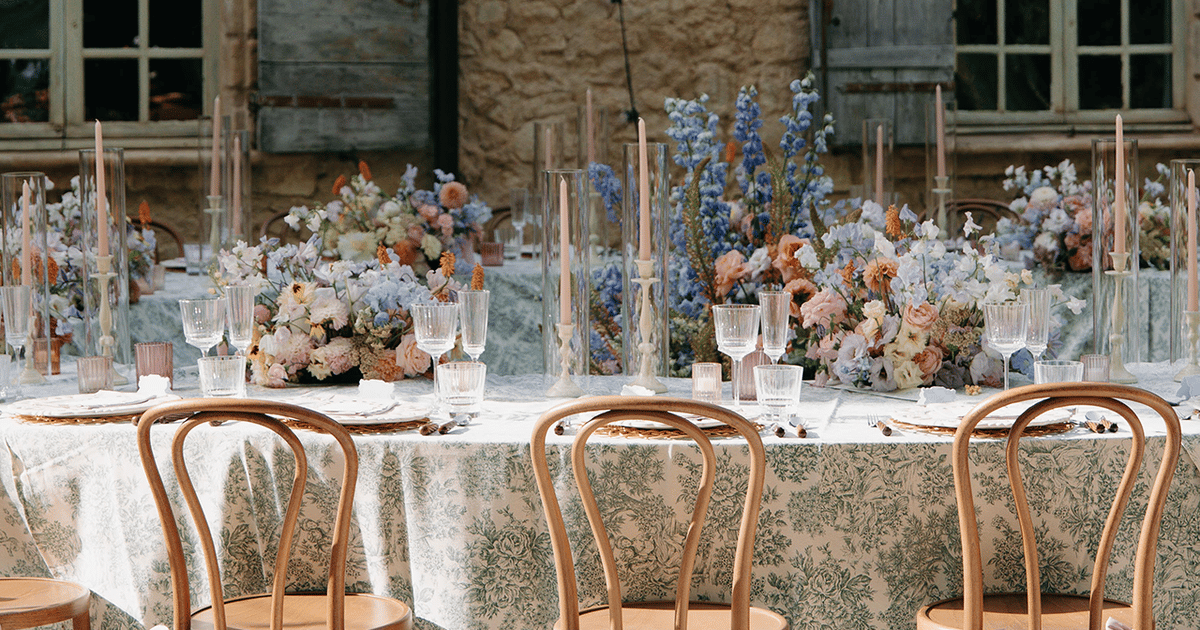
Three things happen at once. The groom wants a speaker to be set up in his “getting-ready” suite. The bride's father decides he would like to bring his first look with her forward by an hour. And a guest has fallen ill and needs a doctor located–quickly. All of it inside the same ten minutes, on a morning when nothing is supposed to go wrong.
An experienced planner does not panic. They have run through this kind of scenario in their mind hundreds of times. They have the team in place, and they spring into action: a team member is dispatched with the speaker. The hotel's butler is asked to call a doctor. And the planner spends the next half hour on the one thing that cannot be handed to anyone else: the quiet diplomacy of a father who wants to move a moment he has waited years for. No algorithm can do that.
Join us for a high-energy preview event designed to give you a first taste of the innovation, connections, and experiences awaiting you at Cater+Event 2027! This industry gathering is your VIP pass to the future of catering and events. You want the intel—you’ve got it well before anyone else!
Related:How to Use Tech Without Losing the Human Touch
This is the question I keep returning to as artificial intelligence becomes ordinary in our industry: where does the line sit between what a tool can take off a planner's plate and what luxury service can never hand over? My answer is that, as AI usage becomes mainstream, experienced human judgment becomes more valuable, not less. Nowhere is that more true than in weddings, where clients are precisely seeking a high-touch, emotionally intelligent service.
Some of the work can be handed over, and in some cases, it should be. The repetitive, pattern-based tasks that build no trust with a client, because the client never sees them. AI is arguably better than most humans at reconciling a table plan against a dietary spreadsheet, cross-checking 200 names without the error that creeps in somewhere around name 140 when the names gradually start blurring together. It is very good at running an eye over setup timings and flagging the clash you would otherwise catch too late, the florist and the lighting crew booked into the same room at the same hour. These are not tasks that replace a planner. They are administrative tasks, and resisting using the latest technology out of principle helps no one. Automating it frees the hours to provide clients with the creativity and judgment they actually need.
But while AI is great at repetitive admin tasks, there is a great deal it cannot do, and this is where a planner's real value lives.
Related:What 25 Years on the Event Floor Taught Me About What Software Gets Wrong
It cannot calm an unsteady bride who calls in tears a week before the day she has pictured since she was a child. It cannot learn that one bridesmaid drinks negronis and another will only touch champagne, brief the catering team, and keep eyes on those guests so neither is ever without a glass across three days. It cannot tell you whether this glass or that one will catch the evening light better in a particular room, or whether a cream tablecloth and a cream napkin sit beautifully together or clash in a way that will show in every photograph.
These are the tasks that sit on a mix of tact, taste, and emotional intelligence. A mix learnt from your very first years in the industry and passed down from one planner to the next, as newcomers gain the experience to see what the untrained eye misses. AI can learn a pattern, it cannot understand or apply the subtlety that is required when pulling together a production that revolves around emotions.
So where should a planner draw the line, and how? The principle I work to is straightforward: automate the input, own the output. Let a tool compare data, show you a comparison of a shortlist, let it take on reconciliation tasks. But always take on the task of fact-checker yourself. Never let it make the final call, and never let it speak to a client in your voice without reading it first. Be candid about where technology sits in your process rather than hiding it: clients know the landscape is changing, and most of them will use AI in some form themselves, whether at work or at home. And explain to them sincerely that every hour it saves is not used as room to take on more clients, but as more time for the things your clients actually want your eyes on. It's extra headspace to find creative solutions for their event, it's more time to research the perfect vendor, more time for you to chase that one vendor they're desperate to work with but who's really difficult to pin down. The crux of it is that line has to sit wherever you start to feel uncomfortable telling a client how you use these tools in your process.
Related:What AI Is Actually Good For (And What It Isn’t)
On that morning of the speaker, the first look, and the doctor, a tool could have rebuilt the timeline in seconds. It could not have held the room, and that is the line.
Related Stories
 AI News
Anthropic researcher believes more than 10% chance AI 'could kill all humans'
11 minutes ago
 AI News
China hits back at US claims of 'malicious' AI distillation ahead of planned Trump-Xi talks
1 hour ago
 AI News
A case for building morality into Artificial Intelligence
1 hour ago
 AI News
UAE commits $1 billion to French space AI project
1 hour ago
 AI News
Golf vs. the Artificial Intelligence Machines
1 hour ago
 AI News
China hits back at U.S. claims of ‘malicious’ AI distillation ahead of planned Trump
1 hour ago
 AI News
AI and Robotics Bootcamp equips 100 Ghanaian students with emerging technology skills
2 hours ago
 AI News
Anthropic researcher says AI has more than 10% chance of 'killing all humans' after colleague quits
2 hours ago