
Here's what Germany's submarine builder is bringing to Canada after winning defence contract
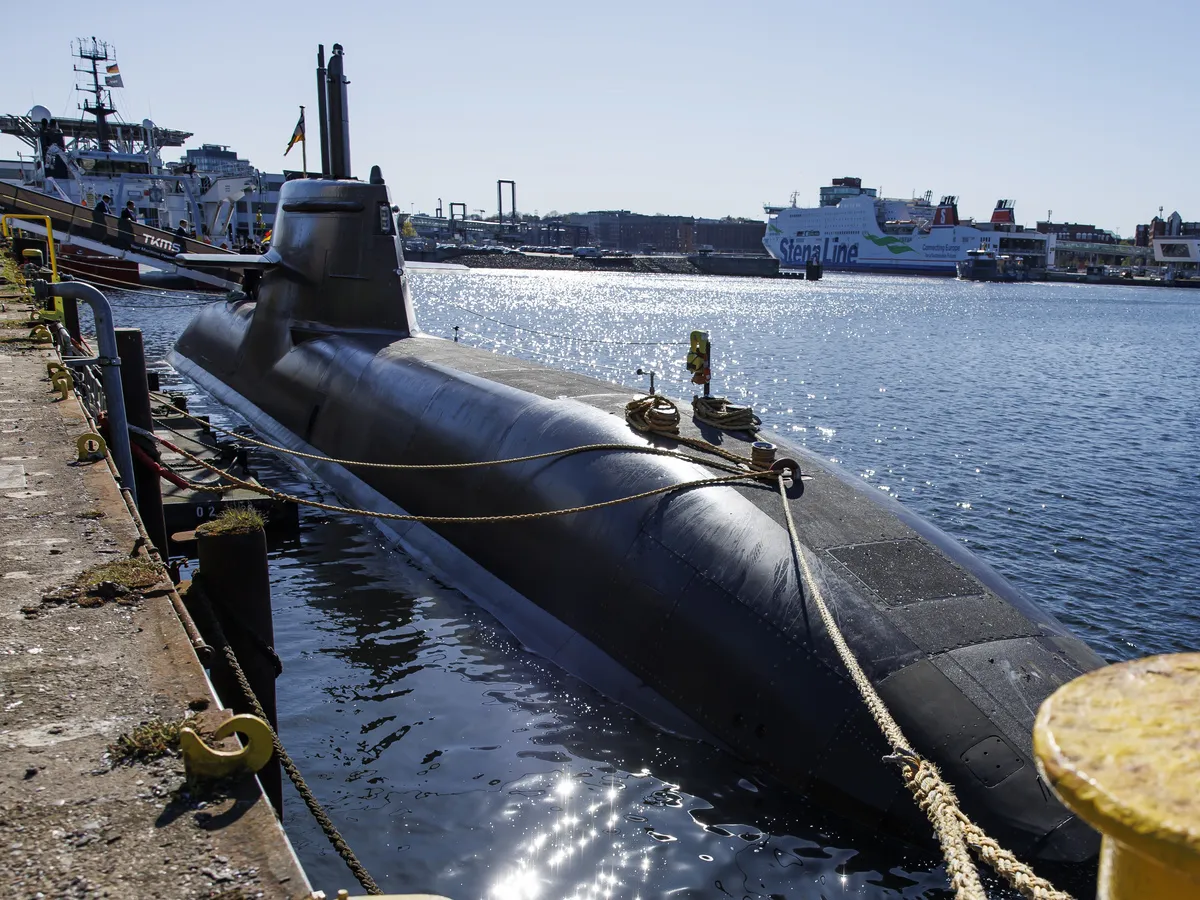
Canada will buy up to 12 diesel-electric submarines from Germany’s ThyssenKrupp Marine Systems (TKMS), ensuring the two countries will be geopolitical and economic partners for years to come, especially if all the side deals come through.
Prime Minister Mark Carney announced the estimated $100-billion decision on Monday, ending months of speculation about whether South Korea’s Hanwha Ocean Co. Ltd. might win the contract and launch as a major global military exporter.
An escalating bidding war between the two companies for the coveted contract, known as the Canadian Patrol Submarine Project, spurred an explosion of deals and partnerships with domestic companies that could contribute materials, software and other skills to the submarines, touching every sector from steel to quantum computing.
But Canada ultimately chose to purchase the submarines from a company that is considered the incumbent player within its sector.
“The Germans right from the beginning said we’re only going to sign agreements that are real,” said Philippe Lagassé, an associate professor at Carleton University’s Norman Paterson School of International Affairs in Ottawa who studies defence procurement. “They were very sour and dour and grumpy about it, but they know their business. You’re dealing with a company that has done this in so many countries and it is tough to beat the top dog.”
The submarines are expected to cost at least $20 billion, with the first ones arriving in 2034, while maintenance and infrastructure support could cost an additional $80 billion in the coming decades.
Under Canadian procurement policy, a company that is awarded a major defence contract must spend an amount equal to 100 per cent of the contract’s value in the country.
But the policy is very complicated and companies are required to submit “value propositions” for how their investments will leverage the procurement to contribute to innovation and economic growth.
For example, TKMS in March submitted a bid that included a commitment to invest in Calgary-based E3 Lithium Ltd., a startup that has begun harvesting battery-grade lithium from brine ponds in Alberta, but only at a demonstration scale.
What that investment looks like remains vague, with Chris Doornbos, chief executive of E3, saying he wasn’t certain whether the investment would take the form of cash or something else.
“We don’t know all of the details,” he said. “We just know they are supporting us if they get the contract and it’s a meaningful amount for us.”
He said the agreement does not include an offtake agreement in which TKMS is entitled to a certain amount of the lithium produced.
Doornbos said E3 is not yet in commercial production, so it is considered in the research and development stage, which means that every dollar TKMS invests in the company may be worth as much as $9 under Canadian procurement policy frameworks.
Related Stories
 Canada
Court cuts US$50M judgment against Infowars’ Alex Jones over falsely labelling Newtown killings a hoax
34 minutes ago
 Canada
An 18-year
35 minutes ago
 Canada
2 men stabbed during prayers at Sikh temple in north Edmonton
35 minutes ago
 Canada
Canada, U.S. hammer out details as midnight deadline looms. Live trade deal updates here.
35 minutes ago
 Canada
Will you buy U.S. alcohol if it returns? Here’s what readers told us
35 minutes ago
 Canada
Astronaut Jeremy Hansen helps open CNE
1 hour ago
 Canada
The Toronto Zoo has named its pygmy hippo baby 'Maple'
1 hour ago
 Canada
Two injured in stabbing attack at Canada Sikh temple
1 hour ago