
GOLDSTEIN: OECD downgrades Canada’s economic growth as Carney moves away from U.S.
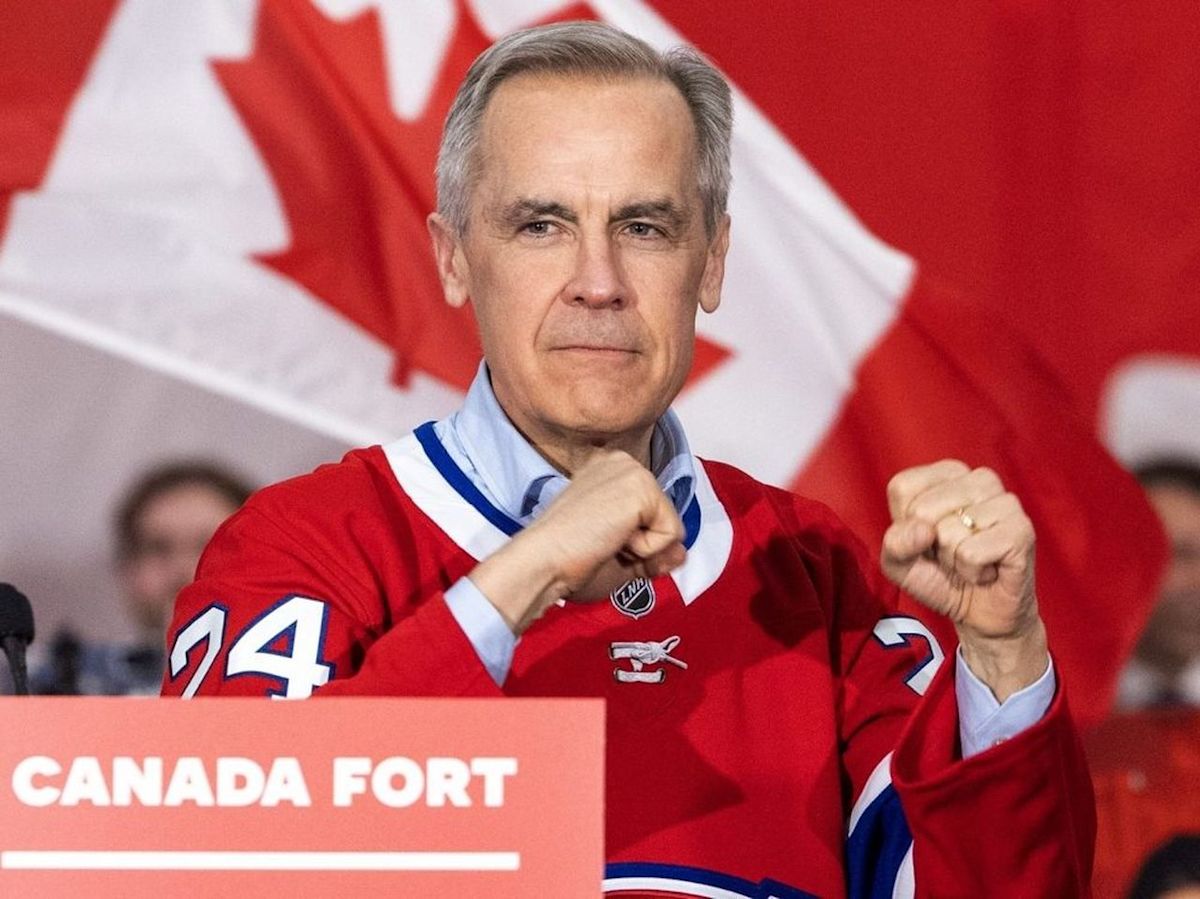
Prime Minister Mark Carney warned that pivoting our economy away from the U.S. would come at a cost to Canadians and the latest numbers show that's true.
An Organization for Economic Co-operation and Development (OECD) report released last week downgraded Canada's expected economic growth by 25% for this year and by almost the same amount in 2027 – 23.53% – compared to its last report in June.
The OECD – representing the world's 38 major industrialized market economies, including Canada and the U.S. – predicts Canada's economy will grow by just 0.9% in 2026, down from its June prediction of 1.2%, and by 1.3% in 2027, down from 1.7% in June.
By comparison, it predicts the U.S. economy will grow by 2.2%, or more than double Canada's 0.9% rate in 2026, and by 2.1%, or 61.5% higher than Canada's 1.3% rate, in 2027.
In both cases, the OECD's September numbers increase the predicted growth rate of the U.S. economy compared to June, up by 0.2 percentage points in 2026 and 0.3 percentage points in 2027, compared to declines of 0.3 percentage points in 2026 and 0.4 percentage points in 2027 in Canada.
The numbers reflect the fact that in a trade war between two countries, the country with the larger economy – the U.S. economy is 13 times the size of Canada's – is better equipped to fight than the smaller one.
The OECD attributes Canada's slower predicted economic growth to the impact of U.S. tariffs on Canadian exports to the U.S. and continuing uncertainty about the future of the Canada-U.S.-Mexico agreement on trade.
In addition, Canada faces long-standing structural problems in its economy, including low productivity.
On the plus side, the OECD said investments in artificial intelligence are boosting the Canadian economy to some extent, along with high oil prices resulting from the ongoing conflict in the Mideast, because Canada is a net energy exporter.
However the report also says high oil prices are contributing to Canada's headline inflation rate, predicting it will come in at 2.8% for 2026, up from its June prediction of 2.4%, and 2.5% in 2027, up from 2.0%.
Carney told Canadians, after breaking off talks with the U.S. last month, that accepting U.S. President Donald Trump's demands in the ongoing trade war the U.S. started would have undermined Canadian sovereignty and been more costly over the long term than his strategy of pivoting to increased trade with other countries and building up Canadian infrastructure.
Raising the OECD numbers in the House of Commons last week, Conservative MP Sandra Cobena said Canada and France were the only two G7 countries that had their economic growth forecasts downgraded in the latest OECD report, while they went up in the five other G7 nations.
She said the major infrastructure projects needed to diversify the Canadian economy are years, if not decades, away from completion when Canadians need help with the cost of living now.
"They (the Liberals) are all talk and no results," Cobena said during question period.
"This Liberal government announces with urgency, but delivers at a crawl. When will they adopt our Conservative action plan so Canadians can afford to live again?"
(Released in April by Conservative Leader Pierre Poilievre, the action plan proposes a wide range of tax cuts, scrapping laws passed by the Liberals the Conservatives say impede Canada's economic growth, and would further streamline the process for approving major infrastructure projects beyond what the Liberals are doing.)
LILLEY: Carney puts politics over paycheques in trade war
Carney slams Trump tariff demands, unveils $7.5B bailout package during caucus address
LILLEY: Mark Carney's currency comments risk more than trade repercussions
Finance Minister Francois-Philippe Champagne accused Cobena of talking the Canadian economy down, consistent with the Liberals' "elbows up" nonsense that any criticism of their policies – even citing the latest economic data from the OECD, where Canada is a founding member – is unpatriotic.
He said Canada will have the second-fastest economic growth among G7 nations in 2027, that the government has created more than 200,000 jobs in the last year, and that Canada has the lowest net debt-to-GDP ratio and one of the lowest deficit-to-GDP ratios in the G7.
"We are building Canada strong and I hope they (the Conservatives) get it, because Canadians are behind us and we're going to build with them," Champagne said.
Related Stories
 Canada
Pedestrian struck by vehicle in south
48 minutes ago
 Canada
Sanderson, Chabot to make their preseason debut for Senators
48 minutes ago
 Canada
Helicopter crashes outside Montreal killing all 4 occupants
48 minutes ago
 Canada
2 veteran politicians compete for mayor's chair in Brandon
1 hour ago
 Canada
Saskatoon records 10th homicide of the year
1 hour ago
 Canada
Coyote bite causes temporary closures in Cape Breton Highlands National Park
1 hour ago
 Canada
B.C. family still looking for answers 1 month after deadly Nepal flood
1 hour ago
 Canada
Doerkson, Clark attend B.C. Lions game
2 hours ago