
Gen Z Protests and India's Democratic Future

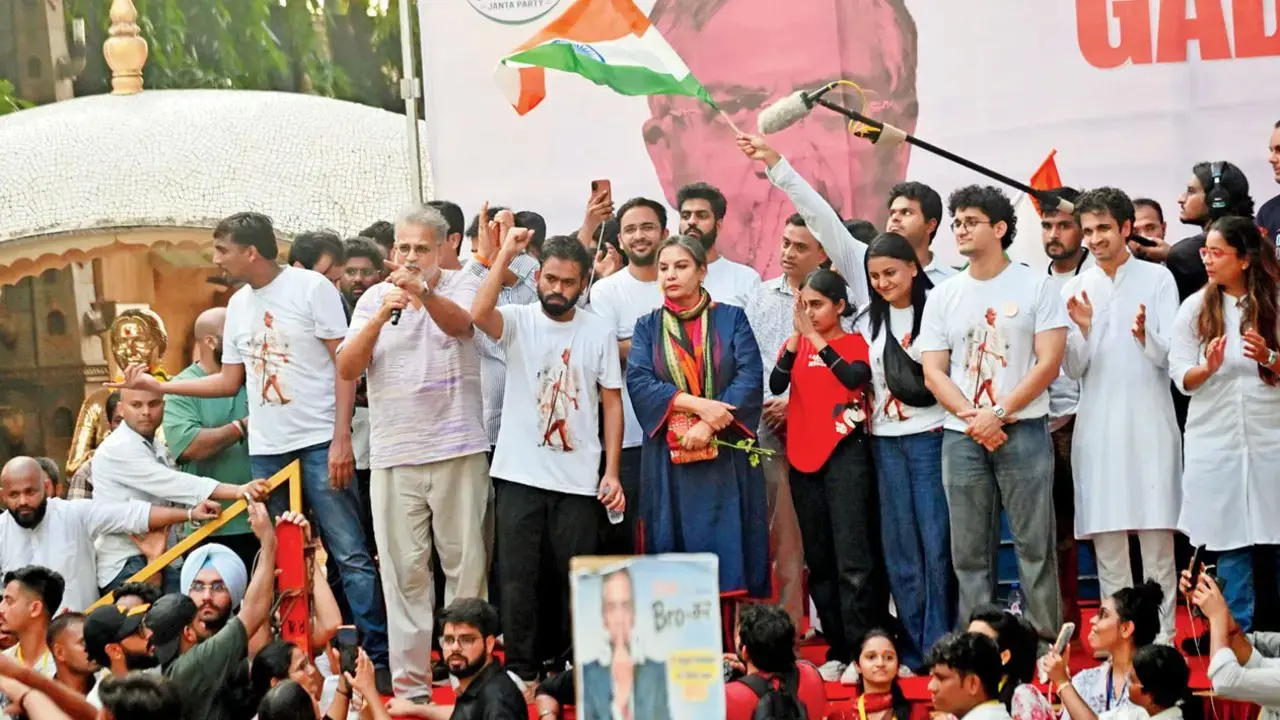
The placards demanding justice for students affected by repeated examination paper leaks were impossible to miss. What stayed with me at Jantar Mantar, however, was something else. Young people wrote poetry on cardboard, sang songs of resistance, shared water and food with strangers, debated without resentment, and, as the crowds dispersed, stayed back to clean the protest site. The protest was demanding accountability from the state, but it was also quietly rehearsing the habits of democratic citizenship.
Every generation experiences a political moment that reshapes not only governments but also citizenship. The JP Movement produced a generation of political leaders. The Mandal movement fundamentally altered the grammar of political representation. The India Against Corruption movement transformed corruption into the organising principle of a mass political campaign and eventually found expression in party politics.
It is too early to place the recent paper leak protests in the same league. Their immediate political consequences remain uncertain. Whether they secure policy reforms or compel governments to strengthen recruitment systems will be judged over time. Yet focussing only on those outcomes risks overlooking their deeper significance.
The immediate grievance was the NEET-UG paper leak, and the immediate ask was the resignation of Dharmendra Pradhan, which has been met. Nevertheless, the deeper question was about trust. When examinations repeatedly fail to guarantee fairness, it is not only careers that are at risk but the faith in public institutions too. Beyond the immediate controversy, these protests reveal an important shift in how young Indians relate to politics, political authority, and democracy itself.
India is one of the world’s youngest democracies, with a median age of about 28 years and nearly two-thirds of its population below the age of 35. Never before has such a large generation entered democratic life at a moment when confidence in political institutions is simultaneously under strain. The future of Indian democracy will depend not only on how this generation votes, but also on how it understands citizenship and political participation.
The first lesson emerging from these protests is a paradox: young Indians are politically engaged, yet institutionally distrustful.
Democracies have traditionally relied on intermediary institutions such as political parties, student organisations, trade unions, and civil society groups to aggregate interests, nurture leadership, and translate public demands into policy. Increasingly, however, this chain appears to be weakening.
The protests displayed extraordinary political participation but relatively little confidence in established political actors. Dissatisfaction with the government did not automatically translate into trust in the opposition. Nor were protest leaders themselves immune from criticism. Participants mobilised collectively while withholding unconditional trust from almost every organised political actor. Even within the movement, leadership remained under constant public scrutiny, suggesting that support for a cause no longer requires unquestioning loyalty to those leading it.
This is not uniquely Indian. Across established democracies, surveys by the World Values Survey and the Pew Research Center have documented declining confidence in political parties, particularly among younger citizens, even as support for democratic values remains resilient. Political theorist Pierre Rosanvallon describes this as “counter-democracy”: a form of democratic life in which citizens increasingly legitimise power not by trusting institutions but by constantly monitoring, questioning, and challenging them. Seen through this lens, these protests are less an expression of anti-politics than a demand for more accountable politics.
Public debate often reduces protests to a simple question: did they succeed or fail? Did they force a policy reversal? Did they influence elections? Did they produce a new political party? History suggests a different measure.
The deepest contribution of social movements is rarely legislative; it is pedagogical. Movements create citizens before they create reforms. They cultivate political consciousness, forge solidarities across social divisions, and expand the democratic imagination.
The culture of these protests reflected precisely this process. Creativity coexisted with discipline, solidarity with disagreement, and public dissent with civic responsibility. Long after slogans fade, these quieter democratic practices often leave the deepest imprint. They remind participants that democracy is not confined to polling booths or Parliament; it is practised through participation, deliberation, and everyday responsibility towards one another.
By that measure, the recent protests have already achieved something significant. For thousands of young Indians, they became a first experience of democratic participation outside electoral politics. Whether every immediate demand is fulfilled matters. Whether this experience produces a generation that remains civically engaged matters far more.
Yet every movement eventually confronts the same challenge. Mobilisation is easier than institution-building. Outrage can fill streets overnight. Building organisations capable of sustaining democratic participation requires years of patient political work. Without that transition, even the most powerful moments of collective action risk becoming episodes rather than turning points.
The protests also point to a changing relationship between citizens and political leadership.
Much of contemporary Indian politics has revolved around personalities. Leaders become symbols and movements often become inseparable from them. The recent protests suggest a more demanding political culture. Protest leaders were celebrated by some, criticised by many, and questioned almost constantly. Their strategic choices, ideological positions, and personal conduct remained subjects of public debate. Yet this scrutiny did not necessarily weaken the movement. Instead, many participants appeared capable of distinguishing between the legitimacy of a cause and the fallibility of those leading it.
Political scientist Pippa Norris argues that contemporary democracies are producing “critical citizens”, people who remain committed to democratic ideals while becoming less deferential towards political elites. If these protests are any indication, India may be witnessing a similar transition. Political legitimacy appears to be becoming more issue-centred and less dependent on personality alone. Support is increasingly conditional rather than permanent. Leaders are expected to earn public trust continuously rather than inherit it through charisma or organisational authority.
This transformation carries both promise and peril. Democracies benefit when citizens reject hero worship and hold power to account. Yet democracy cannot function on permanent distrust alone. Institutions remain indispensable for converting public aspirations into public policy. A politics that produces participation without rebuilding institutional credibility ultimately risks deepening democratic frustration.
The challenge before India’s political class, therefore, goes far beyond preventing the next paper leak or announcing another recruitment reform. It is to rebuild the legitimacy of public institutions among a generation that has lost faith in them.
The significance of these protests lies not only in what they demanded, but in the kind of democratic citizen they may be helping to produce. Democracies are ultimately judged not only by the governments they elect, but by the citizens they cultivate. If this Gen Z protest has begun to nurture a generation of more critical, more demanding, and more engaged citizens, then its most enduring legacy must be measured not by what concessions it won, but by the citizens it helped to shape.
Saurabh Raj is a core team member at the Indian School of Democracy and is also associated with the European Center for Populism Studies.
Also Read | Dharmendra Pradhan’s resignation: Why the Modi government backed down
Also Read | How the cockroaches have reimagined India
Related Stories
 India
India
Starlink, Ambani’s venture should get equal treatment, let consumers decide: Shashi Tharoor
3 days ago
 India
India
Lawrence Bishnoi’s rise: Student politics, first murder and a sprawling crime network | India News
3 days ago
 India
India
India’s finance minister says market liquidity makes it easier for investors to exit
3 days ago
 India
India
India news: CJP alleges 'deliberate' delay in leaders' release
4 days ago
 India
India
Indian Diaspora Holds Pro-Modi Counter
4 days ago
 India
India
Clashes Erupt in London as Diaspora Divided Over India's Election Chief and Electoral Roll Controversy
4 days ago
 India
India
London: Indian diaspora rallies in support of PM Modi, criticises CJP protesters
4 days ago
 India
India
Cabinet Approves Go
4 days ago