
Fueling a return journey from Mars
When Lanie McKinney was 3 years old, her parents stopped at a massive meteor crater during a road trip through the U.S. Southwest. As they prepared to leave, McKinney began to protest.
“I want to wait here for the next one,” she told them.
She didn’t yet understand that another meteor wasn’t likely to land in exactly the same spot. But the story, which her parents still tell, captures a fascination that has remained with McKinney throughout her life.
“I just always remember being captivated by space and what is out there,” she says.
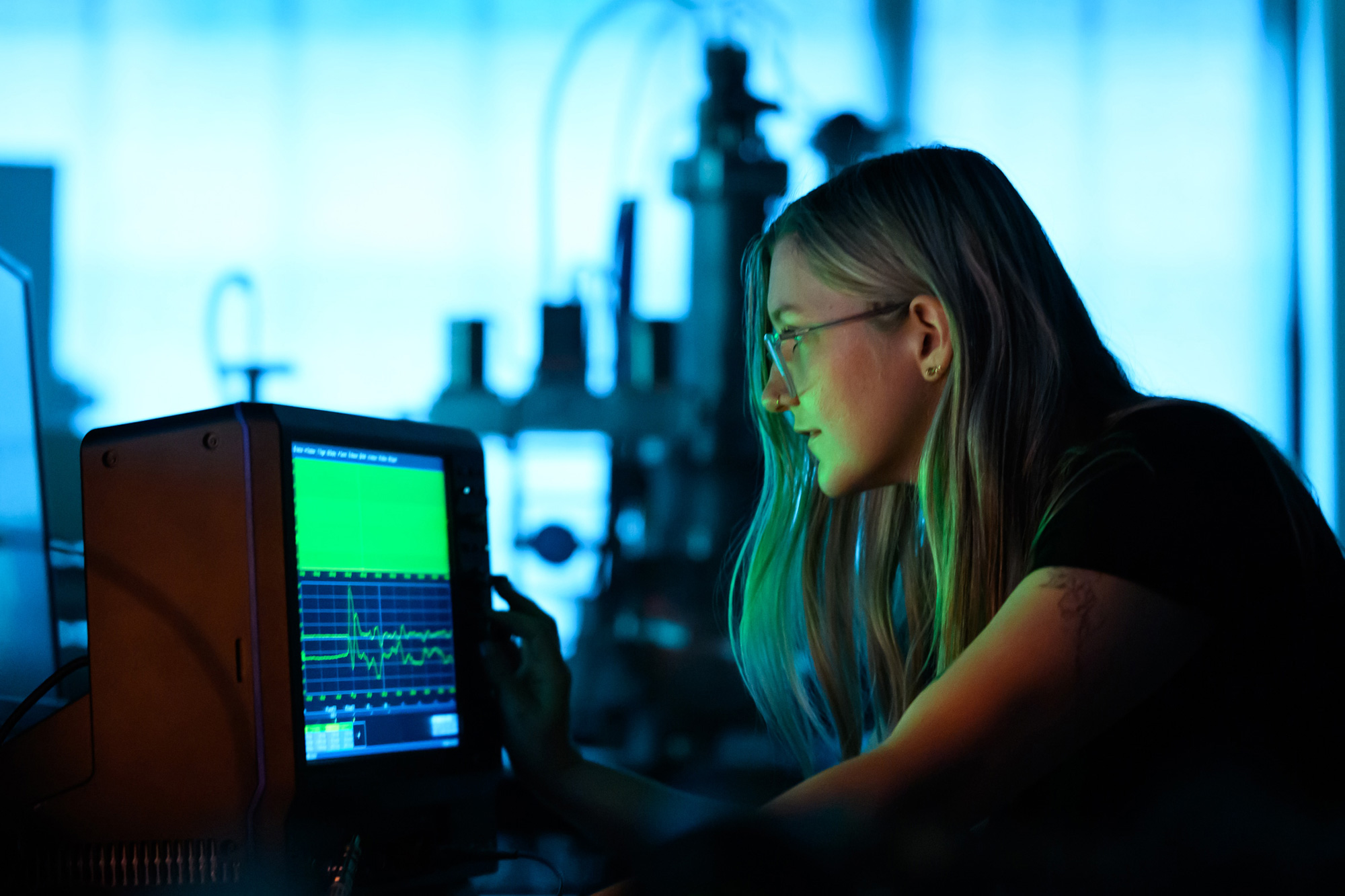
Today, McKinney is entering her fifth year as a PhD candidate at MIT, where she works in the Aerospace Plasma Group with Esther and Harold E. Edgerton Associate Professor Carmen Guerra-Garcia. McKinney’s research focuses on developing technologies that could help humans explore Mars.
One of the challenges of sending humans to the Red Planet is figuring out how to supply them once they arrive — including how to enable their journey back home. Rather than transporting everything from Earth, McKinney is interested in using the resources already available on the planet, a concept known as in-situ resource utilization, or ISRU.
“If we don’t build gas stations on Mars, it will be very difficult to get humans back to Earth,” she says. “We’re going to need some way to produce the propellant on site.”
McKinney’s research uses cold plasma to convert carbon dioxide, which is abundant in the martian atmosphere, into oxygen and carbon monoxide, a technology that could eventually be used to produce life support and propellant on Mars.
An Oklahoma native, McKinney earned her bachelor’s at the University of Tulsa, where she studied physics and applied mathematics. She had initially expected to pursue astrophysics, but a summer research internship at the University of Colorado at Boulder introduced her to plasma physics through a project involving dusty plasmas in the lunar environment.
“I thought it was an incredibly interesting problem,” she says.
At MIT, McKinney has developed a small reactor that can convert carbon dioxide into oxygen and other products. The challenge now is separating out the oxygen before it recombines.
“We can actually perform the conversion step really well,” she says. “But what happens in a plasma is we convert it, and then we get a mixture that needs to be separated.”
Her current work pairs the plasma reactor with an oxygen-selective membrane designed to extract oxygen rapidly. The integration process isn’t well-understood, leaving McKinney and her colleagues with questions about how the reactive plasma environment will affect the membrane.
“We are not entirely sure what we will see,” she says.
For McKinney, the possibility of connecting laboratory experiments to future human missions is what makes the work particularly rewarding.
“I get to work in a really cool lab and develop exciting experiments,” she says. “I get ownership over an entire experimental system, and then I get to connect that to performance requirements for a future Mars system. That’s just the dream.”
That same philosophy has shaped McKinney’s work beyond her thesis. Through MIT’s Space Resources Workshop, she has participated in NASA competitions focused on sustaining humans in space. Her first competition involved designing a self-sustaining Mars mission for 10 years.
“I had no clue what was going on,” she says. “I didn’t know anything about space systems. So, my mentality was, let me jump in and learn.”
She later co-led MIT’s CERBERUZ team for NASA’s LunaRecycle Challenge, which asked teams to develop ways to recycle waste on missions to the moon and deep space. The MIT team recently won first prize in Phase 2, receiving $775,000 in awards for a system that grinds mixed trash into powder that can be reused via injection molding to make spare parts and 3D-printing filament.
Another project McKinney enjoyed brought together engineers and architects through MAS.S66/4.154/16.89 (Space Architecture) to tackle a different problem: how to protect lunar habitats from radiation using only resources available on the moon. The students’ solution was to produce cast bricks from lunar regolith that could be stacked without mortar or another binder. For McKinney, the project demonstrated the value of bringing together people with different expertise.
“The kinds of innovative solutions that can be discovered when you work on a team that brings together different expertise and experiences was one of the project’s major takeaways,” she says.
The experience reflects a broader lesson McKinney has taken from MIT: Research may involve focused individual work, but solving the problems of human space exploration will require collaborations across disciplines.
“I feel like I have learned so much from being a part of these different teams,” she says.
McKinney sees that collaboration as essential to the future she hopes to help build. Reaching the Moon and Mars is only the first step: “What comes next is building up a permanent presence so that we can do amazing science and be really effective at exploration,” she says.
McKinney’s fascination with exploration extends beyond her research. She is an avid hiker and mountaineer, having grown up hiking with her family in the Rockies. She recently completed a mountaineering course in Alaska and summited Mount Baker in the Cascade Range. She sees a connection between those adventures and the curiosity that first drew her to space.
“I love to explore and go on adventures,” she says. “And space is the ultimate thing you could explore.”
That curiosity has also shaped how McKinney approaches her work. When she arrived at MIT from the University of Tulsa, she initially felt intimidated.
“I thought that it was a fluke that I’d gotten in,” she says. “I was very nervous that I was not going to measure up to the environment.”
Over time, she learned to approach unfamiliar problems by asking questions and committing fully to whatever interested her.
“If something interests you, try it and go all in,” she says.
Related Stories
 Technology
Soldiers and students study drone technology in Hereford together
17 minutes ago
 Technology
More Kiwis taking 'hands off' approach with self
17 minutes ago
 Technology
$49M Boost for Aussie Clean Tech Manufacturing
17 minutes ago
 Technology
Why US plan to sell F
1 hour ago
 Technology
From tractors to AI, tech is changing agriculture
2 hours ago
 Technology
Hong Kong to target breakthroughs in core tech
3 hours ago
 Technology
Kingston Police Services Board taking local IT to court over alleged unusable technology
3 hours ago
 Technology
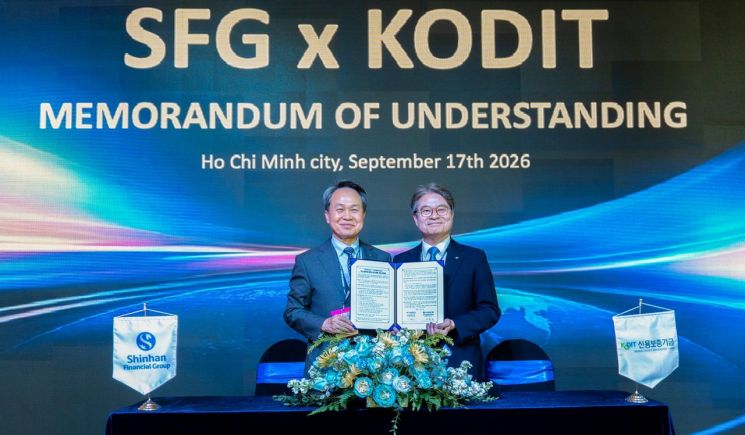
Korea Credit Guarantee Fund and Shinhan Financial to Support Startups from Discovery to Global Expansion...First Step in Vietnam
4 hours ago