
From startup to profitability: The radical reinvention of PayMongo
Fintech is a hot new growth industry where the Philippines is making a significant contribution to the world. One need look no further than Mynt’s GCash to see how Filipinos are shaping the future of finance.
But if you do, you’ll find a host of fintech companies each using technology to serve the needs of connected customers, merchants, SMEs, and more. Leading the fintech charge in e-wallets to crypto are companies such as Maya, coins.ph, GoTyme bank, Tonik bank, and PayMongo.
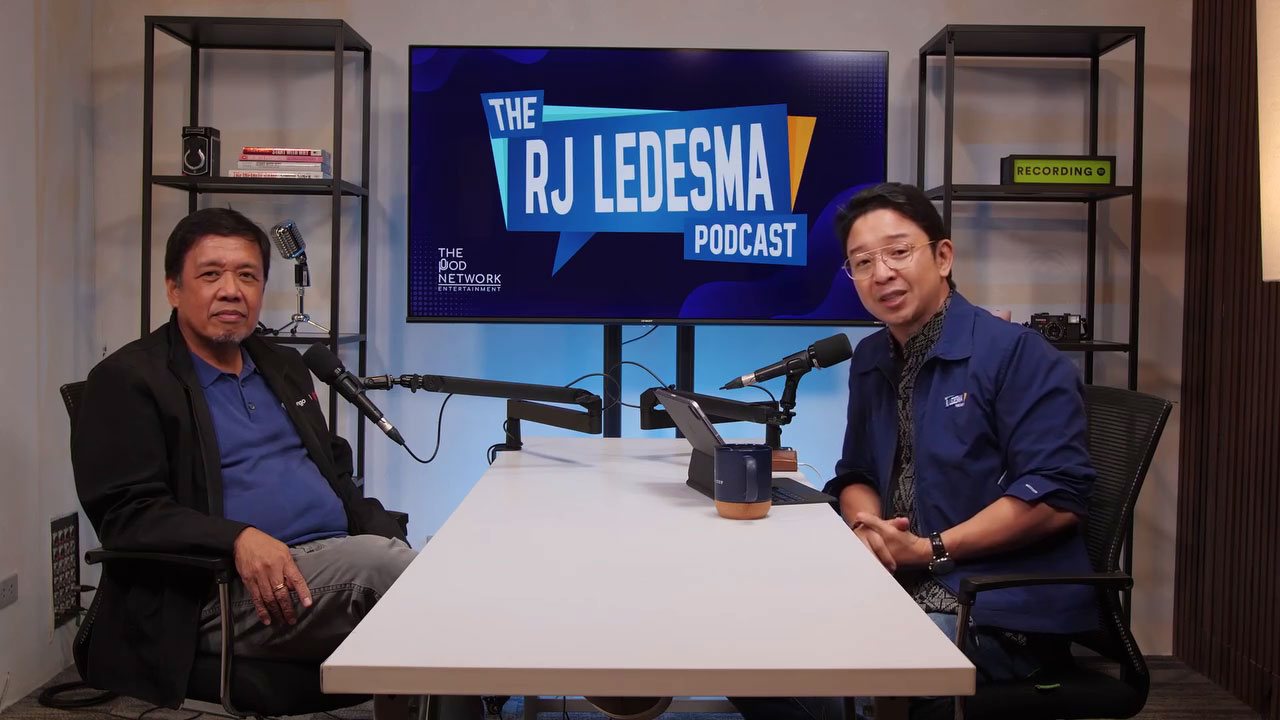
Recently, I spoke with Jojo Malolos, the CEO of PayMongo, a fintech veteran as the founder of GoTyme bank and former CEO of SmartMoney (before its rebrand as Maya).
The interview is full of lessons in leadership from one of the industry’s greats. It’s also full of what I call “Jojo-isms,” nuggets of wisdom that can only come from Jojo Malolos. Below, you’ll find some of my favorite Jojo-isms from the podcast:
Q: How do you solve a problem like churn?
A: “As a provider of business-to-business payment solutions to online and offline merchants, PayMongo is often behind the scenes. But through the years it has evolved into a powerful enabler for businesses — in particular, SMEs — to accept payments through credit cards and digital wallets. More than just an aggregator of payment methods, PayMongo empowers businesses through a mix of innovative products and tech features made with SMEs in mind.
“For example, through the PayMongo dashboard, SMEs can monitor how much money they are making, what channels are most profitable (GCash, Maya, credit card, debit card, etc), and the fees they are paying for each of these channels. It has also innovated through products like Capital, which lets merchants borrow money and then pay through future earnings.”
Counter-intuitively, he explains, “We’re not in the business of merchant online business. We’re in the business of making our merchants succeed and basically grow their business.”
It wasn’t always so. When Mr. Malolos took over the reins of PayMongo, its high-profile investors (a list which includes Peter Thiel, Justin Mateen of Tinder, and fintech giant Stripe) were concerned. The company’s founders had resigned, and the company itself was unprofitable and bleeding cash.
Typical of early-stage startups, the founders had pursued a growth strategy. Yet even with a large number of merchants onboard, PayMongo faced the problem of churn as these merchants quickly turned to competitors when rates were lower. Winning these merchants became a race to the bottom — whoever could deliver the lowest rates.
REVENUE ACCRETIVE As PayMongo’s new CEO, Mr. Malolos instituted sweeping changes to the organization. “The real change was culture,” he said. “And second is that we just really had to overhaul the initial mindset of why PayMongo is there in the first place.”
Growth simply wasn’t enough. Mr. Malolos said, “I reached 20,000 merchants, [with] 13,000 merchants, no transactions. How can you be proud of that? That’s why the first thing I wanted everybody to understand: it is our responsibility to take care of our investors’ money. We overhauled the system.”
In our first Jojo-ism, he continued by saying, “Everything that we will be doing now will have to be revenue accretive.” In short, the days of growth without income were over. All of the company’s efforts had to contribute to revenue.
“If this product is not going to give you a net income immediately, you’re just a loss leader. Then I won’t do it,” he said.
After the hard work of culture change, the introduction of new products, and a tech overhaul, in 2025, PayMongo’s business grew three times. As a result, the company hit positive EBITDA (Earnings Before Interest, Taxes, Depreciation, and Amortization) and positive cash flow in November.
Through its reinvention, PayMongo had become the master of its own fate, no longer reliant on rounds of investment. Mr. Malolos said, “Since November up to now, we’ve been net income positive. And then, you don’t have to worry about raising money anymore. So, it was very fulfilling not only for me, but for the team. Everybody starts feeling that it matters to be in this organization.”
‘THE ONLY REDEMPTION IS SUCCESS’ He shared that it wasn’t easy getting to this point. Initially, he faced dissent and negativity. He explained, “Imagine, the first founders weren’t looking for profitability. Just grow it, grow, grow, grow. And now, I’m looking for profitability.”
By introducing a new culture, firing uncooperative employees, and reorganizing for profitability, PayMongo was able to find the core of its business: helping merchants grow their own businesses.
“The only redemption here is success,” is the second Jojo-ism.
Going against the grain of an established culture and reworking the company’s product were difficult things to do, yet essential. And it’s a typical problem for many startups.
Mr. Malolos explained the startup mindset, saying, “You come up with an idea, you convert it into a product, and you think that you’ll be successful if you convert that to a product, right?”
This brings us to Jojo-ism number three. He said: “Don’t fall in love with your product. Fall in love with the problem that you’re trying to solve.”
‘GRAB THE BULL BY THE HORNS’ At 63 years young and with so much success in the arena of fintech throughout his career, Jojo Malolos is very much concerned about the new generation of leaders. Speaking to these trailblazers, he advises them to focus on two things:
“One is their ability to understand how to experiment,” he said. “You have to be able to bring something and make rubber hit the road. Because when rubber hits the road, you will start to understand what will actually happen.”
His second piece of advice involves a leader’s decisiveness. He concluded with one last Jojo-ism: “Your ability to make a decision on what happens when [the rubber] hits the road is what will now matter. Grab the bull by the horns.”
RJ Ledesma (www.rjledesma.com) is a Hall of Fame Awardee for Best Male Host at the Aliw Awards, a multi-awarded serial entrepreneur, motivational speaker, and business mentor, podcaster, an Honorary Consul, and editor-in-chief of The Business Manual. Mr. Ledesma can be found on LinkedIn, Facebook and Instagram. The RJ Ledesma Podcast is available on Facebook, Spotify, Google and Apple Podcasts. Are there entrepreneurs you want Mr. Ledesma to interview? Let him know at ledesma.rj@gmail.com.
Related Stories
 AI News
World Cup 2026: Has football fever taken hold in the US?
21 minutes ago
 AI News
Cape Verde: All to know before FIFA World Cup knockout against Argentina
21 minutes ago
 AI News
Medal Suite Unveiled for World Athletics U20 Championships Oregon 26
21 minutes ago
 AI News
Ocean surface temperatures hit record high as world enters ‘uncharted territory,’ scientists warn
21 minutes ago
 AI News
Trump accused of ‘disgusting’ greed after earning over $2bn since return to office
22 minutes ago
 AI News
News Live: Watch Times Now Live Streaming | Live News India, World, Politics, Sports News
22 minutes ago
 AI News
Fire risk forces St. John's to postpone Canada Day fireworks show
23 minutes ago
 AI News
Experts confirm tornado touched down in Winnipeg's Whyte Ridge area Monday
23 minutes ago