
From Siloes to Connected Intelligence: Dr Sebastian Hetzler on Holistic Financial Crime Compliance in the Age of AI
From Siloes to Connected Intelligence: Dr Sebastian Hetzler on Holistic Financial Crime Compliance in the Age of AI
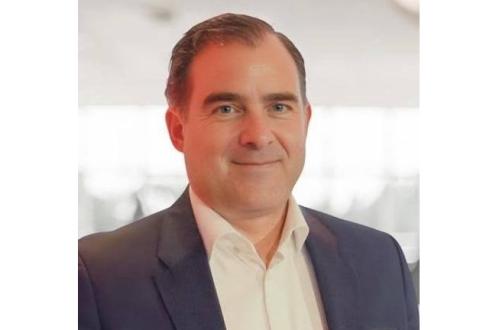
Dr. Sebastian Hetzler of IMTF
The rise of artificial intelligence (AI) in financial crime compliance is often treated as a technology story. For Dr Sebastian Hetzler, Co-CEO of IMTF, the deeper issue is organisational. Banks and financial institutions cannot meet today’s financial crime risks by applying new tools to old operating models. They need to connect data, disciplines, teams and decision-making processes across the full anti-financial crime (AFC) framework. Speaking during as part of a recent Hubbis Digital Dialogue webinar on ‘Holistic Financial Crime Compliance in the Age of AI’, held exclusively in partnership with IMTF, Hetzler set out a clear argument for convergence. The challenge is no longer confined to Know Your Customer (KYC), transaction monitoring, sanctions screening or fraud in isolation. It is the combined risk picture that matters. In his view, AI has an important role to play, but only if institutions first move beyond fragmented systems, siloed teams and narrow process-by-process thinking.
Hetzler opened by positioning IMTF around the idea of AFC convergence. Switzerland-headquartered and operating globally, IMTF is best known for Siron, which Hetzler described as one of the most widely used AFC solutions in the market, with more than 1,500 financial institutions using the company’s products.
That product context, however, was used to support a broader strategic point. From IMTF’s perspective, the central challenge is not simply to automate individual compliance workflows, but to connect them.
“We have been proponents of an anti-financial crime convergence, or holistic approach to financial crime,” he said. “Not to look at KYC, customer onboarding, transaction monitoring, transaction screening, sanction screening, fraud, and so on, in silos, but to connect the data.”
Siron®One, launched in 2024, was presented as a platform expression of that philosophy. Hetzler explained that it brings different AFC disciplines into one environment, allowing institutions to connect data, connect rules, build AI models on connected data, and reach faster and better decisions by making those connections visible.
The point was not that technology removes complexity. Rather, it is that fragmented technology and fragmented teams make complexity harder to manage.
Asked whether the discussion would look different in Europe, Hetzler drew a distinction between Singapore and many other markets. His view was that Singapore occupies a relatively advanced position, particularly in terms of public-private partnerships, data sharing between institutions, engagement with the regulator, and the adoption of AI.
“Singapore has a kind of forerunner position in this market,” he said, referring to data sharing between institutions and with the regulator. He contrasted that with other jurisdictions where the regulatory approach to AI remains stricter or more cautious.
Hetzler was careful not to generalise across Asia. Different markets, he noted, are taking different approaches. But he described Singapore as a special case, particularly because conversations with clients suggest AI adoption is already further ahead than in many other countries.
This distinction matters because AFC transformation is not occurring in a vacuum. The ability to share intelligence, collaborate across institutions and operate within a supportive regulatory architecture affects how quickly firms can move from narrow compliance processes to wider risk intelligence.
The Limits of Siloed Compliance
Hetzler’s strongest contribution came when he turned away from AI as a standalone topic and returned to the operating model of financial crime compliance. Most banks, he argued, still organise AFC activity around large specialist teams: onboarding, continuous KYC, transaction monitoring, sanctions screening and other disciplines.
Each function may have its own tools, processes, culture and budget. The problem is that financial crime does not respect those internal boundaries.
“If we talk about holistic anti-financial crime, I think this is one of the hurdles that we have to overcome,” he said. Institutions should not tackle financial crime “according to the org chart,” but according to the typologies now present in the market.
The distinction is important. A suspicious pattern may not be visible within a single discipline. It may sit across onboarding history, adverse information, transaction behaviour, sanctions exposure, counterparty networks, digital activity and wider external intelligence. If those signals remain separated, institutions risk seeing fragments rather than the real risk picture.
For Hetzler, holistic AFC therefore requires a rethink of process, organisation, data and culture. It is not simply a matter of buying a new tool or adding AI to an existing workflow.
The Criminal Environment Has Changed
The need for convergence, Hetzler argued, is being driven by external forces. Criminals have changed. The typologies have changed. The infrastructure available to criminal actors has changed.
“What has been appropriate in former times is definitely not appropriate to the things we are seeing in the market,” he said, pointing to fast payments, syndicates, deepfakes, AI-enabled attacks, fraud-as-a-service and money-laundering-as-a-service.
His framing was blunt: financial institutions are now in an arms race. Criminal groups are becoming more professional, more digital, more automated and more capable of exploiting gaps between institutions, systems and teams. Crypto-related transaction channels add another layer of complexity, creating what Hetzler called a shadow world for financial transactions that must be included in the institution’s risk picture.
The implication is clear. AFC frameworks built for slower, more linear and more easily categorised risks are not sufficient for a world of faster payments, industrialised fraud and AI-enabled deception.
AI as an Enabler of the Holistic Model
Looking ahead, Hetzler expects the next 12 months to bring broader AI adoption and a continued shift from siloed organisations toward more holistic working models. He was clear that the two trends belong together.
“AI is an enabler,” he said. Its value lies in helping institutions bring intelligence into the process, process large volumes of data, and connect that data across use cases.
But Hetzler also warned against using AI within the old paradigm. If institutions keep the same siloed structure, AI may deliver incremental efficiency gains, such as some reduction in false positives, but it will not address the real threat. The larger risk is that firms use AI to optimise legacy processes while missing the fundamental change in financial crime typologies.
That is why, in his view, financial institutions should begin the journey quickly. They need experience in how to integrate AI into decision-making, how to adapt risk culture, and how to make the shift consistently across the organisation.
Hetzler closed with a broader transformation message. IMTF can help from a technical perspective by bringing different use cases and signals together in a platform, using AI to connect data and add an intelligence layer. But he was explicit that technology alone is not enough.
“At the end, it is more than just IT,” he said. “IT is important, technology is important, but changes have to start, maybe at the board level.”
That board-level point captures the substance of his contribution. Holistic financial crime compliance is not merely a systems upgrade. It is a change in how institutions understand risk, organise themselves, collaborate internally, use data and respond to criminal innovation.
The firms that make that shift will be better placed to detect patterns across disciplines, adapt to new typologies and use AI as a genuine intelligence layer. Those that remain in the old model may gain efficiency, but not resilience. For Hetzler, the direction of travel is already clear: the future of AFC lies in connected intelligence, not isolated controls.
More from Dr. Sebastian Hetzler, IMTF
Wealth Planning & Structuring Forum - Singapore 2026
Process, Governance, and the Danger of Overreaction: Insights from Michael Velten
Jul 13, 2026 Michael Velten of Velten Advisors
From AI Interest to Operational Discipline: Jordan Lo on Building Holistic Financial Crime Complianc...
From Rule-Based Controls to Network Intelligence: Alwyn Loh on Financial Crime Compliance in the Age...
Beyond the Structure: Wealth Planning's New Imperatives in Asia's Evolving Landscape: Insights from...
Jul 13, 2026 Kendrick Lee of Raffles Family Office
From AI Interest to Operational Discipline: Jordan Lo on Building Holistic Financial Crime Compliance
From Client Lifecycle to Risk Culture: Kelvin Chiang on AI and Compliance Transformation
Jul 9, 2026 Kelvin Chiang of Bank of Singapore
Why Compliance Is Becoming a Strategic Capability - and What Financial Institutions Need to Do About It
Related Stories
 AI News
Bill Gross bets AI can help mass
4 days ago
 AI News
Nigeria records 93% rise in AI micro
4 days ago
 AI News
The Italian gelato maker using AI to invent new flavours
4 days ago
 AI News
Closing the Gap Between Agentic CX Pilots and Production
4 days ago
 AI News
New Brunswick data centre debate highlights cross
4 days ago
 AI News
How to Structure an AI Agent Referral Fee Agreement Between Startups
4 days ago
 AI News
No, AI didn’t delete a Swedish reality TV series
4 days ago
 AI News
There is no AI in Armageddon. Artificial intelligence is a tool, not an apocalypse
4 days ago