
From missile defense to artificial intelligence: How Technion is preparing Israel for the future
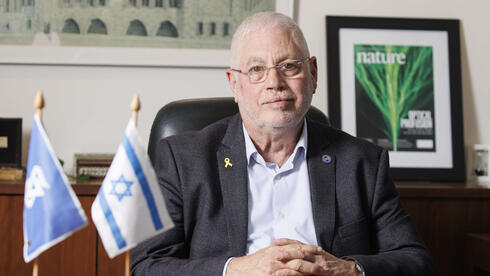
For more than a century, the Technion, Israel Institute of Technology has played a central role in Israeli science, engineering and technology, and for its president, Prof. Uri Sivan, the past few years have demonstrated just how closely academia is connected to the country’s resilience. Speaking to ynet Global ahead of Rosh Hashanah, Sivan said that despite war and extraordinary pressure, Israeli academia and high-tech continued to develop and innovate. He pointed in particular to missile interception technology, recalling how intercepted debris and cluster munitions fell on the Technion campus in Haifa. Walking through the campus after one such incident, he had a striking realization: “We are certainly the only university globally being defended by technology developed by its own graduates.” That resilience, he said, is driven by a deeply rooted “sense of mission” and a belief that the Technion bears responsibility for Israel’s security, economy and society.Interview with the President of the Technion (Photo: Tal Saar)Looking toward the technologies that will shape the future, Sivan argued that success depends less on predicting the next breakthrough than on building the foundations that allow breakthroughs to happen. The Technion invested early in fields including semiconductors, aerospace, nanotechnology and quantum technologies, and Sivan believes the same long-term philosophy must guide education. Rather than training students in the latest software or application, he said, the university emphasizes mathematics, physics, engineering and the ability to solve difficult problems. “We don’t train them for the first job,” he said. “We train them for a lifetime career.” That philosophy is particularly important in the age of artificial intelligence, which Sivan believes is fundamentally different from previous technological revolutions. “Artificial intelligence is not just yet another industrial revolution,” he said. “It is something else, as it touches at the very core of human existence, which is knowledge and thought.”GalleryProf. Uri Sivan, President of the Technion University (Photo: Gil Nehushtan)AI offers extraordinary opportunities, but Sivan warned that instant access to answers could also change the way people think and learn. “What does it mean to know something if everything man knows is just one prompt away?” he asked. If answers are always immediately available, the risk is that people stop doing the intellectual work required to reach them. Unlike GPS, which allowed people to outsource navigation, AI could mean “outsourcing our very essence,” he said. Yet the excitement of human discovery remains irreplaceable. Sivan recalled a PhD student who, alone in an empty laboratory at 4 a.m., finally solved a scientific problem the team had worked on for more than a year. At that moment, the student realized he was the only person in the world who knew the answer. “Those eureka moments are indispensable,” Sivan said.The Technion University today(Photo: Nitzan Zohar, Technion Spokesperson)Ultimately, however, Sivan believes Israel’s most pressing challenges may not be technological at all. Science and technology, he said, “should serve society” rather than exist for their own sake, and universities have a responsibility to educate students with that wider purpose in mind. As Israel enters a new year, his greatest concern is the country’s internal fragmentation. “The major challenges we’re facing are actually societal ones,” he said. “We are being torn apart by division.” His Rosh Hashanah message to Israel’s students, scientists and researchers is therefore also a message to the wider country: knowledge must continue to be developed and supported, but it must ultimately benefit society. “What worries me most is really the fragmentation of our society,” Sivan said. “My wish for the next year, but actually forever, is that we find the ways to live together despite disagreement. There is so much common to us. There are so many challenges. Let’s focus on them.”
Related Stories
 AI News
AI Upended Her Startup in 30 Days. She Kept Building Anyway
14 minutes ago
 AI News
Aging Congress Is Completely Ill
46 minutes ago
 AI News
Oracle climbs as AI
1 hour ago
 AI News
Anthropic CEO warns AI race is moving too fast to control. OpenAI’s chief agrees
4 hours ago
 AI News
Collective learning in decline: Korea's hidden risk
4 hours ago
 AI News
AI
4 hours ago
 AI News
Türkiye aims to become leading AI nation with new action plan, investments
5 hours ago
 AI News
OpenAI IPO will not happen in 2026 amid AI safety fears, Sam Altman says
5 hours ago