
Four Aussie startups that raised $80 million this week
Two space startups lead this week’s funding round-up, which features four Australian technology companies that have raised a collective total of $80 million.
Keep reading to learn more about MAKO, Southern Launch, Emesent and Fluent.
Australian aerospace startup MAKO has raised $28 million in a Series A funding round led by climate technology investor Virescent Ventures.
The round also saw participation from IAGi Ventures, Grok Ventures, Skip Capital, IP Group, Zero Infinity Partners and TreeArc.
This new funding follows a $5.6 million seed round back in 2022 under the company’s former name MicroTau. The startup also received a $3 million grant from the federal government’s Industry Growth Program back in March.
About $102 million was cut from the program as part of MYEFO back in December 2025. The government went on to pause all new applications after handing down the budget last month.
The Sydney-founded company says the funding will help accelerate the global deployment of its Flightfilm technology.
This film works as an adhesive surface coating that mimics the microscopic texture of shark skin. The idea is to reduce aerodynamic drag on an aircraft and reduce fuel consumption by up to 4% per aircraft.
The federal government’s National Reconstruction Fund (NRF) has tipped $10 million into a $25 million Series A round for veteran South Australian rocket launchpad startup Southern Launch.
The raise was led by specialist defence-industry merchant bank Brindabella and Company and, alongside the NRF, includes former Macquarie Group execs Nicholas Moore and Alex Harvey, as well as Coupland Asset Management.
Southern Launch previously announced an undisclosed “significant” raise in March 2025, led by “a syndicate of prominent Australian infrastructure investors”, so it’s likely the Series A includes that raise, topped up by the NRF’s $10 million.
Founded in 2017, the company has two spaceports in South Australia: the Koonibba Test Range, near Ceduna, and the Whalers Way Orbital Launch Complex near Port Lincoln, 680 kilometres west of Adelaide, on the Great Australian Bight.
The new funds will go towards upping headcount and accelerating its launch, re-entry, and range services.
Alongside pads for orbital and suborbital launch, and testing facilities for smaller rockets, the company also facilitated the world’s first commercial spacecraft re-entry at the Koonibba Test Range in early 2025. A further three re-entries, including the Varda W-6 capsule in May 2026, have happened since. The first commercial rocket launch was in 2020.
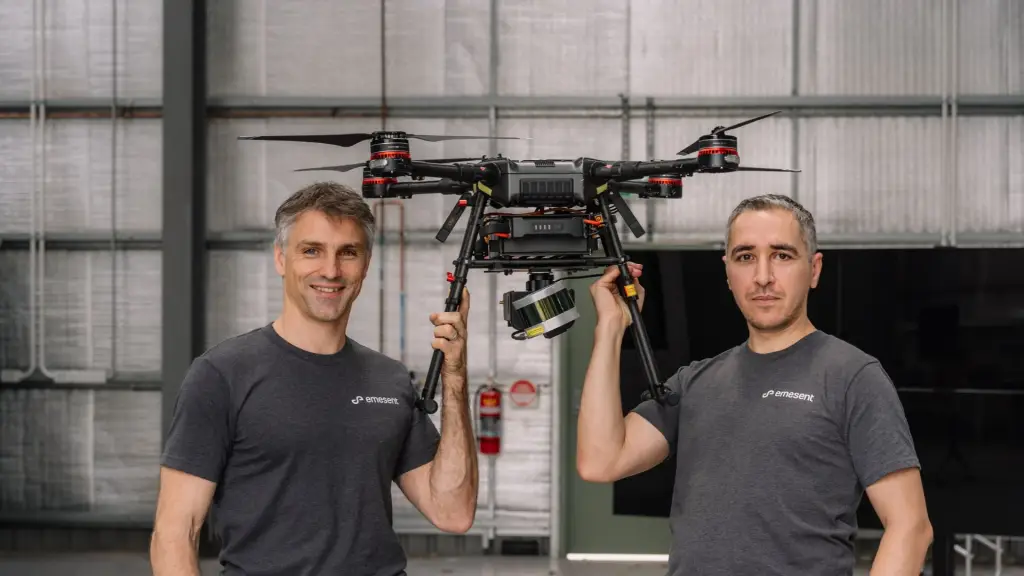
Queensland robotics company Emesent has raised $25 million, which includes $10 million from the National Reconstruction Fund Corporation (NRFC) in its first-ever venture debt investment.
The announcement comes just days after the federal government launched the first legislative review of the NRFC. The review will examine whether the investment vehicle remains fit for purpose.
The remainder of the funding includes a $15 million SAFE Note backed by Main Sequence Ventures, QIC, NGS Super, Hostplus and Orion Resource Partners.
The round follows a $32 million Series A investment in 2022 and a $3.5 million seed round in 2018.
Originally spun out of the CSIRO in 2018, Emesent develops AI-powered robotics and spatial computing technology capable of mapping hazardous and GPS-denied environments.
Its flagship Hovermap system is used across more than 200 mine sites worldwide by customers including Rio Tinto, BHP and Glencore. Its technology has also been adopted across construction, engineering, critical infrastructure and defence.
Melbourne brain-computer interface startup Fluent has raised $2 million to help speech-impaired people communicate.
The University of Melbourne spinout was backed by the uni’s Genesis Pre-Seed Fund, Pacific Channel, Galileo Ventures, Multiple Sclerosis WA, paediatric audiologist professor David Graydon, and by New York’s Jumpspace Ventures and London’s Founder’s Factory.
The low-risk interface, inserted under the scalp but outside of the skull, helps people with neurological disorders that lead to a loss of speech, such as motor neurone disease and multiple sclerosis, to communicate using their thoughts.
Fluent co-founder and biomedical engineer Dr Tim Mahoney said the device sits above a part of the brain called the motor cortex, which controls speech muscles. Machine learning is used to convert brain activity into text or audio.
Never miss a story: sign up to SmartCompany’s free daily newsletter and find our best stories on LinkedIn.
Related Stories
 AI News
Gonçalo Ramos' 94th-minute goal gives Portugal a 2
23 minutes ago
 AI News
StubHub accused of failing to deliver pricey World Cup tickets
23 minutes ago
 AI News
Metrolinx splits unfinished Hazel McCallion LRT work into 2 contracts
23 minutes ago
 AI News
Why offside rules denied goals for Portugal, Croatia in World Cup
23 minutes ago
 AI News
Massive fan crowds gather in sweltering Toronto for Portugal
23 minutes ago
 AI News
Canada to host 2028 Francophonie summit in Ottawa region
24 minutes ago
 AI News
New report reveals reasons behind Canada's brain drain to U.S.
24 minutes ago
 AI News
Unprecedented flooding inundates Swan River, leading to evacuations
24 minutes ago