
Finnish and Estonian Armed Forces Plan to Develop Military AI with NestAI
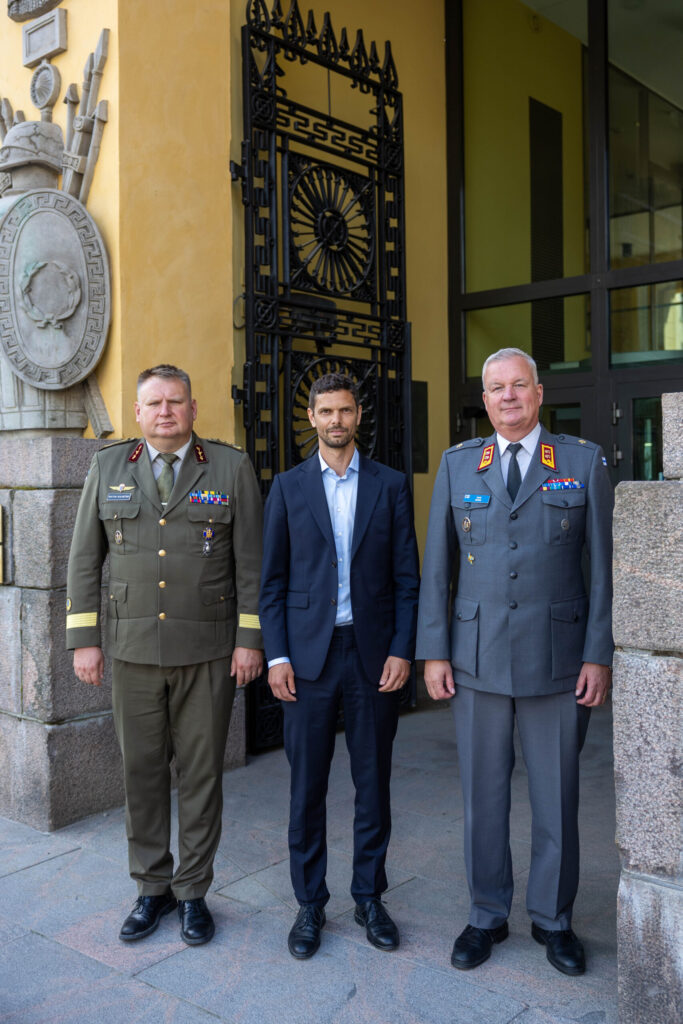
Finland, Estonia, and NestAI (NEDAI), a European developer of artificial intelligence for defense, have agreed to collaborate on research and development of adaptive and machine-learning artificial intelligence, command and control support solutions, as well as autonomous and unmanned systems.
This was reported by the Estonian Ministry of Defense.
The partners in this collaboration are the Center of Competence for Artificial Intelligence of the Finnish Defense Forces and the Estonian Defense Forces’ Future Capabilities and Innovation Command (TIVJ).
“Last year, we launched the Finnish Defense Forces’ data and artificial intelligence strategy. This LOI (letter of intent) is one of the elements in achieving the strategy’s goal — to create a national and international ecosystem around data and artificial intelligence. Our goal is to involve more countries in this cooperation, and the partnership now beginning with Estonia is an excellent starting point for this. At the same time, we are developing capabilities that are compatible with those of our allies,” said Major General Sami Nurmi, Deputy Chief of Strategy at the General Staff of the Finnish Defense Forces.
The Estonian Defense Forces, the Finnish Defense Forces, and the European Artificial Intelligence Laboratory for Defense NestAI (NEDAI) have signed a LOI to promote the development of AI capabilities. The document provides a framework for knowledge sharing, joint development, training, and technical cooperation.
NestAI’s flagship product — an adaptive operating system called NestOS — is already being positioned as a solution for the aviation industry. In May 2026, the company agreed to integrate this software with Patria’s UAVs, combining adaptive autonomy with an in-service flight platform.
In late 2025, NestAI raised 100 million euros from Nokia and the Finnish state-owned fund Tesi. Its founder, Peter Sarlin, previously founded the Finnish AI company Silo AI before selling it to AMD. Sarlin noted that the new Finnish-Estonian collaboration aims to keep the pace and direction of development “in the hands of the countries that operate these systems.”
The collaboration will begin in phases. The first step will be to identify priority areas for pilot projects, followed by an assessment of the experience gained, best practices, and opportunities for expansion.
In the long term, the goal is to expand the network and its activities by engaging organizations working in the field of artificial intelligence, centers of excellence, and industry partners from other countries, which will contribute to the development of a robust artificial intelligence ecosystem in the defense sector.
The Baltic states have been experiencing a constant stream of drone incursions linked to the war in Ukraine and Russian electronic warfare, prompting the presidents of these countries to ask NATO to transform the rotational “Baltic Air Policing” mission into a full-fledged air defense mission equipped with specialized counter-drone capabilities.
Since then, Estonia has reallocated 500 million euros from its budget earmarked for armored vehicles to air defense systems.
Related Stories
 AI News
Bill Gross bets AI can help mass
2 weeks ago
 AI News
Nigeria records 93% rise in AI micro
2 weeks ago
 AI News
The Italian gelato maker using AI to invent new flavours
2 weeks ago
 AI News
Closing the Gap Between Agentic CX Pilots and Production
2 weeks ago
 AI News
New Brunswick data centre debate highlights cross
2 weeks ago
 AI News
How to Structure an AI Agent Referral Fee Agreement Between Startups
2 weeks ago
 AI News
No, AI didn’t delete a Swedish reality TV series
2 weeks ago
 AI News
There is no AI in Armageddon. Artificial intelligence is a tool, not an apocalypse
2 weeks ago