
Federal government admits two trans inmates charged with sexual assault after transfer to women's prisons
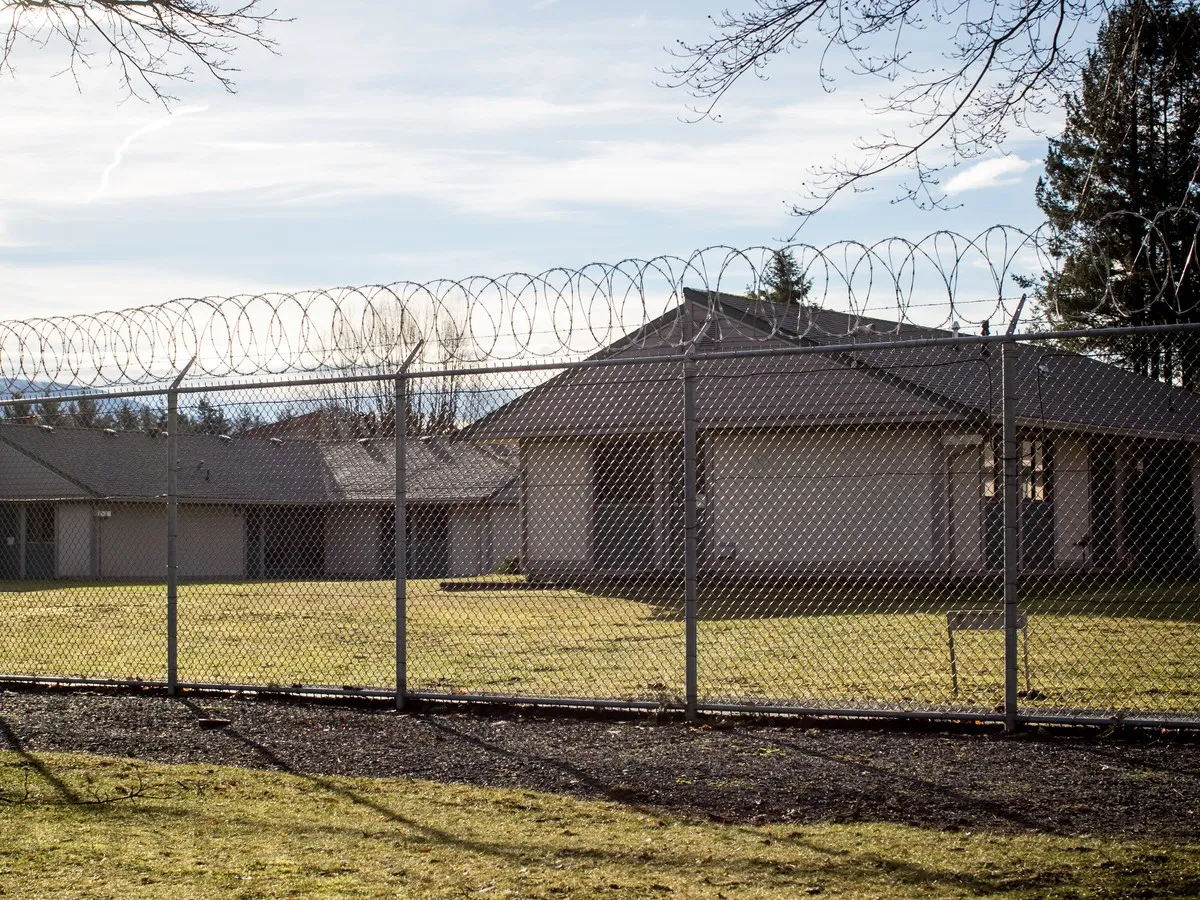
The federal government has acknowledged that two transgender inmates incarcerated in women’s prisons faced sexual-assault charges following complaints made by female inmates.
On Monday, the government filed its statement of defence in an ongoing constitutional challenge to Correctional Service Canada’s (CSC) policy allowing some “gender diverse” inmates to be transferred to women’s prisons. The CSC uses the term “gender diverse” to describe identities or expressions that differ from expectations based on sex assigned at birth, including non-binary, transgender and two-spirited.
According to the filing, one inmate was charged with one count of sexual assault and one count of criminal harassment in May 2020 after a female inmate filed a complaint. Another inmate was charged with two counts of sexual assault after a female inmate filed a complaint in October 2024.
The inmate charged in 2020 was alleged to be an instigator in an additional five incidents against three women inmates, but the government said in its filing that they were not involved in four of these, while a “cisgender woman” inmate was also found to be an instigator in the fifth.
The government uses the term “cisgender women” to refer to “individuals whose gender identity corresponds to the gender assigned to them at birth.”
The inmate charged in the 2024 complaint was also identified in another incident, but this was a false allegation, the government said.
Responding to a demand for particulars, the plaintiff in the case identified 45 cisgender women inmates who were allegedly impacted in 59 incidences of harm. For 45 of the 59 alleged incidences, the government says, “insufficient particulars were provided to allow Canada to respond.”
Of the remaining 14 claims, 10 took place at Grand Valley Institution for Women in Kitchener, Ont., three took place at Fraser Valley Institution, in Abbotsford, B.C., and one at the Okimaw Ohci Healing Lodge on the Nekaneet First Nation, Sask. These include a 2018 complaint that led to a police investigation but no charges, a 2019 report of sexual assault, and a 2021 complaint alleging sexual and physical assault.
The constitutional challenge brought against the federal government concerns CSC’s Commissioner’s Directive 100: Gender Diverse Offenders, and was launched in 2025 by the Justice Centre for Constitutional Freedoms (JCCF).
CSC introduced its policy on “gender diverse” offenders in May 2022. The directive states: “Throughout their sentence, offenders may apply for a voluntary transfer to a men’s or a women’s institution according to their gender identity or expression.” It adds that all transfers are assessed on a case-by-case basis, and that the Deputy Commissioner for Women is the final decision-maker for transfers to women’s institutions.
Related Stories
 Canada
Montreal’s blue
51 minutes ago
 Canada
Which states stand to suffer most in escalated U.S.
51 minutes ago
 Canada
Dutch bank shifts 86 tonnes of gold from U.S., Canada to U.K.
51 minutes ago
 Canada
Powerful storm hits Canada’s Toronto, cutting power to tens of thousands
51 minutes ago
 Canada
Trade war complicates Manitoba Hydro plan to buy gas turbines from U.S. manufacturer
1 hour ago
 Canada
Two more B.C. Conservative M.L.A.s abandon party
1 hour ago
 Canada
Ontario student accused in U.S. of taking airport photos for Chinese official
1 hour ago
 Canada
Trump says not doing business with Canada is an option
1 hour ago