
Exclusive: Payments startup Velocity raises $38 million to help businesses tap stablecoin growth

As stablecoin use surges globally, traditional finance is rushing to keep pace. Many businesses, though, are still getting up to speed on how to integrate dollar-pegged tokens into customer payments, and London-based startup Velocity—which on Tuesday announced a $38 million Series A funding round—is one of the firms helping them to do so.
“These are companies that do not understand that they can be using stablecoins to solve their problems. Those are the people we are going for,” said Rob Hadick, a general partner at the venture capital firm Dragonfly, which has carved out a niche in backing firms that facilitate fiat-to-bridge transactions.
Dragonfly led Velocity’s Series A round, which also included investments from Coinbase, Capital One Ventures, and Wintermute. Eric Queathem, founder and CEO of Velocity, declined to specify at what valuation his startup raised its most recent stash of capital.
Founded in 2025, Velocity aims to tap into the industry’s rapid expansion, with its name pointing to its goal of making payments faster through stablecoins. The company declined to name specific clients but said its customers include a mix of global merchants, payment providers, fintechs, and financial institutions.
Queathem has encountered the frustrations that arise when using traditional banking rails to settle cross-border transactions. Before Velocity, he spent the last nine years at payments technology company WorldPay, leading corporate strategy and acquisitions before launching their crypto and global payouts division. There, he saw that while consumer payments looked sleek, the underlying infrastructure was “awful.”
Velocity sees traditional banks and foreign exchange houses as its main competitors, rather than other payments startups. Hadick described Velocity as a model that moves beyond simpler use cases into the more complex treasury and cross-border settlement needs of large companies.
“What Velocity has built is what we think is the easiest, most comprehensive set of solutions for these businesses to come on-chain and to do [so] in a way that’s familiar to them,” Queathem told Fortune.
The company already operates in the United States, parts of Europe, and Australia, and plans to use the new capital to obtain licenses required to expand into Africa and Latin America. It will also invest in infrastructure for secure asset custody and develop features such as yield-generating stablecoin products.
Stablecoins have rapidly expanded over the past two years, extending beyond fintech and into Wall Street. Proponents say they enable faster cross-border payments and lower transaction costs, and venture investors have committed hundreds of millions of dollars to the sector over the past year. In June, Open Standard, a consortium of financial firms including Stripe, Visa, BlackRock, and more than 140 others, said it would launch its own stablecoin to compete with the market’s current leaders.
Related Stories
 Business
Robot factories and hypersonic missiles: JPMorgan Chase’s first $5 billion of defense investments
1 week ago
 Business
Police say a car has hit an Australian lawmaker, critically injuring her; the driver was arrested
1 week ago
 Business
Boomi acquires Israeli startup Elementary for $43 million
1 week ago
 Business
Mega chicken farm expansion plan withdrawn
1 week ago
 Business
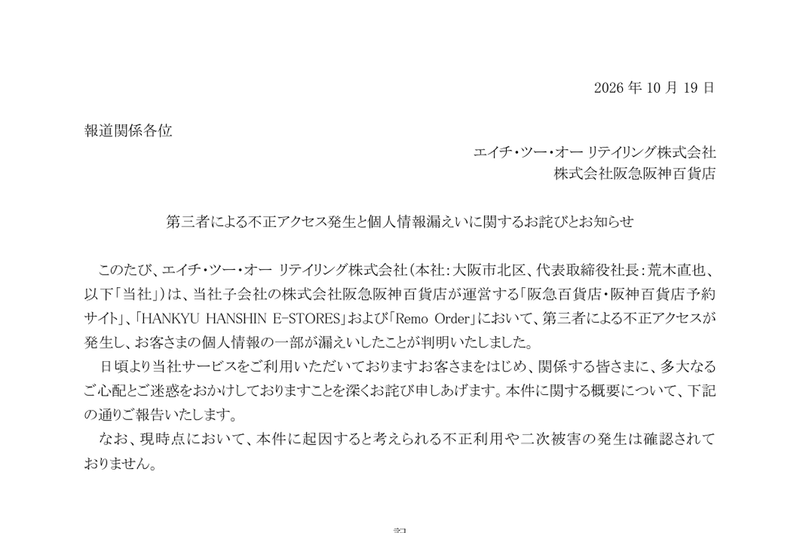
Data Breach at Hankyu Hanshin Department Store Common ID System Affects Nearly All 1.26 Million Members
1 week ago
 Business
Global Startup EXPO and Nippon Startup Awards 2026: METI Showcases Japan's Deep
1 week ago
 Business
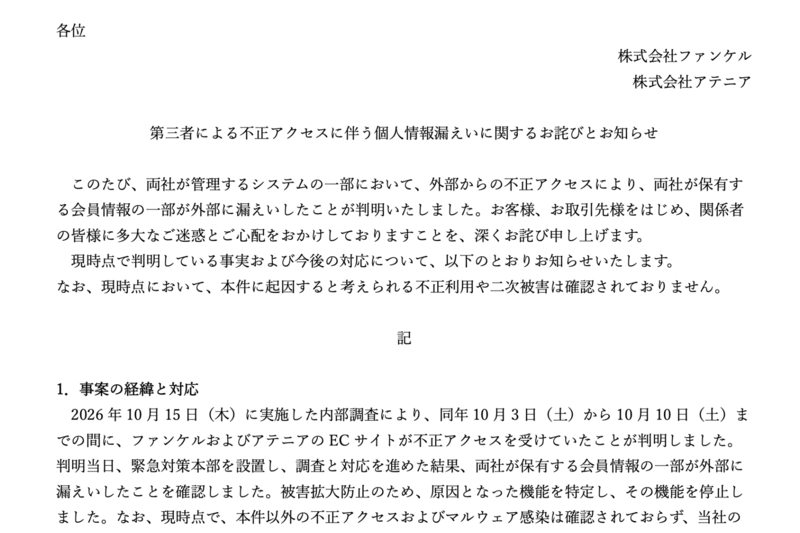
FANCL and Attenir Suffer Data Breach Affecting 780,000 Customers, Exposing Addresses, Names, Phone Numbers
1 week ago
 Business
DeepSeek Quietly Ships V4.1-Flash
1 week ago