
Enhancing Early-Stage Startup Investment Capabilities… Hosting '2026 Boonicorn Build
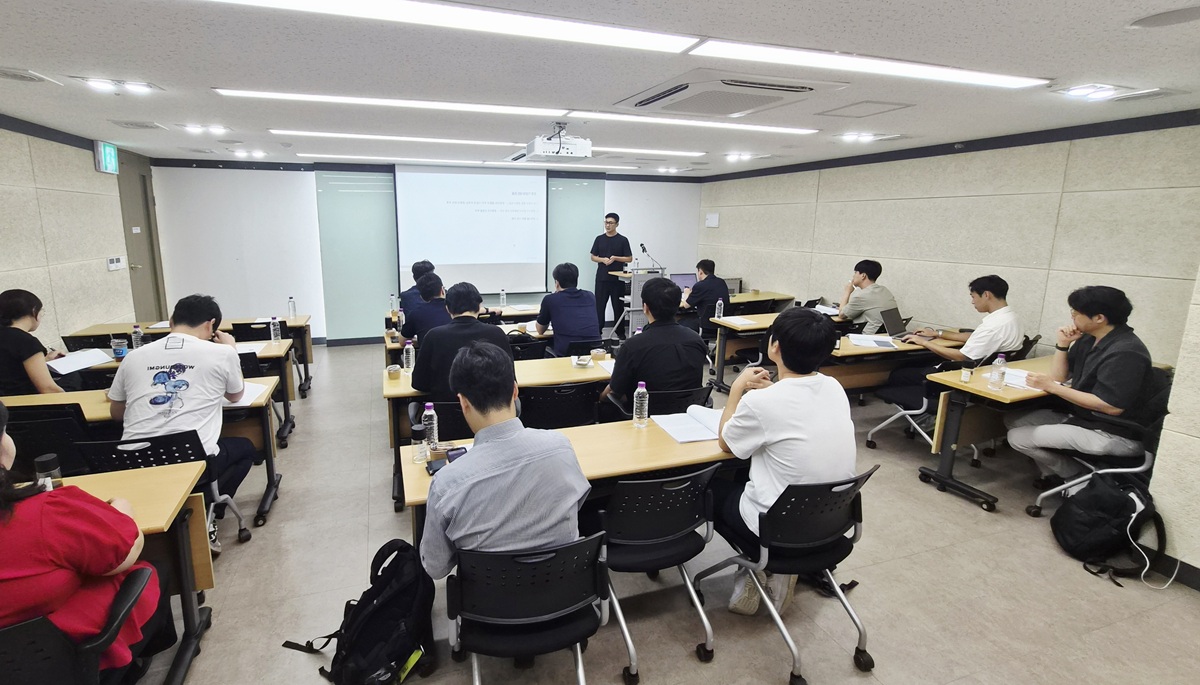
For early-stage startups preparing to attract investment, the ability to explain their technology and business idea from an investor's perspective and secure actual funding is just as important as the technology itself. Attracting investment requires diverse preparation, ranging from finding investors suited to the company's growth stage to creating IR materials that help investors understand the company, and commercializing proprietary technology.
The 'BUILD-UP' investment program of the '2026 Bunicorn Build Incubation Project,' jointly organized by Busan United Technology Holdings and the Busan Technology Startup Investment Agency, was held in Busan on the 31st. This program was designed to help CEOs and employees of early-stage startups aiming to attract investment enhance the strategies and practical capabilities necessary for the actual investment attraction process. Nam Moon-woo, Investment Manager at the Yoonmin Foundation for Creative Investment; Seol Hoon, CEO of Axiom Ventures; and Kim Jin-sung, CEO of Lia Partners, participated as speakers to share insights on the growth and investment attraction processes of early-stage companies, ranging from seed investment and IR strategies to technology transfer and research institute spin-offs.
How should early-stage companies secure investment?… Sharing strategies starting from seed funding
In the first session, Nam Moon-woo, an investment manager at the Yoonmin Creative Investment Foundation, delivered a lecture on the topic of "Strategies for Attracting Seed Investment." Focusing on "What Investors Look For," Manager Nam specifically explained the factors early-stage startups must consider when preparing for seed investment, including: which startups investors prefer, the timing of investment, contacting investors, investment capital and equity, methods for preparing for an investment round, and the use of investment funds.
In particular, the founder's perspective on competitors was also addressed. The intention is that rather than highlighting only the weaknesses of competitors, one should explain their own competitiveness based on a thorough understanding of the competitors and the market. Investment Manager Nam stated, "Respect and understanding of competitors are essential for a company's IR materials to become more sophisticated," adding, "Highlighting only the flaws of competitors may actually prevent the company's strengths and advantages from being properly revealed."
In the second session, Axiom Ventures CEO Seol Hoon delivered a lecture on the topic of "IR Strategies for Successful Investment Attraction." Drawing on his personal experience in fundraising and consulting for listed companies, CEO Seol focused on how to structure IR materials from an investor's perspective and effectively convey a company's business performance and growth potential.
According to CEO Seol, IR materials should not merely stop at unilaterally explaining a company's technology and products; instead, they must connect the information investors need to evaluate the company—such as market problems and solutions, business models, market size, competitive advantages, and business performance—into a single logical flow. The presentation also covered pitching strategies required during the actual investment attraction process, including how to effectively convey a company's core competitiveness within a limited time and how to respond to investor questions.
In the final session, Kim Jin-sung, CEO of Lia Partners, delivered a lecture on the topic of "Technology Transfer and Research Institute Companies." Focusing on "Technology Utilization Strategies for Startups," CEO Kim explained the technology transfer and research institute company systems that companies can utilize in the process of acquiring and commercializing technology.
CEO Kim stated, “In-house R&D requires significant budget and time, and while struggling to secure key personnel, companies may miss the opportunity to enter the market at the right time.” He added, “By utilizing technology transfer, companies can rapidly commercialize proven technologies and shorten the product development period through collaboration with experts, thereby increasing the likelihood of securing a market advantage.” CEO Kim further noted, “Looking at domestic technology transfer trends, revenue from technology transfer for universities and government-funded research institutes is growing every year,” and introduced technology transfer strategies and real-world examples that startups can utilize.
From seed investment to IR and technology commercialization… Covering the growth stages of early-stage companies
A key feature of this program was that it covered three interconnected areas within a single session, targeting early-stage companies preparing to attract investment. The first session examined seed investment strategies from an investor's perspective, while the second session addressed IR strategies to effectively communicate a company's business performance and growth potential to investors. Subsequently, the third session shared methods for connecting technology to actual business by utilizing technology transfer and the research institute company system.
Accordingly, participating companies were able to identify practical aspects necessary for the growth of early-stage startups, ranging from "how investors view early-stage companies" to "how to convey a company's competitiveness to investors" and further to "how to commercialize technology."
Kim Hyun-seung, a representative from the Busan Institute of Technology and Startup Investment, who co-hosted the event, stated, “The purpose of this ‘Build-up’ program is to support ‘Boonicon’ startups—candidates for Busan-style unicorns—in acquiring the practical capabilities necessary to attract investment and expand their contact points with investors.” He added, “We will actively support promising local startups by strengthening investment strategies, IR capabilities, and commercialization expertise tailored to each company’s growth stage, enabling them to secure follow-up investments and achieve sustainable growth.”
The Startup Ecosystem Reporter Corps is jointly operated by KAIA and Venture Square and records various stories from the startup scene.
Related Stories
 Technology
Credo Technology Stock Falls Despite Beating Fiscal Q1 Targets
2 hours ago
 Technology
What's Going On With Marvell Technology Stock Tuesday?
6 hours ago
 Technology
How the NFL uses customer journey technology
6 hours ago
 Technology
Feature Article: Biometrics at the Border
7 hours ago
 Technology
How ZS democratized secure ad
7 hours ago
 Technology
Are you going to make that green light? A new, Kitchener
8 hours ago
 Technology
Here's what's been breaking OC Transpo fare readers
9 hours ago
 Technology
Whatfix cofounder and CEO Khadim Batti passes away
9 hours ago