
Eight ANZ startups that raised $102 million this fortnight
It’s been a busy two weeks for startup funding news, with a bunch of Australian and New Zealand startups securing some serious capital.
We’ve counted eight startups that collectively raised $102 million to round out July.
Keep reading to learn more about Partly, Outlier Space, Navi, Agscent, Superstat, Wellumio, Early Bird and Octopusbot.
New Zealand automotive software startup Partly has secured $71.5 million (US$50 million) in new funding from high-profile investors DST Global and Australian venture capital firm Blackbird.
According to The Australian, Partly’s valuation has grown to $715 million (US$500 million) as it continues its global expansion. The Christchurch-based startup has offices in the US and UK and is in the process of building an Australian team too.
Partly was founded in 2020 and has previously spoken about applying an Amazon-like model to the automotive repair sector.
The startup’s platform acts as a central hub for information about auto parts, helping manufacturers and resellers sell across multiple channels and share real-time data with partners.
It does this through an artificial intelligence foundation model built specifically for the auto repair supply chain, called Interpreter. The model predicts the individual parts needed for a repair job based on a photo, voice note or description inputted by a user.
This saves mechanics time and eliminates much of the guess work involved in car repairs, according to co-founder Levi Fawcett.
“If you are a repair shop and you use our model, you’ll get exactly the right parts the first time four times more often,” he told The Australian.
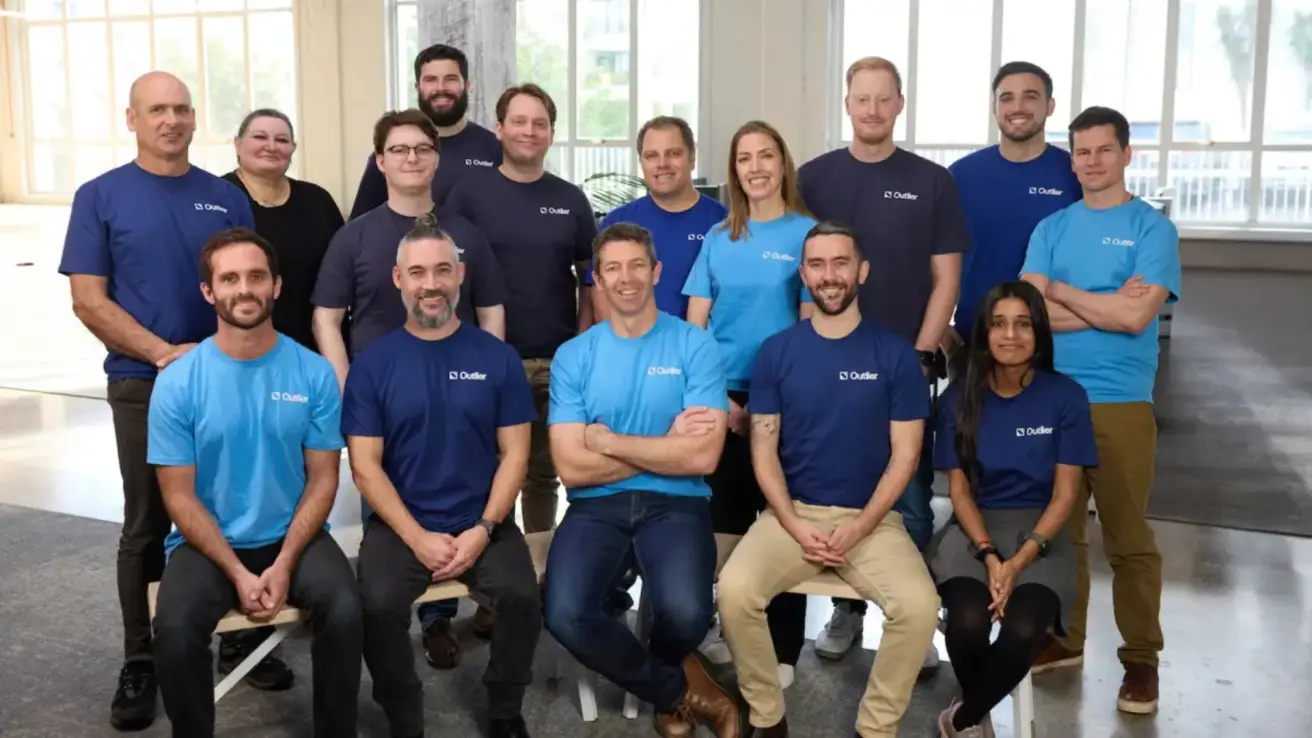
An Auckland-based startup has raised $10.5 million (US$7.35 million) in pre-seed funding to build commercial payload capsules for space.
The round for Outlier Space was led by by New Zealand VC GD1, supported by Nova Threshold, Brian Cartmell, Airtree, Icehouse Ventures, Investible and Side Stage Ventures.
The capital is to develop an autonomous, reusable satellite capsule to carry research and manufacturing payloads to microgravity on any type of rocket, then return them to Earth, with hopes to hold a first test flight in 2028,
Target customers include US and European pharmaceutical, biotechnology and advanced materials companies needing microgravity conditions to produce things difficult to develop on Earth.
Founder and CEO Jamie France, said his engingeering team previously designed and launched orbital rockets, built satellite buses, and delivered payloads to orbit the Moon and explore its surface.
“Our people have been at the forefront of numerous globally significant advances in space. It shows that we have the talent to deliver a world-first commercial offering from New Zealand,” he said.
“The cost to orbit is at an all-time low. The International Space Station, which has proved the science over the last three decades, is being decommissioned soon. We’re already seeing strong demand for a commercially viable, uncrewed commercial platform, which is what we are building.”
Melbourne medtech Navi Medical Technologies has raised $6.8 million to commercialise its baby-saving catheter device in the US.
The round was led by $4m from ANZ healthcare VC KP Rx, supported by existing investor Innovation (formerly Breakthrough) Victoria and Pacific Chan.
Navi previously raised $2.4m in mid-2023 supported by Medtech Actuator and Artesian VC, as well as the Victorian government fund.
The medtech startup, which also has a base in Boston, Massachusetts, developed a vascular device, called Neonav, to help clinicians insert catheters into the veins of critically ill newborns and children to administer life-saving therapies.
The capital follows US FDA approval for Neonav and clinical evaluation trails at two leading US paediatric hospitals.
An agtech startup that can analyse cattle breath to tell if they’re pregnant, sick or belching excessive methane has raised $5 million.
The round for Agscent came from VCs Scale Investors and Tundra Capital (previously Mandalay), as well as family offices and farmers. It values the deep tech startup at $26.9 million.
Economist and farmer Bronwyn Darlington founded her regional NSW startup in 2018 . While trawling NASA’s online patent library and, she found sensing tech developed to monitor astronauts and detect hazardous airborne compounds during space missions. She licencsed for the system an applied it to livestock.
Agscent combines advanced sensors, biological signal analysis and artificial intelligence to identify chemical signatures in breath and air. Darlington calls it a “digital dog’s nose”. The funding will help add AI detection to the product.
The technology can halve the time it takes to detect a cow’s pregnancy from 40 days to as early as 18 days after insemination. It also measures methane to analyse feed efficiency and livestock productivity.
Agscent is now running large-scale US validation programs with Dairy Farmers of America
A Melbourne sports tech startup using AI to deliver performance analysis for amateur players has scored a $3.5 million pre-Seed raise.
The round for Superstat was led by Blackbird, supported by Blinq founder Jarrod Webb, and Mindset Health’s founders, Alex and Chris Naoumidis.
Superstat was founded in May 2025 by Cordelia King, Sam Hung and Kai Bloomfield, a former AFL data analyst, and was selected for Startmate’s 2026 summer cohort.
The platform turns raw match footage into structured data automatically, generating player stats, event timelines and performance patterns.
They wanted to bring the analysis in elite sports to community clubs, junior programs and semi-professional teams, and following the raise, will move to Austin, USA.
Superstat already has customers there, and alongside its existing focus on basketball, has begun building models for NFL, volleyball, soccer and baseball.
New Zealand startup Wellumio, which develops mobile brain imaging devices to detect strokes, has topped up its pre-Series A round with a further NZ$2.47 million (AU$2.06 million).
The fresh funding brings the oversubscribed round’s final funding total to NZ$9.75 million (AU$8.13 million).
Wellumio’s core product is the Axana device, which packages MRI-based technology into a unit usable at the point of care.
The Auckland-based company hopes to give medical professionals more options during the ‘golden hour’, the sixty minutes after stroke symptoms first appear, where rapid diagnosis and treatment is essential.
“Every minute counts in stroke care,” said Dr Shieak Tzeng, co-founder and CEO of Wellumio, in a statement accompanying the raise.
“Yet only a small proportion of patients receive treatment within the ‘golden hour’, when timely intervention offers the best chance of reducing long-term disability.”
Wellumio will use the funding to build the startup’s team, drive clinical and product development, and back more clinical evaluation across additional sites.
Australia’s Bioshore Ventures, and the US early-stage investment firm Jumpspace Ventures, were new participants in the raise.
They join Nuance Connected Capital, which led the series funding, along with Icehouse Ventures, NZ Growth Capital Partners’s Aspire Seed Fund, Pacific Channel, Booster, and Cure Kids Ventures.
Flying Kiwi and Enterprise Angels also contributed, along with global investors through the New Zealand Government’s Active Investor Plus program.
Wellumio also tapped into the New Zealand equity crowdfunding platform Snowball Effect for retail investor funding.
A wellness startup with strong ties to Eucalyptus, has raised $2 million in seed funding.
Early Bird was co-founded by a former Eucalyptus employee and has now received investment from Eucalyptus co-founders Tim Doyle and Benny Kleist, along with a group of angel investors from Hyper Ventures.
As reported by the Australian Financial Review (AFR), Early Bird is working on a hangover prevention capsule and a gut health clinic.
The startup’s founders include Dan Cable, who led Eucalyptus’ men’s longevity product Compound, and Alex Debney, who is a former Macquarie Group manager and an early backer of Eucalyptus.
According to the AFR, Early Bird is working towards an initial launch of its first product in the second quarter of the current financial year.
A Sydney startup using artificial intelligence (AI) to forecast crop production for farmers has raised more than $1 million.
The round for Octopusbot was backed by Folklore Ventures and No Brand.
The six-year-old grain forecasting platform uses AI to analyse historical yield data, satellite imagery, weather records and commodity market information to forecast crop production, supply risks and price direction, for an average 95%+ data accuracy, up to 7 months ahead of trade and official estimates.
Growers, buyers, traders, food producers, fertiliser and crop protection companies along the grain commodity supply chain can make more accurate commercial and financial decisions using the platform. It now has more than 100 customers globally and has partnered with agricultural services company Elders for data analysis and insight.
The funds will be used to scale the tech, strengthen its global market intelligence network, and expand the forecasting models across new commodities and regions.
Technical engineers Carolina Ferreira and Rodrigo Cortes founded Octopusbot in 2020. She was inspired by her grandfather, a corn farmer, and has a background in cyber security and electrical engineering. Cortes has procurement and supply-chain treasury experience at the likes of PepsiCo, Kirin and Heineken.
Never miss a story: sign up to SmartCompany’s free daily newsletter and find our best stories on LinkedIn.
Related Stories
Mesa School of Business, NuSynth Technologies, ThinkMetal, others raise funding
41 minutes ago
 Business
3D
41 minutes ago
 Business
Calgary police call for 73% boost in capital funding for infrastructure, technology investments
1 hour ago
 Business
Drone
2 hours ago
 Business
The new math of starting a business
3 hours ago
 Business
Reliance takes its discount playbook to ice cream. Will it work?
4 hours ago
 Business
VEIR’s $110M Round Follows a 3 MW Cable Demo
5 hours ago
 Business
NWA Business Journal seeks nominations for 2027 Outstanding Business Awards
6 hours ago