
EDITORIAL: High
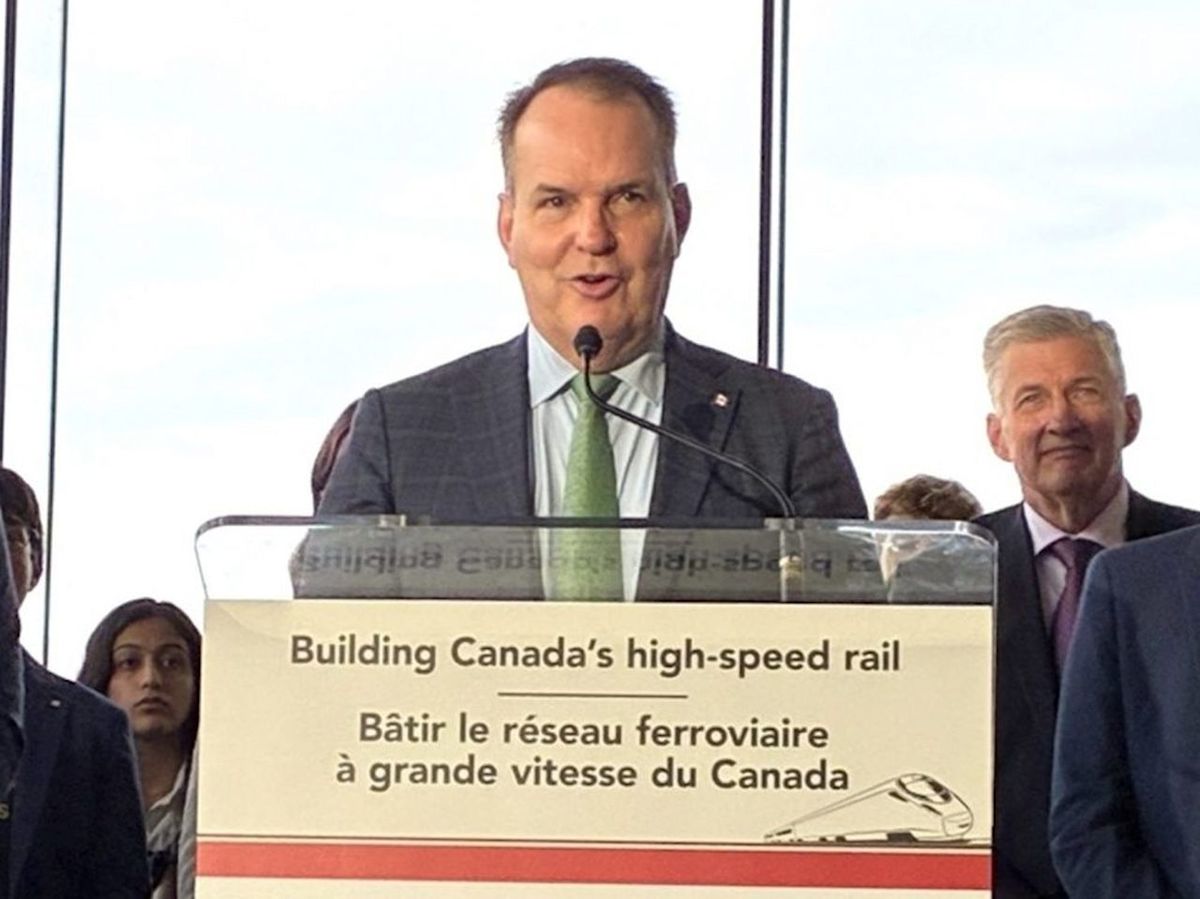
Building a high-speed rail service between Ontario and Quebec is the unicorn of federal politics — often imagined, never seen.
Over the past 50 years, the federal government has been involved in at least half a dozen attempts to create a high-speed or high-frequency rail network in the Ontario-Quebec corridor.
None succeeded. Either politics got in the way, or the plan was impractical, or costs became prohibitive, or there was too much local opposition, or governments changed hands or lost interest over time.
Some announcements were timed to coincide with elections, as was the case with the latest proposal known as Alto, a publicly owned federal mega-project partnering with a private sector conglomerate called the Cadence Consortium.
It was proposed by Justin Trudeau in February 2025, a month before Mark Carney became prime minister and called the election.
In the 1974 election, PM Pierre Trudeau, as his son would 50 years later, promised to revitalize Canada's rail network, leading to the creation of Via Rail, a crown corporation that was to manage the roll-out of Bombardier's "Light, Rapid, Comfortable" trains.
Subsequent government attempts to create high speed and/or high frequency rail corridors in 1981, 1984, 1998, 2002 and 2008 came and went.
A 2016 proposal eventually morphed into Alto, envisioning a 1,000-km passenger rail network with trains travelling at 300 km/h along a dual-track corridor, cutting existing travel times between Toronto and Quebec City in half.
The advertised cost according to the feds is up to $90 billion, although the Globe and Mail reported Monday based on sources that this is just the capital cost of building the infrastructure.
It doesn't include operating and maintenance costs, estimated at over $60 billion over 40 years, raising the total price tag to about $150 billion, with projected revenue of $105 billion.
Citing capital costs for building large-scale transportation infrastructure without including operational costs until later has been standard operating procedure at all levels of government for years, a reason to take all early projections with a grain of salt.
The feds say Alto will boost Canada's GDP by up to $35 billion annually, creating over 50,000 well-paying jobs during construction.
In other words, this time, the Carney government insists, things will be different.
Our advice? Don't hold your breath.
Alto expands on the economic case for high-speed rail
GOLDSTEIN: Canada's history of high-speed rail projects littered with political train wrecks
JARVIS: Kingston high-speed rail stop will cost taxpayers dearly
Related Stories
 Canada
2 killed, multiple injured after vehicle drives onto field during soccer game at Wichita sports complex
32 minutes ago
 Canada
‘Significant casualties’ after fire breaks out at CFB Wainwright, MP says
32 minutes ago
 Canada
Carney says 'serious incident' led to major fire at Alberta military base
32 minutes ago
 Canada
Emergency crews respond to incident, fire at CFB Wainwright
32 minutes ago
 Canada
Fatalities and injuries reported after ‘incident’ at Alberta military base: defence minister
32 minutes ago
 Canada
Backstreet Boys’ 12
1 hour ago
 Canada
Vehicle drives through Kansas soccer game, killing two, including a child, police say
1 hour ago
 Canada
Saturday Sips: Halloween party pairings
1 hour ago