
Economists have some ideas about how to Trump

OTTAWA — Prime Minister Mark Carney says Canada is under attack, bombarded by U.S. tariffs and a trade partner that moves goalposts on a whim.
The federal government’s initial response was to offer short-term support payments for companies and workers hit by this latest round of American tariffs.
But economists say it’s the long-term policy moves that will do much more to inoculate the Canadian economy against the Trump tariffs, not to mention fuel a higher national standard of living.
The most powerful policy play, they say, would be an overhaul of Canada’s tax system because that could improve national competitiveness, something that was sorely needed even without the Trump tariff threat. They argue that tax changes, specifically cuts to personal and corporate income, would encourage increased investment and exports, which would then fuel increased economic growth.
“Canada really needs to do something large on tax reform,” said Jack Mintz, the president’s fellow at the University of Calgary’s School of Public Policy. “I think it’s even more crucial today.”
While Finance Minister François-Philippe Champagne has yet to signal the government’s broad goals for its upcoming budget this fall, the stars may have aligned for big change. The trade rupture has given Ottawa and the provinces rare political cover to make moves that might have been unpopular during normal times. The Liberals are also led by an economist, have a majority and are likely at least a couple of years from the next election.
The Liberal government might be leaning that way. Even before the trade war with the U.S., the party had vowed to hold a review of the corporate tax system during last year’s federal election campaign, although that promise that has not yet been kept.
The question is whether the Carney government will seize this moment to boost the economy or defy Winston Churchill’s quip to “never let a good crisis go to waste.”
It’s not just economists feeling the tides of change. The leaders of two of Canada’s largest banks, Scott Thomson of the Bank of Nova Scotia and Darryl White of the Bank of Montreal, said Tuesday that the tariff fight should trigger the federal government to act.
“There is an opportunity for the Canadian federal and provincial governments to recognize the moment for what it is and use it to drive transformational policy change,” White told equity analysts, “and not let this moment go to waste.”
A handful of economists surveyed by National Post were largely consistent in what they’d like to see the government do to spur and Trump-proof the economy.
Each said that their recipes for growth include, and usually begin with, income tax cuts: both corporate and personal.
Tim Sargent, director of economic growth and prosperity at University of Calgary’s School of Public Policy, said these two taxes touch and influence virtually every inch of the economy, which means that reducing them would also mean widespread improvements to competitiveness.
Related Stories
 Business
Robot factories and hypersonic missiles: JPMorgan Chase’s first $5 billion of defense investments
2 days ago
 Business
Police say a car has hit an Australian lawmaker, critically injuring her; the driver was arrested
2 days ago
 Business
Boomi acquires Israeli startup Elementary for $43 million
2 days ago
 Business
Mega chicken farm expansion plan withdrawn
3 days ago
 Business
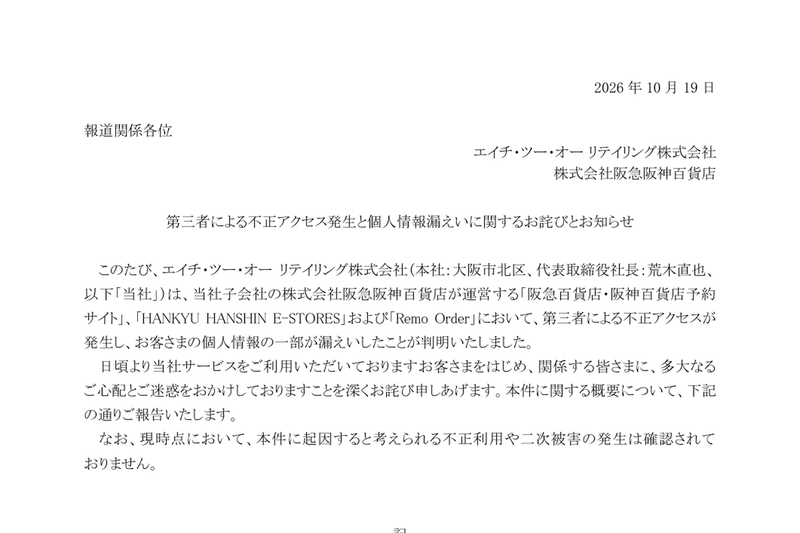
Data Breach at Hankyu Hanshin Department Store Common ID System Affects Nearly All 1.26 Million Members
3 days ago
 Business
Global Startup EXPO and Nippon Startup Awards 2026: METI Showcases Japan's Deep
3 days ago
 Business
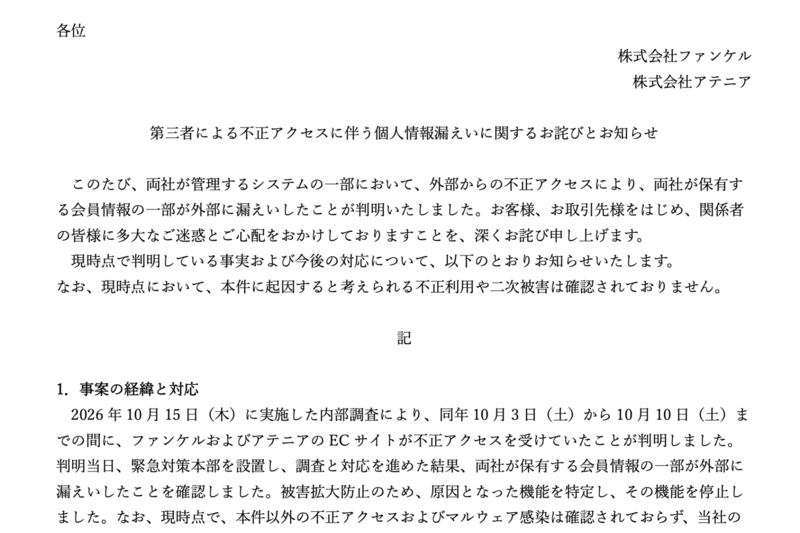
FANCL and Attenir Suffer Data Breach Affecting 780,000 Customers, Exposing Addresses, Names, Phone Numbers
3 days ago
 Business
DeepSeek Quietly Ships V4.1-Flash
3 days ago