
Doctors urge women to remove fallopian tubes to reduce ovarian cancer risk
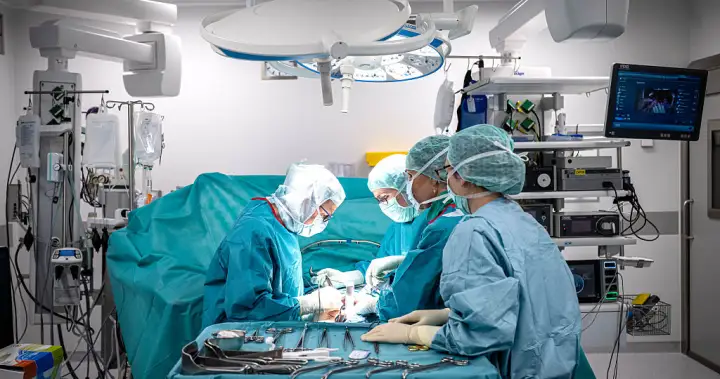
Doctors are urging women to consider removing their fallopian tubes as growing evidence suggests it could reduce the risk of developing ovarian cancer by roughly 80 per cent.
About 3,000 women in Canada are diagnosed with ovarian cancer every year, and 2,000 of them will die, Dr. Elyse Lackie, an OB/GYN, told Global News.
But a highly effective procedure to remove the fallopian tubes, where most ovarian cancers are believed to develop — known as an opportunistic salpingectomy — is proving to be an effective preventative measure, she explained.
The procedure takes less than five minutes and is done on patients already undergoing surgery in the abdominal area and who don’t want children or have finished having children.
Ovarian cancer is particularly deadly because it is often caught in its later stages due to a lack of observable symptoms or accurate tests that help to catch it early, resulting in low survival rates and limited treatment options.
“Essentially you’re not gonna see it at all, you’re not going to feel it at all, until it’s really advanced and that’s often too late,” Lackie said.
According to a study at the University of British Columbia (UBC) earlier this year, removing the fallopian tubes leaves the ovaries intact, preserving important hormone production and leading to minimal side effects from the added procedure.
“This study clearly demonstrates that removing the fallopian tubes as an add-on during routine surgery can help prevent the most lethal type of ovarian cancer,” said co-senior author Dr. Gillian Hanley, an associate professor of obstetrics and gynaecology at UBC.
“It shows how this relatively simple change in surgical practice can have a profound and life-saving impact.”
Shaheen Mawani, who received the operation last year, told Global News it was an “opportune thing” that she went ahead with during a procedure to remove her uterus.
“This seemed like a brainer for me,” she said.
Dr. Peter Stotland, North York General Hospital Chief of Surgery, said the surgery will see “lives saved” alongside the avoidance of intensive chemotherapy, radiation, and surgical treatments.
“We’ve really put a concerted effort into getting this out there,” he said, so people are aware of the option, which adds very little time to abdominal area procedures that are already underway.
Lackie also called on the Canadian government to invest in the procedure through education and implementation of what she described as a “really simple” operation, with small financial costs that will save the system “so much money” in the long run if ovarian cancer can be prevented.
The opportunistic salpingectomy approach was developed and named by Dr. Dianne Miller, a gynaecologic oncologist with BC Cancer and Vancouver Coastal Health, and associate professor emerita at UBC.
“If there is one thing better than curing cancer, it’s never getting the cancer in the first place,” Miller said.
Symptoms of ovarian cancer can include constipation, bloating, early satiety after eating and back pain. It tends to occur in post menopausal women; though anyone can be at risk, according to the Mayo Clinic.
About 20 per cent of all ovarian cancers are caused by a genetic mutation that also affects a woman’s risk of breast cancer.
The cancer tends to respond well to chemotherapy and radiation but also has a high recurrence rate.
Related Stories
 Canada
Could ‘The Boss’ be euthanized? Parks Canada addresses plans for Bear 122
53 minutes ago
 Canada
Ukraine's winter warning to Canada: Help us keep the lights on
53 minutes ago
 Canada
PM Carney prepared for ‘risk’ that Trump might order U.S.
54 minutes ago
 Canada
Health Canada suspends collection at Manitoba donation site
1 hour ago
 Canada
N.W.T. officially ending seasonal time changes
1 hour ago
 Canada
2 people killed, 1 person arrested following Highway 1 crash in Burnaby
1 hour ago
 Canada
Israeli bulldozers smash Palestinian olive trees ahead of annual harvest
2 hours ago
 Canada
Trump claims Canada’s ‘Liberal takeover’ will ‘end very badly’
2 hours ago