
Delhi braces for more protests against election chief amid crackdown
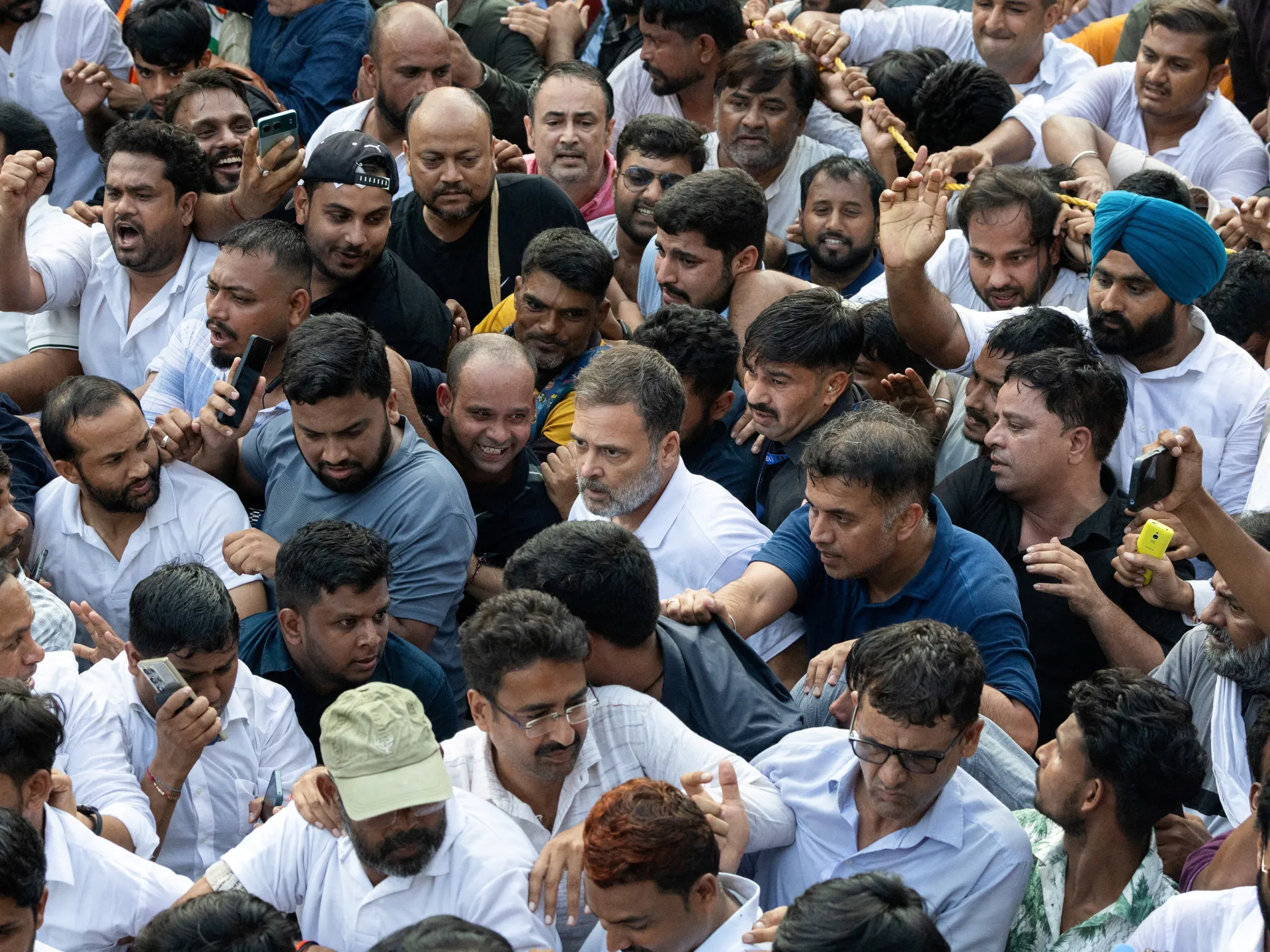
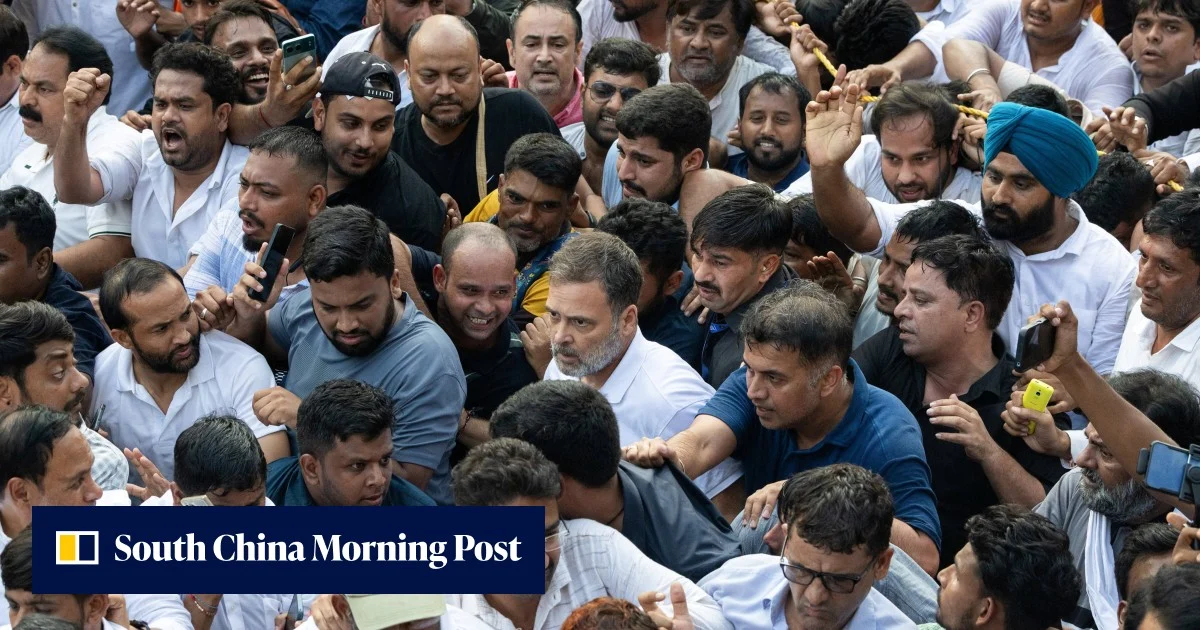
New Delhi, India — India’s main opposition leader Rahul Gandhi led dozens of members of parliament and thousands of other protesters in a tense march to the Supreme Court on Monday, submitting a petition demanding the resignation of the country’s election chief even as tens of thousands of police officers shadowed them, stopping them from physically reaching the court.
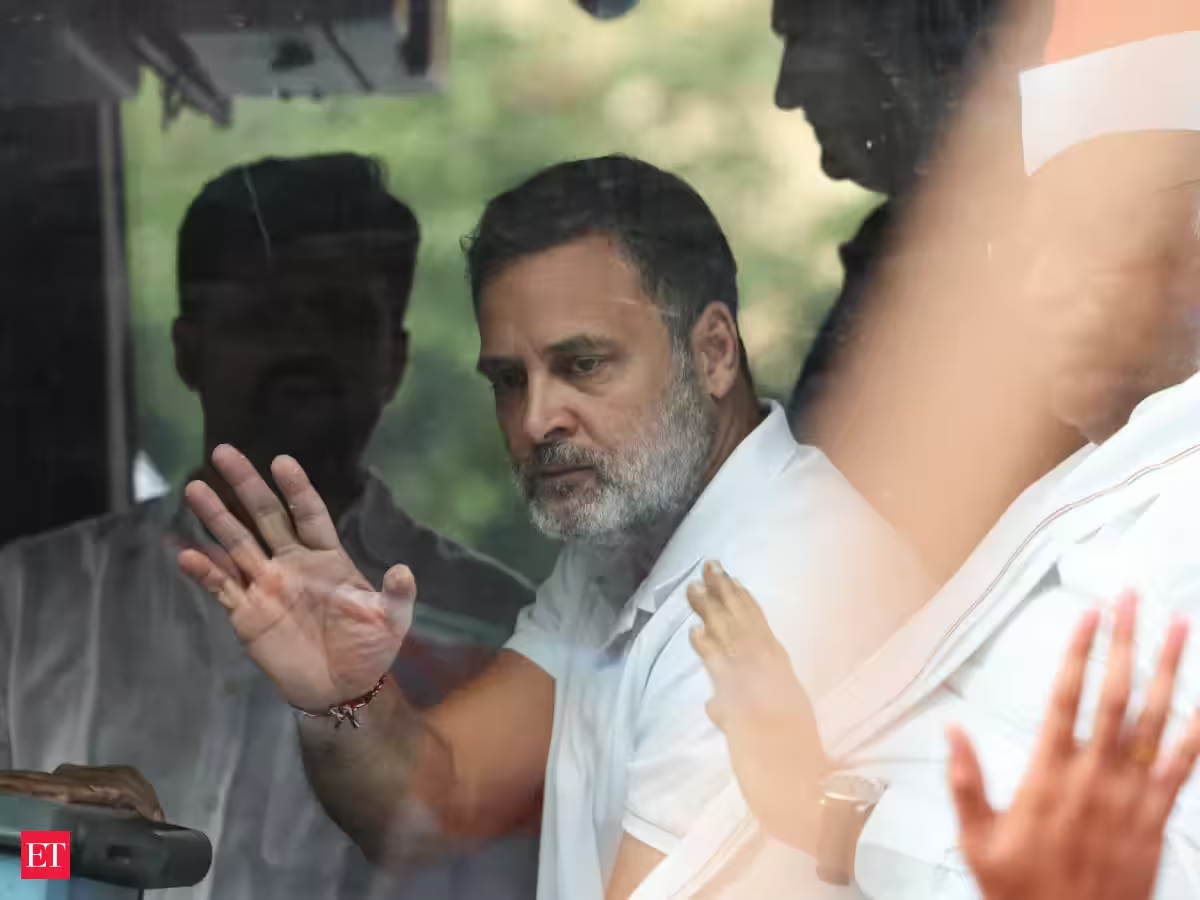
Congress Party leader Gandhi was joined by his sister, Priyanka, who is also a member of parliament, and other prominent leaders on top of a truck that slowly made its way through a sea of supporters towards the court.
The police had set up a series of barricades to stop them from reaching the Supreme Court. But some Congress Party supporters crossed the first set of barricades after climbing over them. As they approached the second barricade, police officials tried to push back, and clashes appeared imminent.
But Congress leaders then announced that Gandhi and others had managed to submit their petition to the court, even if not physically, and their truck turned around.
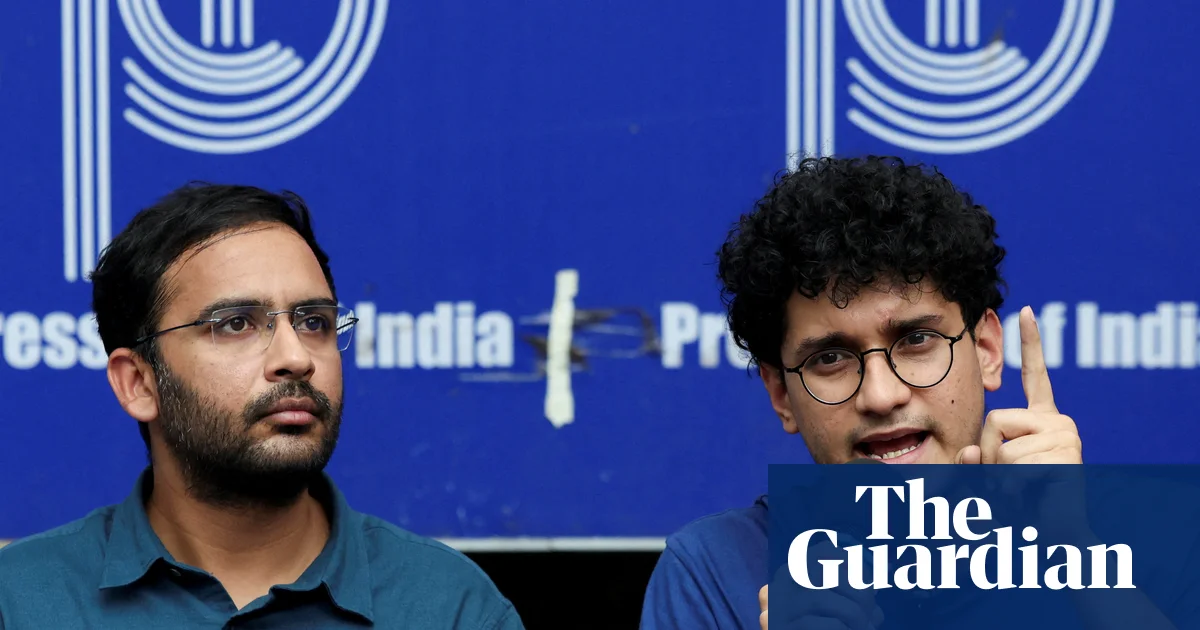
Yet leaders from the Congress, other opposition parties and the Gen Z-led “Cockroach” protest movement have signalled that they are still deciding their next steps — their demand for Election Commission chief Gyanesh Kumar’s resignation unchanged. The Cockroach Janta Party movement had forced out Education Minister Dharmendra Pradhan in July.
Rahul Gandhi, heir to India’s most influential political dynasty, is seeking to turn a summer youth uprising into a broader challenge to Prime Minister Narendra Modi’s decade-long dominance of Indian politics, putting the Hindu nationalist government under growing pressure.
In a press briefing on Monday, Gandhi said the Modi government had put the capital city “in jail”. More than 30,000 police officers were deployed on New Delhi’s streets.
India’s Election Commission, a supposedly autonomous body tasked with overseeing the world’s largest electorate, has been criticised after revelations that its chief, Kumar, frequently overruled concerns raised by the other two election commissioners about the integrity of changes to the voter database.
For months, India’s opposition parties have argued that the election commission is compromised, sabotaging elections at the behest of Modi’s Hindu majoritarian Bharatiya Janata Party (BJP) for its electoral benefit. The BJP denies the allegations.
Since June last year, the commission has been revising and updating statewide voter lists. It has since removed more than 130 million names, which critics say has disproportionately deprived minorities and other vulnerable groups in India of the right to vote.
Gandhi has called for the chief election commissioner to be tried for treason. “We will not spare you,” he said, referring to Kumar, at his Monday press briefing.
Opposition politicians allege that protest rallies by leaders including Gandhi have been met with violent and brutal force, as seen in videos showing them being detained.
“[The protesters] came with love in their hearts, not hatred or anger,” Gandhi said, referring to a protest on Saturday. “They were beaten, both by cops and BJP goons.”
“Narendra Modi … cannot silence India’s voice. These cowards cannot intimidate us. They will have to step aside,” he wrote on X, calling on people from all walks of life to join the protest on Monday.
Analysts say circumstances this time around are starkly different from the summer protests, when CJP-led demonstrators demanded the resignation of then-Education Minister Pradhan.
Asim Ali, a political analyst in New Delhi, told Al Jazeera that the mobilisation of the wider opposition would not stop, but the Modi government was unlikely to back down.
“The crackdown this time on students is making it apparent that it would be tougher for young protesters this time, and students can’t get beaten up and dragged violently daily,” he said. “Going forward, the opposition parties stand to be the front face of the protests, and they need to lead from the front.”
Since 1975, when then-Prime Minister Indira Gandhi imposed a state of national emergency suspending civil liberties, “India saw more civil politics grow into mainstream, where opposition parties were allowed space,” Ali said.
He added that after five decades, “those democratic gains have vanished – and there are no constraints on this government by independent institutions.”
Rasheed Kidwai, a political analyst, said he has seen New Delhi at the centre of “several big opposition political rallies, held in areas near the parliament, hosting hundreds of thousands of people”, when the police did not interfere, unlike the crackdowns this year.
Kidwai said that the violent detention of members of parliament, in particular, was worrying.
“We are seeing a big change from when politicians were more tolerant of dissent,” he noted.
With an unprecedented security deployment in central New Delhi designed to prevent protests, youth leaders are turning to new tactics.
Neha Bora, the president of the All India Students’ Association (AISA), a left-wing group affiliated with the Communist Party of India, has often tricked Delhi police in order to stage protests in recent days.
Bora, a post-doctoral student of theatre, came to national prominence for her fiery speeches in the July protests, becoming a leading face of the Gen Z movement challenging Modi’s Hindu nationalist politics.
Aditi Thakur, a 23-year-old student in the capital, has turned on notifications for all of Bora’s posts on social media. “A call to protest can come anytime, anywhere,” she told Al Jazeera.
Bora does not reveal when or where she is going to stage a protest until just 30 minutes before, to avoid detentions by the police. Her supporters are alerted via social media to join her at a given location in the capital.
On Sunday, she picked a congested street near central Delhi — and was able to jump several barricades to reach the heavily secured Parliament Street, before being chased down and dragged into a police van.
Even Thakur couldn’t catch her, she told Al Jazeera, laughing. “These are guerrilla times, but peacefully. If the government cracks down on us, we also need to adapt,” she said. “It is a fun cat-and-mouse chase every day. I’m hooked on it.”
The Gandhi-led Congress is also adopting similar measures, holding flash rallies at unannounced venues, then running away from police.
A defining feature of the July protests – a watershed moment for wrestling concessions from the government – was Gen Z’s humour in the face of police brutality.
Now, protesters are prepared for a more serious confrontation, even if demonstrations remain peaceful, say analysts.
“We are seeing that humour changing more into anger this time,” Asim Ali said.
The biggest challenge for the government is disruption in central New Delhi, which, Ali said, the government cannot allow on a daily basis. The area is home to most federal government offices, as well as being a major business hub.
Protesters know that too, and that gives them leverage.
“We are seeing this movement grow into a bigger anti-government, anti-Modi movement,” Ali said.
Related Stories
 India
India
A show of resistance on Delhi’s streets as Rahul Gandhi
52 minutes ago
 India
India
Democracy can't be held hostage to opposition's comfort, SIR necessary for fair polls: Delhi CM Rekha Gupt
1 hour ago
 India
India
India’s opposition marches on Supreme Court as ‘cockroach’ protests gain ground
1 hour ago
 India
India
BJD slams State government for Hockey India’s notice to downgrade Odisha’s status
3 hours ago
 India
India
Trade minister leading 300
3 hours ago
 India
India
BT BIG STORY: How India’s space startups are building on Isro’s blueprint
3 hours ago
 India
India
‘Cockroach’ party leaders say India is ‘at war with its citizens’ as protests enter second day
4 hours ago
 India
India
Home Minister Gurung leaves for India to attend BIMSTEC meeting
6 hours ago