
Crusoe Reaches a Reported $30B Post
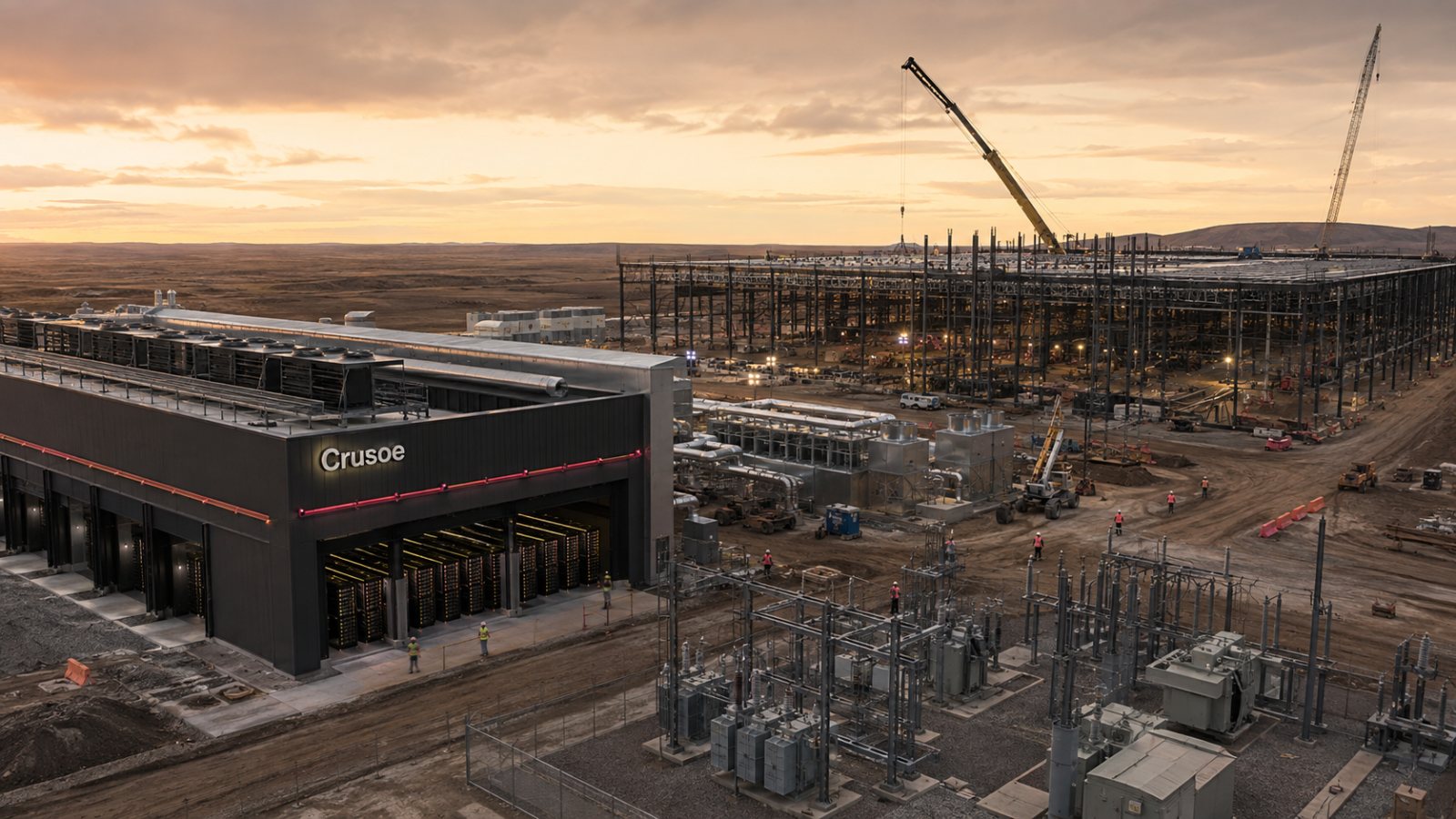
Crusoe finalized a funding round of more than $3 billion at a roughly $30 billion valuation on September 3, 2026, according to Bloomberg’s account of the transaction. Atreides Management and Valor Equity Partners co-led the round, with Mubadala Capital also participating, although the information came from unidentified people familiar with the deal rather than a public announcement by Crusoe.
TechCrunch’s September 3 coverage corroborated the principal terms and identified a separate five-year cloud contract with Jane Street worth about $13 billion. Together, the financing and contract explain why investors assigned Crusoe nearly three times its previous valuation, but they do not establish how much capacity is operating, how quickly contracted projects will produce revenue or how much more capital the expansion may require.
The $30 billion valuation includes the new money
The headline valuation is not the amount Crusoe received. The approximately $30 billion figure is post-money, meaning it includes the capital invested in the round, as specified in Reuters’ September 4 report.
If slightly more than $3 billion consisted entirely of primary equity, simple subtraction would place the pre-money valuation just below $27 billion. The new investment would consequently represent about one-tenth of the post-money capitalization. This is an illustrative valuation bridge, not a reconstruction of the transaction: the exact proceeds, security rights, dilution and presence of secondary share sales have not been disclosed.
The earlier comparison also needs precision. On October 24, 2025, Crusoe disclosed an initial $1.375 billion Series E closing at an expected valuation above $10 billion, co-led by Valor and Mubadala Capital. Because that valuation was above $10 billion and the latest figure is approximate, “triples” describes the scale of the increase rather than an exact threefold calculation.
The step-up cannot be explained by new cash alone. Relative to the earlier benchmark, the latest round assigns close to $20 billion more value to the business that existed before the new investment—including its projects, customer commitments and expected future earnings. That increment is valuation, not another pool of construction cash.
Contracted demand is not operating capacity
The strongest operating case for the new price is the volume of customer commitments. On June 9, Crusoe disclosed 4.9 gigawatts of contracted AI infrastructure across data-center projects and Crusoe Cloud, alongside a development pipeline exceeding 40 gigawatts.
Those figures represent different levels of certainty. Crusoe defined the broader pipeline as including contracted projects, sites under active tenant negotiations and sites in advanced development. It therefore cannot be treated as capacity already sold, built or connected to power.
The Jane Street agreement provides a particularly large demand anchor, but its multiyear contract value is not current revenue. Dividing $13 billion evenly over five years produces an illustrative average of $2.6 billion a year; actual revenue recognition could differ because delivery dates, service commencement, usage requirements, pricing provisions and other contractual conditions remain undisclosed.
A signed commitment can reduce the risk that completed infrastructure will lack a customer. It does not eliminate the need to procure computing equipment, finish buildings, install cooling and electrical systems, secure energy and make the service available on schedule. Contracted value therefore offers visibility into potential revenue while remaining distinct from recognized revenue, operating capacity and cash flow.
Fresh equity covers only part of the expansion risk
The new round gives Crusoe substantial capital for construction, hardware and working capital, but it does not demonstrate that the full pipeline is financed. Large AI campuses require spending on buildings, substations, cooling, networking and computing systems before customers can use the capacity and before many associated receipts can begin.
This timing is central to the investment case. If construction and energization keep pace with contracted demand, Crusoe can convert expensive projects into long-duration infrastructure revenue. Delays, equipment shortages or cost overruns could instead create a funding gap to be filled with project finance, debt, customer contributions or additional equity.
Power is part of the same delivery challenge. Crusoe’s operating model spans energy sourcing, data-center construction and cloud services, yet each additional gigawatt must still be supported by generation or grid access and completed electrical infrastructure. A large pipeline can signal commercial opportunity while simultaneously measuring a potentially large capital obligation.
One large contract raises concentration questions
The Jane Street contract is large enough to materially support the demand narrative around Crusoe Cloud. It cannot be compared directly with the company’s valuation as though both numbers measured the same thing: the contract figure is a gross multiyear commitment before expenses and revenue-recognition timing, while the valuation prices the equity of the entire company.
Publicly available terms do not show the agreement’s expected margin, annual delivery schedule, minimum purchase obligations or termination protections. Crusoe has also not disclosed what share of its revenue is attributable to any individual customer. The contract therefore confirms substantial demand without revealing whether it diversifies the revenue base or increases reliance on a small number of very large counterparties.
As of September 5, the financing terms are supported by multiple reports, while the prior valuation and capacity figures come from Crusoe’s own disclosures. The unresolved variables are operational: how much contracted capacity is already serving customers, when the remaining projects will be energized, what additional financing they will require and how concentrated the resulting revenue will be.
Related Stories
 Finance
NI secretary to hold Stormont talks over budget deadlock
54 minutes ago
 Finance
Iran retaliates after US strikes oil tankers
1 hour ago
 Finance
Councillor hits back at 'outrageous' bypass claims
3 hours ago
 Finance
German exit polls suggest far
6 hours ago
 Finance
Netanyahu boasts about bombing Qatar, says Gaza funds used for aid
10 hours ago
 Finance
US military says it struck three Iranian tankers after American warships came under missile attack
16 hours ago
 Finance
The Venezuelan billionaire the U.S. investigated for money laundering now has a Pentagon oil deal
1 day ago
 Finance
Trump ranks himself the greatest US president ever. Historians beg to differ
1 day ago