
Could Scoop of Moon Dust Reveal Alien Technology?
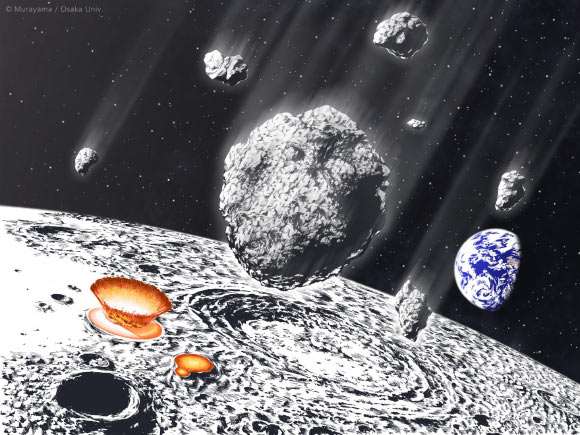
A cubic meter of lunar soil might be one of our best bets for finding physical proof that another advanced civilization once existed somewhere in the Milky Way, according to a new paper to be published in the International Journal of Astrobiology.
Pinault et al. propose searching the Moon for microscopic technosignatures — tiny engineered particles that may have traveled through interstellar space and become preserved within lunar soil over billions of years. Image credit: Murayama, Osaka University.
In the 1990s, the Ukrainian astronomer Oleksiy Arkhipov proposed that microscopic debris from alien spacecraft, probes or industrial activity could drift across interstellar space and quietly pile up on stable, ancient surfaces like the Moon.
SETI Institute researcher Lewis Pinault and colleagues revisited and expanded this idea in a new study.
“The Moon has been quietly accumulating material from space for billions of years, much of it likely billions of years older than the Moon itself,” Dr. Pinault said.
“We’re asking whether that ancient collection might contain microscopic traces of technologies that existed long before humans ever looked up at the sky.”
“Unlike Earth, the Moon has no atmosphere, flowing water, or active geology to erase ancient material.”
“Over the last four billion years, its surface has continuously collected dust from across the Solar System and interstellar space, making it a remarkably stable archive of Milky Way history.”
“If advanced civilizations produce durable microscopic debris — whether intentionally or as a byproduct of space exploration or large-scale engineering — a tiny fraction of those particles could eventually become embedded in the lunar regolith.”
In the study, the researchers modeled how tiny grains, on the order of 0.3 microns across (a few hundred times thinner than a human hair), could survive the journey through the interstellar medium.
They found that sufficiently tough, refractory particles could travel thousands of light-years over hundreds of millions to billions of years, occasionally arriving at the Earth-Moon system slowly enough — thanks to solar radiation pressure and the Sun’s magnetic ‘bubble,’ the heliosphere — to survive impact rather than vaporize.
They call unintentional debris of this kind ‘Arkhipov particles,’ essentially cosmic litter analogous to Earth’s own orbital debris.
They also describe a more speculative category, ‘Bracewell particles,’ named after physicist Ronald Bracewell’s classic proposal of self-contained interstellar probes — in this case, deliberately engineered micro-scale devices designed for sensing, logging or even limited self-replication.
Finding and confirming such particles would be extraordinarily difficult, requiring a combination of machine-vision screening to flag anomalous grains and detailed laboratory forensics — isotopic, chemical and structural analysis — to rule out natural minerals, terrestrial contamination or debris from our own spacecraft.
“The concept of searching the lunar regolith for microscopic technosignatures is at once extraordinarily original and eminently reasonable,” said Bill Diamond, SETI Institute President and CEO.
“This is a novel addition to the search methodologies applied to seeking evidence of technology as a proxy for life and intelligence beyond our Solar System and we are excited at the prospect of bringing this to fruition.”
Lewis J. Pinault et al. 2026. Micron-Scale Technosignatures: How a Cubic Metre of Lunar Regolith May Begin to Constrain the Number of Past Technological Civilisations in the Galaxy. International Journal of Astrobiology, in press; arXiv: 2606.24028
Related Stories
 Technology
Elastic Chief Technology Officer Sold Shares Worth Over $26M
15 minutes ago
 Technology
New law to force tech firms to stop children taking or sharing nude images
2 hours ago
 Technology
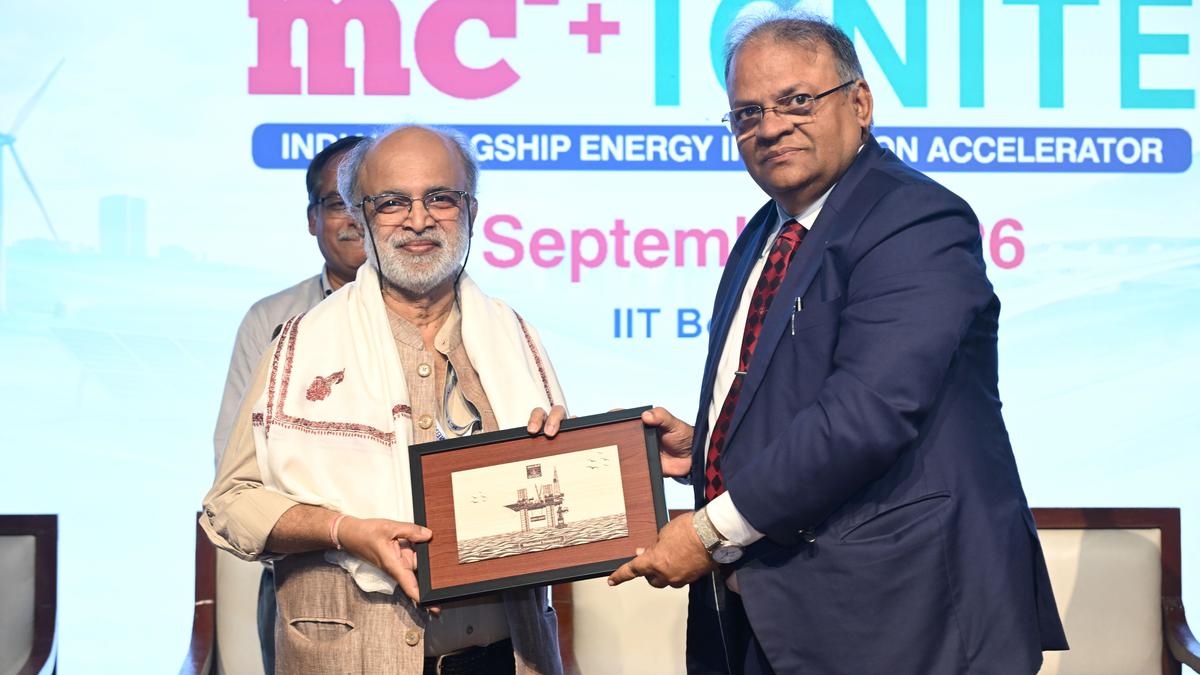
ONGC Chairman calls for greater focus on tech, innovation; commits to fund and support startups
4 hours ago
 Technology
Karnataka invites global tech firms, startups to build Quantum City
4 hours ago
 Technology
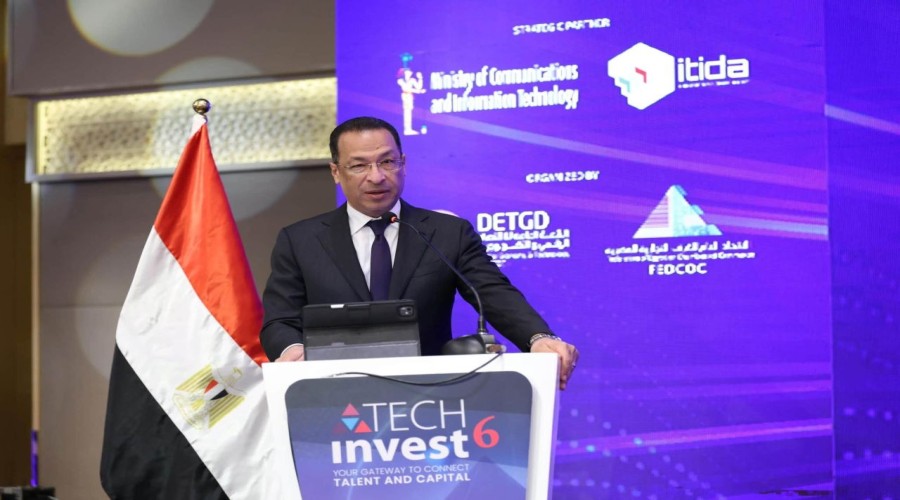
Egypt unveils new push to scale tech investment, AI and startups
4 hours ago
 Technology
Catholic cardinal highlights technology’s role in transforming Africa’s resources
4 hours ago
 Technology
China's Huawei Technologies faces racketeering trial in New York
4 hours ago
 Technology
Lectra Takes Equity Stake in Caron Technology
5 hours ago