
Construction industry faces new uncertainty as Canada
Ontario Construction News staff writer
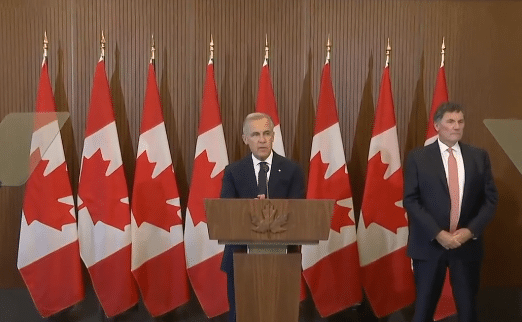
Canada has suspended trade negotiations with the United States and is preparing retaliatory tariffs after the two countries failed to reach an agreement before new U.S. tariffs took effect Saturday, adding fresh uncertainty for Canadian construction contractors, suppliers and manufacturers.
U.S. President Donald Trump’s 50 per cent tariffs on roughly $28 billion worth of Canadian goods include cement, drywall, hardwood products and other construction materials.
Prime Minister Mark Carney said Canada walked away from the proposed agreement rather than accept U.S. demands that would compromise the country’s sovereignty or undermine key industries.
“We were not prepared to compromise Canada’s sovereignty or undermine our key industries,” Carney said.
Carney said the United States “asked for too much and offered too little.” Canada has suspended negotiations and recalled its negotiating team following what the government described as unfair last-minute changes to the proposed agreement.
“For more than a year, Canada has worked tirelessly and in complete good faith with the United States to negotiate a new comprehensive trade agreement,” Carney said Saturday. “We have been pragmatic, patient, and persistent.
“We cannot accept what the United States is offering us, and we refuse to grant them what they are asking of us.”
Canada will respond with equivalent duties, dollar for dollar, beginning Sept. 8. The retaliatory measures will target U.S. goods in sectors including steel, appliances, agricultural equipment, pulp and paper and electronics.
The inclusion of steel could be particularly significant for the construction industry, where the material is widely used in commercial and industrial buildings, infrastructure projects and other major developments.
Contractors and project owners could also face higher costs if Canadian counter-tariffs affect machinery, equipment or other construction-related imports from the United States.
The dispute comes as contractors continue to contend with volatile material costs, supply-chain concerns and pressure on the affordability of major projects. The new tariffs could add another layer of uncertainty to estimating and procurement, particularly for projects that depend on materials or equipment sourced across the border.
Most provincial premiers have backed Carney’s decision to walk away from the proposed agreement, although Alberta Premier Danielle Smith has called for the two countries to resume negotiations.
The U.S. government has offered a different account of the talks. U.S. Trade Representative Jamieson Greer said Canada “declined to finalize” an agreement and accused Canadian negotiators of making new demands and reversing earlier positions.
The two governments remain at odds over why the negotiations collapsed, with no indication that talks have resumed.
Related Stories
 Canada
Albertans head to polls in historic referendum on whether they want to stay in Canada
4 days ago
 Canada
In the news today: four soldiers killed, Alberta referendum, AI privacy fears
4 days ago
 Canada
How a grass fire at a Canadian military base killed four soldiers
4 days ago
 Canada
How will household electricity rebate reduction, temporary winter pricing change impact Ontarians?
4 days ago
 Canada
Residents told to boil tap water due to bacteria
4 days ago
 Canada
Oil
4 days ago
 Canada
Albertans vote on path to independence as Carney fights to keep Canada united
4 days ago
 Canada
Two of 4 soldiers killed in fast
4 days ago