
Checking in on AI at Hyatt Hotels, where human and artificial intelligence have a double room

Technology should enhance the human connection not replace critical thinking or judgment or human connectivity.
As a statement of the importance of human intelligence sitting alongside its artificial counterpart, that’s one that chimes pretty much with diginomica’s worldview.
It comes from Mark Hoplamazian, CEO of Hyatt Hotels. Talent becomes even more powerful when paired with the right technology, he believes:
We're not eliminating humans, we're simplifying and enhancing the colleague and owner experiences to give them more time to care for our guests and customers, and for our owners, to get what they need in optimizing the performance of their hotels. It's not about activity. We don't measure activity. We want impact. We want results. That's what our KPIs are. We're personalizing the guest experience at scale, driving deeper engagement and greater loyalty. And by the way, in segments and for guests where that matters a lot to their decisions about travel. We're streamlining operations and empowering our colleagues, reducing friction, and improving service delivery.
AI is a strategic enabler embedded in the firm’s operating model across the entire enterprise, he states:
We're using tools, data and insights to better engage with our guests across their travel journey and to support our colleagues by reducing friction in their daily work, taking administrative tasks off of their responsibilities, enabling faster and better-informed decisions. As AI increasingly shapes customer decisions, we believe that companies that win will be those with the clearest understanding of their customer and the strongest brand coherence.
That's the way travel distribution is going to work in the future, he argues, and is why Hyatt has been a mission to evolve into a more insights-led and brand-focused organization as a strategic priority. Hoplamaziann explains:
It positions us to compete from a place of clarity, consistency and most importantly, trust. Recent studies show nearly 2/3 of millennials prefer AI-assisted personalized travel planning. We believe utilization of AI distribution tools will become more important over time.
The hoped-for end result of all tech spend is stronger loyalty contribution, higher revenue per booking and greater hotel performance and profitability.
Hyatt thinks about tech and AI in a number of core ways, according to Chief Commercial Officer Mark Vondrasek:
First, they allow us to scale our platform efficiently. They allow us to drive smarter decisioning and to enable even deeper engagement with our guests. And importantly, we don't think about technology just as infrastructure, we think about it as a growth multiplier.
The way we are scaling our advantage is through efficiency gains in our core technology platform. Over the past 1.5 years, we've elevated our foundational technology systems. We're moving from proprietary solutions to best-in-class platforms. We started with revenue management. We replaced our homegrown system with the industry-leading ideas product, which has already delivered a 1.4% revenue uplift across our entire system. It's not just a pricing tool, it's a decisioning engine. It optimizes demand, inventory, pricing and mix across our entire business.
We're also migrating the Sabre's SynXis platform for our Central Reservation System, which expands distribution, improves merchandising and reduces our cost and complexity for our owners…And finally, our move to OPERA Cloud for our Property Management Systems creates a more scalable and flexible platform across all of our hotels, reduces infrastructure cost, simplifies operations at the hotel level and create a more flexible foundation for future capabilities and for our future growth trajectory.
Hyatt has approached this work a bit differently, he suggests:
We brought in senior leaders from Sabre to execute this work and this has resulted in these large-scale system migrations being completed on time, on budget with little to no disruption to operations and importantly, with no incremental cost to our owners.
That’s a talent management decision that has made all the difference to the ongoing success, he reckons:
The reality is that most companies undergo these transformations and try to pull them off with the same leaders who built their proprietary systems. We knew that the best way to ensure success was to actually bring in leaders who've executed these large system initiatives several times. For us, this has made all the difference. We will wrap up this work this Fall.
Benefits are already accruing, he states, and the tech investment is driving revenue and lowering costs, as well as enabling smarter decisions at the property level. He cites the example of Hotel Heartbeat, a centrally led AI-enabled self-learning tool that puts data directly into the hands of property leaders:
It integrates more than 70 data points to deliver clear prioritized recommendations to our on-property leaders on where to act across revenue, service and forecasting. Instead of interpreting reports, teams now know exactly where to focus.
The engagement with Hotel Heartbeat has been strong, with the pilot hotels seeing great weekly engagement, he adds:
More than half of the signals that come from the center are actually driving action at the property level. And when a recommended action is not taken, our leaders feed the LLM (Large Language Model) by providing feedback as to why what we recommended was not the optimal choice, and that makes the model smarter over time. We're scaling Hotel Heartbeat across the entire system. It's an example of how we're turning insight into action with AI.
Another AI-related application are is around deeper guest and customer engagement. Vondrasek explains:
We are transforming how guests discover Hyatt through AI. We were the first in our industry to introduce intent-based search. We can now smart match location, amenities, price points and experiences to what guests really want in travel, with the ability now to search for travel options on their terms, such as ‘I'm looking for Cancun hotels under 30,000 points at night with a wonderful spot’. The result here is a 23% lift in conversion of intent-based search, but more importantly, it gives us a much deeper understanding of guests' intent. This insight learned through intent-based search feeds our ecosystem now of better informed offers because now we know that this kind of trip appeals to you. It also feeds data to our development teams as we think about future project sites based on demand.
And there’s more to come it seems:
We've taken this work a bit further. We were also the first to launch an integrated ChatGPT experience, opening a new direct channel to nearly 1 billion users who can now download and engage in our app.
This falls into the category of putting down a beach towel on a deck chair by the pool in many ways as Vondrasek admits:
Being early here mattered a lot to us because it allowed us to learn faster and build stronger relationships with our guests. And while the truth is, there is not a ton of volume here yet, for us, that's just fine. I mean we're learning simply by being early here. And we're learning things like the demographics of our guests using this capability are that they're younger. They have higher income, and they're disproportionately looking for experiences across all of their travels. That insight alone helps us with content creation and future partnerships.
Hyatt is also using AI to transform how it manages group demand, an incredibly important part of the business representing approximately 25% of revenue in the United States. This also started with a simple insight, says Vondrasek:
Our sales teams were spending way too much time, roughly 1/3 of their day, filtering and processing inbound request for proposals, RFPs, time that we knew could be better spent for more engagement with our customers.
So we developed an AI-powered solution that scores and routes the most valuable opportunities to the right teams and right properties without human intervention. It's now deployed across more than 500 of our hotels today, and it's expanding rapidly.
And the impact is clear. What this does is it removes guesswork, it prioritizes the best opportunities for our sellers, and it helps us sell smarter and faster. Our sellers love it because it's giving them time back.
When you put it all together, technology and AI allow us to scale our platform very efficiently. They've allowed us to make smarter decisions and to engage more meaningfully with our guests and customers, and it's what allows us to take everything we've built across our brands and our loyalty platform and extend that advantage across the entire Hyatt system.
Related Stories
 AI News
US says it has agreed to 'stand down' after exchange of strikes with Iran
28 minutes ago
 AI News
Morocco and the Netherlands look to move mountains in Monterrey matchup
28 minutes ago
 AI News
The Supreme Court nears the end of its term with momentous cases about Trump's power to be decided
28 minutes ago
 AI News
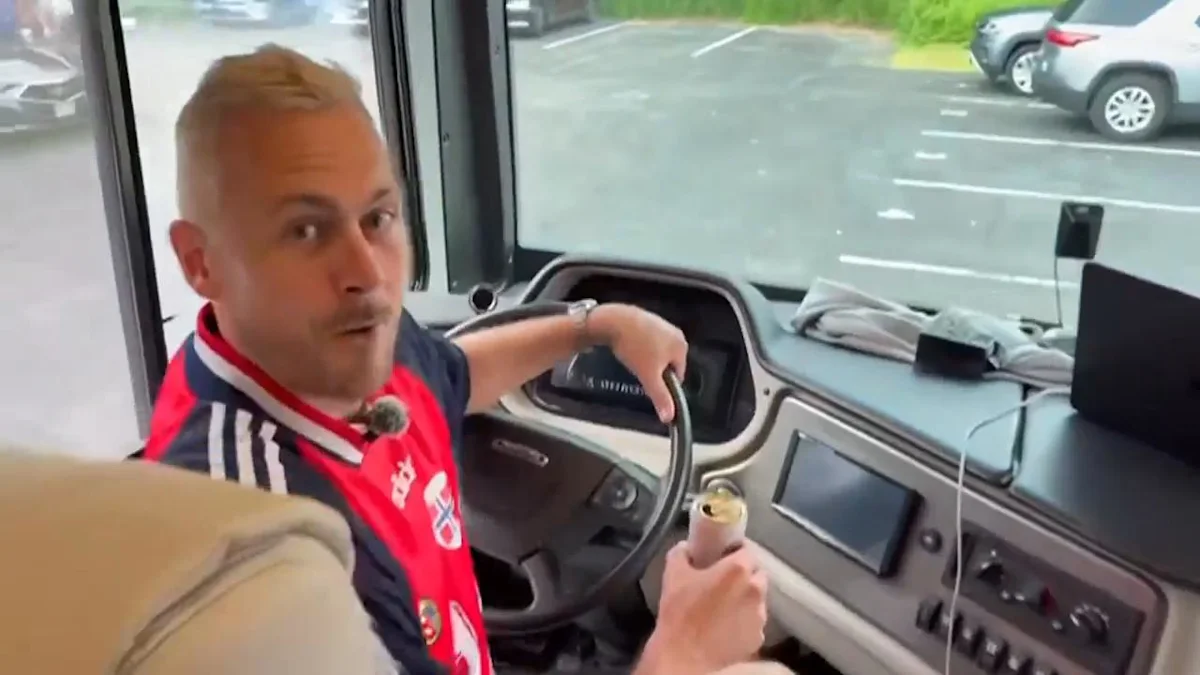
Norwegian podcast hosts travel in style during World Cup
28 minutes ago
 AI News
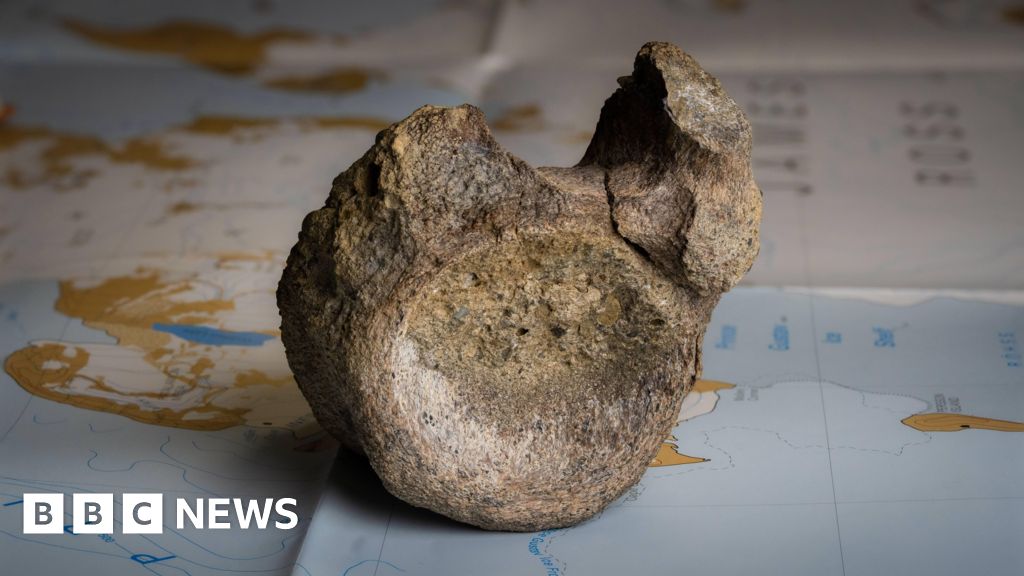
Antarctica's first ever dinosaur bone discovered in a drawer
28 minutes ago
 AI News
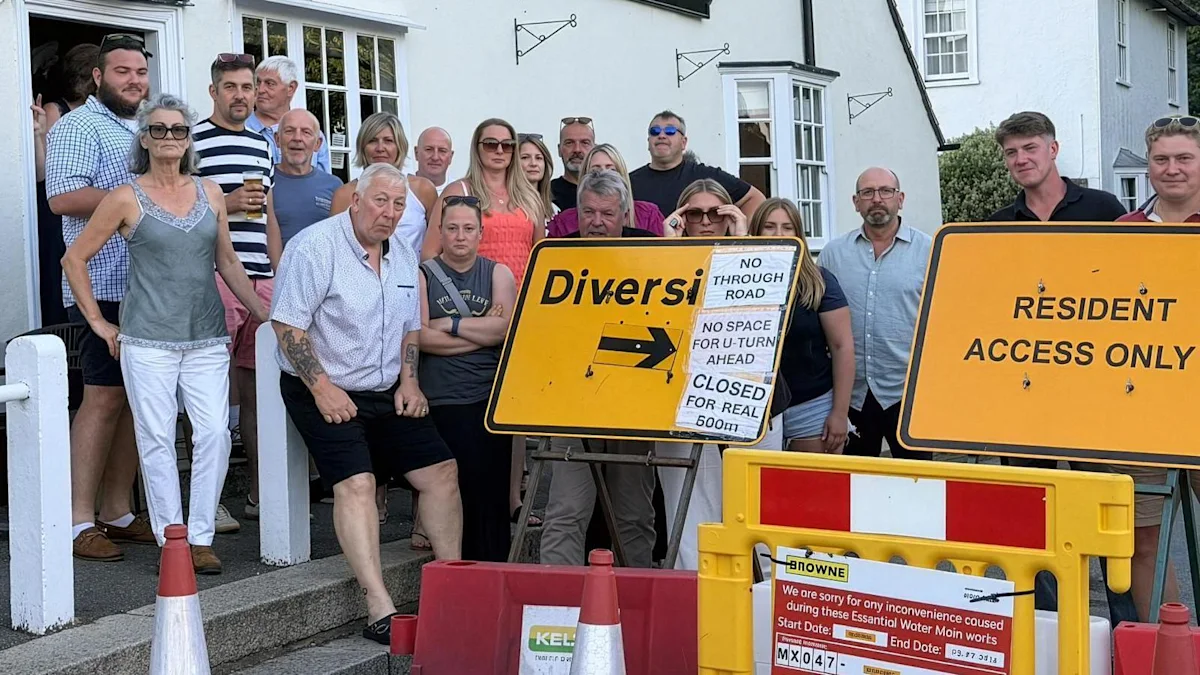
Landlord says roadworks delay threatens his pub
29 minutes ago
 AI News
Four Canadian insurers make Corporate Knights' 2026 sustainability ranking
29 minutes ago
 AI News
First dinosaur bone from Antarctica found in a drawer
29 minutes ago