
Canada’s politeness problem: How to stop playing nice and assert itself more
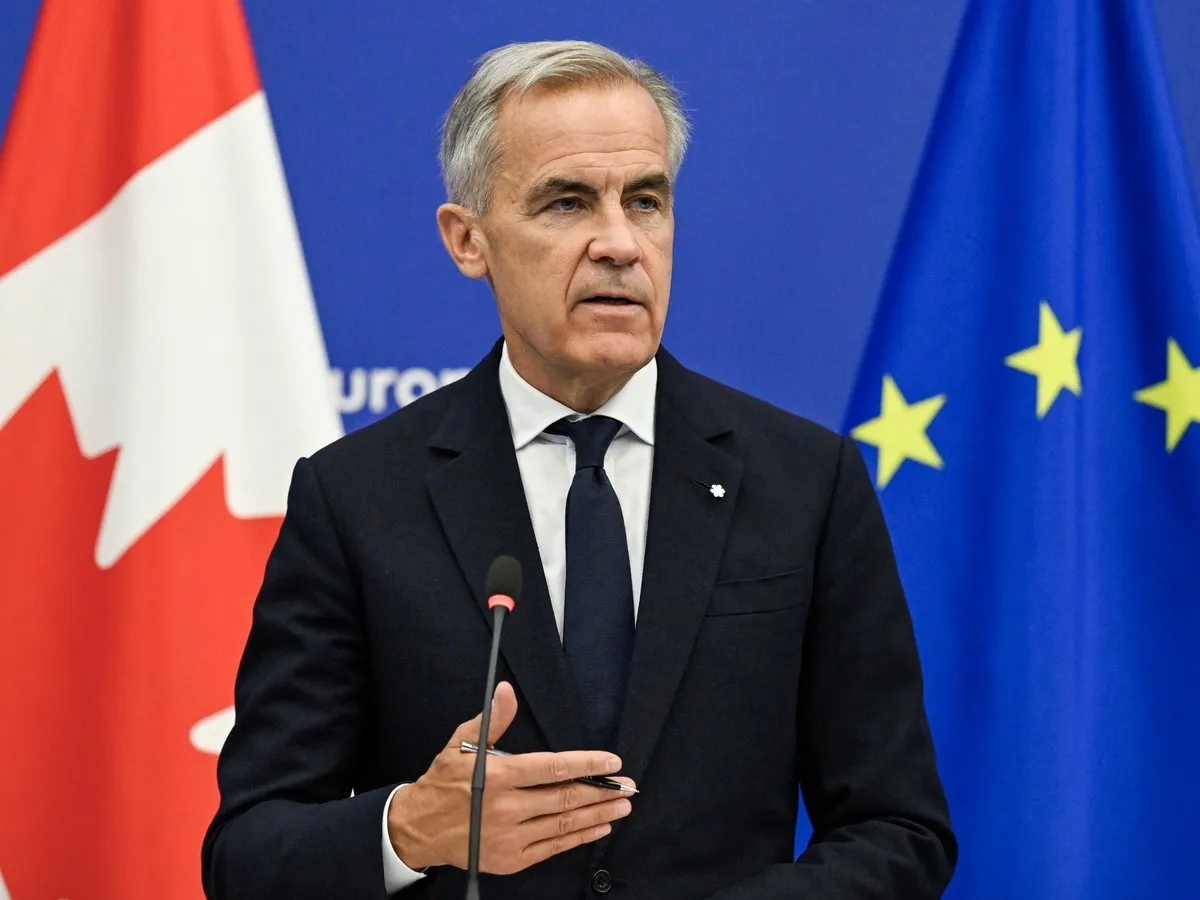
WASHINGTON, D.C. — Around the world, Canadians are often described as “nice” or “polite.”
Canada’s international reputation for kindness resonates domestically, too. A Pew Research Center survey this year found that Canadians held among the world’s most positive views of their fellow citizens’ morality, with 92 per cent of respondents saying their fellow Canadians were morally good. But could all that politeness be hurting Canada?
Kumaran Nadesan, the cofounder of 369 Global, a Canadian conglomerate specializing in skills training, media and global market facilitation, says yes. In his 2026 book, The Impolite Canadian: Why Playing Nice Is Costing Us the Future, Nadesan argues that Canada’s greatest weakness is its inclination to be too polite.
National Post reached out to Nadesan to discuss how Canada’s cultural commitment to politeness has become a passive liability that is holding the country back. The good news? He says some less polite Canadian moves in recent months have given him reason to hope.
This Q&A has been condensed and edited for clarity.
Kumaran Nadesan: We don’t always ask the hard questions or push back when we need to, which means we let others dictate our reality for us rather than being active agents.
I think it also produces a sense of inconsistency. For example, if you look at the new “associate membership” with the EU, this is a tremendous announcement and a much-needed re-establishing of Canada’s identity and presence in the world. But we have a history of pushing through for the signing ceremonies and then moving slowly in the execution of things. This can turn into inaction in the mid- to long-term.
We have a lot of great bilateral trade agreements, but I think we do not really measure the outputs of that in tangible terms. We are not consistently looking at how we continue to aggressively execute these MOUs and trade agreements.
The single most damaging habit is that politeness sometimes does not allow us to maintain consistency in how we assert our position, our privilege, and the leverage that we have in the world. For many years, that has overindexed toward a reliance on the U.S., but we have a lot more value to add. The inconsistency and sporadic nature of Canadian trade interests around the world is one of those outcomes that I hope changes with this re-imagination of Canada’s role in the world.
It can be seen as the other side of the same coin. We are seeing this juxtaposition play out right now. I think there is a two-track race the prime minister is running, and those two are connected: productivity at home is required for investments to come, and vice versa.
We cannot look at either side in isolation. Our productivity has to improve; we are lagging behind in the OECD index. Politeness can look a lot like apathy. Yes, we have a beautiful country. We also have people with incredible talent, abundant natural resources, and critical minerals that the world needs. But we aren’t doing as much as we could be with what we have. We haven’t actively been acting like it or doing anything to invest, increase productivity, or take a stand politically. Our politeness feels antithetical to aggressively selling Canada’s advantages and taking a stance as a middle power on the global stage.
Productivity and drawing investments to Canada are coupled together. You cannot have one without the other. What remains to be seen is whether, given that ambitious two-track race, our institutions, public service, and narrative framing of Canada can keep up and lead to tangible outcomes.
We are always going to be partners with the U.S. I do not think that is going to change, whether it is with this prime minister or this particular president or the next. It is important to understand that Canada looking to diversify its footprint beyond the U.S. is not divorce; it is insurance.
A quote-unquote “impolite” prime minister should be doing exactly what he is doing: making sure we continue to speak to the U.S. and do not shut that door, but actively seeking different opportunities for Canada. It is really about asserting our independence.
An impolite prime minister will make sure we do not cave in to anything. He is walking a fine line between keeping the lines of communication open with the U.S., whether with the negotiating team or the White House, and looking at other markets.
We have been very blessed with this geography in North America, but this is the moment that pushes us to look for more alliances and more allies, and to harness all of that for the prosperity of Canadians. That means not just the EU, but the Indo-Pacific, Africa, and many parts of the world that want what Canada has.
Would this be impolite if it were the other way around? We cannot see this whole thing as a knee-jerk reaction to a tumultuous negotiation. I see it as Canada looking to assert its independence and making sure we are not tied to one trading partner. We have seen the effects of this, and that doesn’t bode well for us. We aren’t the U.S.’s only option, and we become similarly positioned when we are building bridges with multiple trading blocs.
If that means we have to call out bad deals or bad terms, then so be it. The prime minister has said certain things are not negotiable, such as identity, and that we have to be able to walk away, cool things off, and come back. Those are all things an impolite Canadian would do.
I do not define impolite as being obnoxious or rude. The idea is not to be afraid to speak truth to power. I think the prime minister has been doing that with an administration in the U.S. that has been very chaotic and emotional in its trade approach, not just toward Canada but across its trading relationships around the world.
I think so. The prime minister’s message seems to be resonating for Canadians, if you go by the recent byelections and sentiment on the ground.
We have to be careful not to lump the American people and the U.S. administration together. Those are two different things, and there are many governors and everyday Americans who are very supportive of the approach Canada is taking.
This is not about vilifying Americans or getting into 240-character wars with our cousins down south. It is about them understanding that we are a nation unto ourselves, and we want to decide what we want to do with this country we call Canada.
Canadians are not going to be rude and obnoxious, but I do think there is widespread support for the position the prime minister has taken during this moment in time.
(Former prime minister) Jean Chrétien said the other day that we should be withholding things like even the clean-energy production that the U.S. relies on Canada for. It could come to things like that, where we are looking at deeper areas in which the U.S. is very dependent on Canada.
You saw President Trump’s announcement about the Belarusian deal on potash. There are things more needed in the U.S. that we can potentially hold as additional negotiating cards. A couple of former prime ministers have suggested that as well.
Will it come to that? I really do not think so. Maybe I am hopelessly optimistic for a guy who wrote The Impolite Canadian, but I think sentiments in the U.S., with the midterms coming up, are changing. People are going to feel the pain south of the border as well. I think saner heads will prevail ultimately, and we will come to a deal with the U.S., in addition to looking at different markets and different deals for Canada.
When it costs us more than what we have to give up. I do not think our intertwined histories, cultures, and politics allow for that kind of estrangement from the U.S. I do not think it is ever going to come to that.
If anything, Americans are getting a wake-up call about Canada rethinking and reasserting itself on the world stage. President Trump may treat associate membership in the EU as a hostile act, but will that necessarily lead to more serious actions on the border, defence, or military matters? I really doubt that.
There is political rhetoric coming out of the White House, but there is also what the chain of command thinks about these things in the U.S. military and other institutions. I do not think it is going to become self-defeating for us. Any part of this window that allows us to become indispensable to more allies and new trading partners can only be a good thing for Canadians.
It is the latter. My argument is that we should not be doing this build-at-home, diversify-abroad work now simply because of what is happening with this particular U.S. administration. This should have been happening for decades.
But here we are. If this is the catalyst that gets us there and sets up Canada for the next hundred years, so be it. Let’s leverage this geopolitical window.
I do not want to answer that in relation to the U.S., but I have gone on a few trade missions where the government takes business leaders to different markets. There is still work to do, especially with some of our iconic businesses, particularly the large ones, in getting them to be more risk-taking — actually a lot more risk-taking — when it comes to markets outside the U.S.
There is a general reluctance, a risk aversion, to really understanding the tremendous opportunities we have, especially in places like the Indo-Pacific. The EU is good; it is our second-largest trading partner. But even with CETA, there is still a lot of work to do to fully realize the gains of that agreement.
I would call on business leaders not to think that diversification is a blip on the radar or a passing fancy while we sort out our relationship with the U.S. They should use this window to actively invest their time, money, resources, and organizational rigour in understanding what other markets farther away from Canada have to offer. We have an incredible diaspora in this country, and we aren’t tapping into that potential for cross-border business opportunities.
It is about getting corporate Canada to be intentional, genuine and active in exploring beyond the U.S., and not assuming everything will be fine in six months or two years and we can reconnect all our supply chains to the U.S. again. We aren’t going back to the old days. The rulebooks are being rewritten, and our playbooks need to drastically change as well to ride the waves of this brave new world.
The answer is somewhere in the middle. There is an aspect of political theatre, in the sense that we already have very strong agreements and history with the EU. I have not read the details, and they are still emerging, but I do not think this associate membership necessarily produces significantly new tools beyond visa-free travel and things like that.
We should not fantasize that this membership is going to give us anything significantly new. We need to double down on what we already have with the EU and exploit it and leverage it much more effectively.
The opposite of the U.S. is not necessarily the EU, and just the EU. We need to make sure we have more options than vacillating between the U.S. and the EU. Other markets may provide even better concessions than the EU can.
The EU will continue to sell to the U.S. and do whatever serves its interests. The EU will always have to balance between Canada and the U.S. Canada needs to look beyond just the EU: keep the EU membership going, but invest equal time and political capital in getting businesses to think broadly outside the EU-U.S. corridor.
I am hopeful it is the former, and not the latter. All of this would fail if we replaced one dependency with another.
We run the risk of that because we are not typically assertive or aggressive enough in these things. This is why trade agreements that are almost at the point of being signed in the Indo-Pacific, the trade agreement with the UAE and hopefully other GCC states, and resurging interest in Africa are signs that we are making sure we are not replacing one dependency with another.
We need to be actively looking for what deals and markets best serve Canadians and help build our prosperity and productivity.
Since we are talking in the context of trade, the first impolite thing we should be doing is preparing to face, or pay, the price for the duration it will take corporate Canada and our businesses to practically, effectively, and intentionally build supply-chain and trading positions in other parts of the world.
That will not happen overnight. There are many trade missions coming up, including the one to India in a few weeks. The practical thing is to build supply-chain diversity beyond the EU and Canada.
If that means retail prices have to increase for a short time, that is the price we have to pay to maintain our sovereignty and build practically for how we want to be in the world for the next hundred years.
My social-media feeds tell me it is our prime minister, ironically enough. (American academic and author) Scott Galloway said at a conference last week that the prime minister of Canada is probably the second most powerful man in the world because he is willing to call out what it is in terms of the geopolitical order.
I do not know much about how other countries are approaching this, but the way India is moving and the position it has taken with the Trump administration has been very strong. India’s prime minister and foreign minister, especially, have been willing to be very impolite in how they are pushing India aggressively, not just in their neck of the woods but across the board in Europe and the States.
I would say India, Finland, and France are countries that are trying to take a similar approach. Carney’s Davos speech removed the scales from people’s eyes, and people are willing to look at their U.S. relationships with a little more impoliteness, thanks to Canada.
I think he is impolite in every sense of the word, but he thinks he is doing what is best, in his view and in his mandate, for the American people.
The recent election outcomes in the U.S. have not gone in his favour. The midterms will be another litmus test. Do I think he is going to change his tempo and tactics? I really do not think so — not he himself. Maybe there are enough people in the administration who might hopefully take it in a different direction, but I do not see President Trump changing his view or mindset in how he is approaching Canada or the world at this point.
Our website is the place for the latest breaking news, exclusive scoops, longreads and provocative commentary. Please bookmark nationalpost.com and sign up for our newsletters here.
Related Stories
 Canada
Danielle Smith’s popularity dips as her party now tied with NDP in support: poll
11 minutes ago
 Canada
Vietnam's leader To Lam visits Ottawa as Carney reaches out to middle powers
11 minutes ago
 Canada
1.2M British Columbians have no family doctor
11 minutes ago
 Canada
Highrise tenants want action amid slow repairs to Canada Day flood damage
11 minutes ago
 Canada
DEAR ABBY: Self
1 hour ago
 Canada
Michael Higgins: Canada's unimaginative media can't get enough of these academics
2 hours ago
 Canada
Cheap Leafs aren't the only big news coming from Nissan Canada
2 hours ago
 Canada
As referendum looms, 70% of Albertans want province to remain in Canada
2 hours ago