
Canada’s largest carbon capture project breaks ground in central Alberta
Canada’s largest carbon capture project breaks ground in central Alberta
Origins has capacity to permanently store up to 1.5 million tonnes of CO2 annually
A village in central Alberta is set to become home to Canada’s largest carbon capture and storage project (CCS).
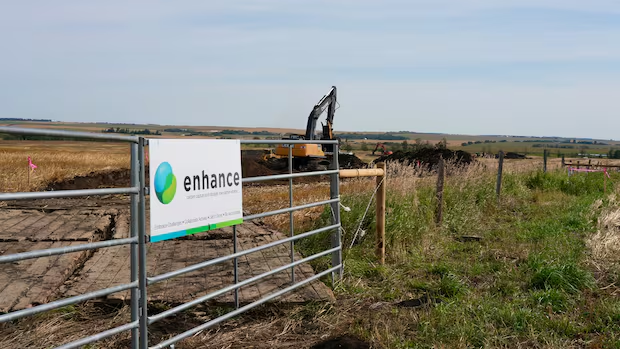
Enhance Energy broke ground Wednesday on its Origins CCS hub near Clive, about 140 kilometres south of Edmonton.
CCS technology traps carbon dioxide (CO2) emissions from industrial plants before they enter the atmosphere and stores them deep underground.
Candice Paton, vice-president of corporate affairs at Enhance Energy, said operations for the Origins project are slated to begin in January, with an initial capacity to store 1.5 million tonnes of CO2 annually, which the federal government equates to taking about 500,000 cars off the road.
“You can see behind me that we are breaking ground right this second on the connecting pipeline,” Paton said. “That will deliver CO2 for permanent storage to the Origins CCS hub.”
That pipeline will connect to the existing Alberta Carbon Trunk Line, a $1.2-billion CO2 transportation system co-owned by Enhance Energy. Paton said the trunk line currently carries emissions from a fertilizer factory in Redwater and from the Sturgeon Refinery near Edmonton to mature oil reservoirs like the ones in Clive.
Enhance Energy has operated a CCS site in Clive since 2020. Paton said the company has permanently stored more than nine million tonnes of CO2 to date through that project.
With the new storage hub nearby, Paton said Enhance Energy aims to expand capacity and offer another storage option for regional industrial emitters.
“There's significant potential to expand as new emitters and infrastructure are connected,” she said.
Federal Energy and Natural Resources Minister Tim Hodgson said with the current political climate, other countries are seeking reliable energy produced in responsible ways, and CCS playing a larger role in Canada’s energy industry will help the economy.
He added that projects like Origins will help lower emissions while moving toward Canada's 2050 net-zero goals.
“As we look toward net zero by 2050, there will not be one technology or one source of energy that gets us there,” Hodgson said. “We will build more conventional energy done the right way, and we will build with technologies like carbon capture and storage.”
Agricultural groups like the National Farmers Union have raised environmental concerns about CCS, warning about what they say is the potential for groundwater acidification and how that could pose risks to land and livestock.
“Concerns also have been raised about CCS storage facilities leaking and leading to dissolution of CO2 into groundwater,” the union stated in a 2025 news release, pointing to the Queensland government in Australia banning carbon capture projects in its largest groundwater basin over similar concerns.
Hodgson told CBC News he remains confident in the technology's safety, noting that every geological formation is unique.
“I can't speak for what the geology is in Australia, but the geology here in Alberta is exceptional,” he said.
“It is a proven technology. It's been done for many years here. We're expanding it.”
Lacey Yellowbird, from Samson Cree Nation, is the executive director of the Maskwacis Employment Center. She said Enhance Energy has a three-year partnership agreement with the Maskwacis community to support local employment.
She noted that while the facility is located on Treaty 6 territory and she is aware of environmental concerns, she does not personally have any concerns at this stage.
“Well, I'm never really completely 100 per cent satisfied,” Yellowbird said. “But I was given an opportunity to take a tour of the site and I did get to see [it] firsthand.
Alberta Energy and Minerals Minister Brian Jean said Enhanced Energy’s projects in the region demonstrate that large-scale CCS is viable in the province. He pointed to the 240-kilometre Alberta Carbon Trunk Line as an example of how emissions could be transported and stored via a regional storage hub model.
“It can work in other places as well,” Jean said, adding that Alberta selected several hub proposals in 2022 to accelerate the development of CCS projects in the province. “I would make a note that I watched the United States doing something very similar and we are in a race, and we need to win that race.
“The Origins project is among the first of these hubs to move to a groundbreaking stage.”
Nadeer Hashmi is a reporter for CBC News in Red Deer, Alta. He was formerly a reporter in Yellowknife.
Related Stories
 Canada
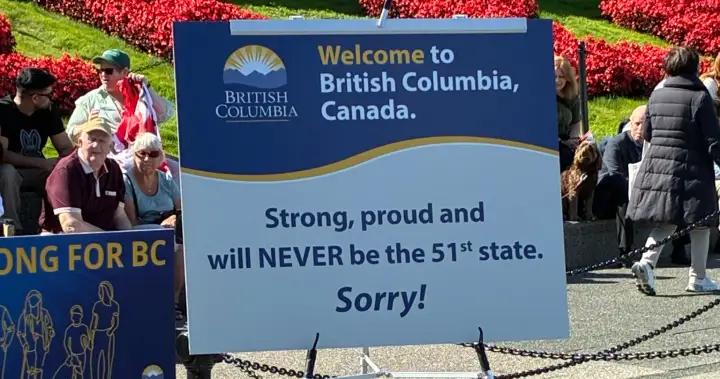
B.C. unveils new border signs: ‘We will never be the 51st state’
37 minutes ago
 Canada
Morocco, Germany and Hosts Canada Set for Group D Challenge
37 minutes ago
 Canada
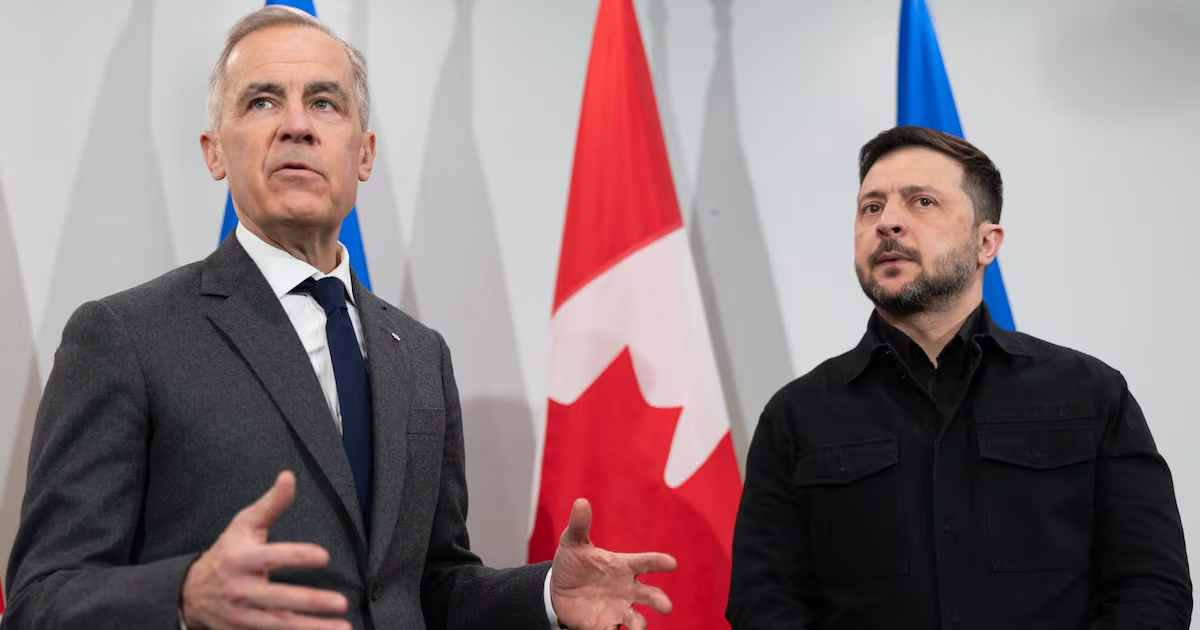
Ukraine’s Zelenskyy arrives in Calgary ahead of meeting with PM Carney
38 minutes ago
 Canada
Trump says Canada ‘dying’ to make trade deal as Carney updates review process for major energy projects
38 minutes ago
 Canada
Wheelchair users’ class
38 minutes ago
 Canada
Zelenskyy arrives in Calgary ahead of Carney meeting
1 hour ago
 Canada
Federal finance minister defends Canada's response to Trump's trade war
1 hour ago
 Canada
Sportsnet unveils 'Saturday Night Hockey' as replacement for 'Hockey Night in Canada'
1 hour ago